
Khapra beetle
Trogoderma granarium
Description
How to identify
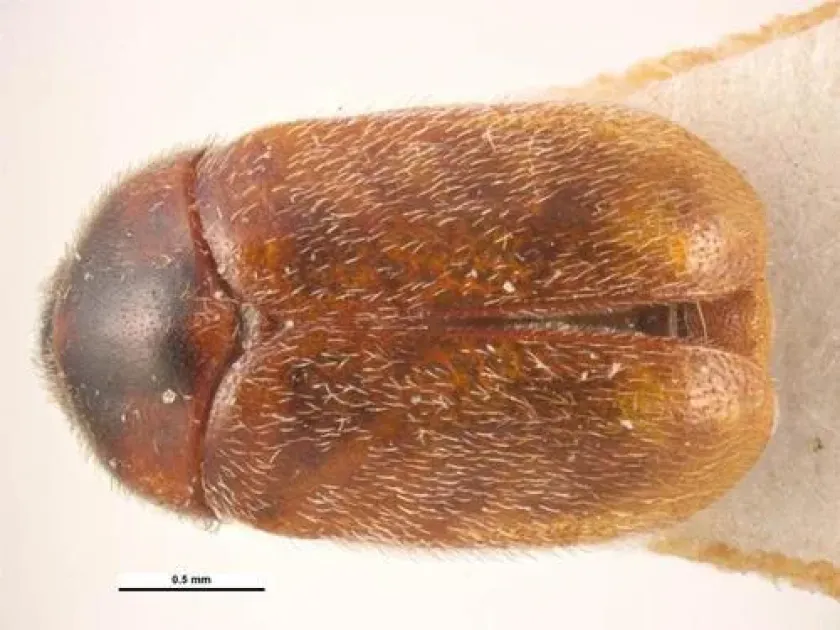
The Khapra beetle is a member of the Dermestidae family (carpet beetles). Adults are small, oval-shaped beetles, measuring approximately 2–3 mm, with a reddish-brown to black appearance.
The larvae are particularly distinct, growing up to 4–5 mm long, and are densely covered with stiff, golden-brown hairs that give them a fuzzy appearance.
This species is highly resilient, as larvae can enter a state of diapause, allowing them to survive for long periods without food in challenging environments.
The Khapra beetle is widely considered a major quarantine pest because of its ability to be easily transported in shipping containers and its potential to destroy stored commodities.
Due to its small size and secretive habits, identification often requires professional inspection or pheromone-based trapping in grain storage facilities.
What it damages
The Khapra beetle is a voracious polyphagous pest that thrives on a wide variety of stored products, particularly dry grain, seeds, and processed cereal products.
Preferred hosts include wheat, barley, rice, maize, sorghum, and peanuts, though they also target processed materials like flour, semolina, and dried animal feed.
Larvae cause the most significant damage by consuming the endosperm of the grain kernel, often leaving only the hollowed-out outer husk.
Aside from weight loss, the pest contaminates grain with shed larval skins and fecal matter, which can trigger allergic reactions and render food unfit for consumption.
Severe infestations can result in losses of 30% to 70% of stored stock, making this one of the most economically damaging storage pests globally.
When it appears
The Khapra beetle thrives in hot, dry climates. Optimal development occurs at temperatures ranging from 30°C to 35°C, where the life cycle can be completed in about 30 days.
In cooler climates, the pest is typically confined to heated environments, such as commercial grain warehouses, mills, and shipping vessels with internal microclimates.
Larval development is highly dependent on environmental factors; under food scarcity or temperature fluctuations, larvae can remain in a larval state for years.
During the warmer months, the risk of dispersal increases as global trade routes involve the transport of bulk grain that may harbor dormant larvae.
Low humidity levels (around 10–15%) are generally preferred by the beetle, which allows it to thrive in environments where other grain pests might struggle.
Signs of infestation
The most common sign of infestation is the presence of large quantities of cast larval skins, which tend to accumulate in cracks, crevices, and warehouse corners.
The appearance of fine, floury dust or pulverized grain particles indicates that larvae are actively feeding within the storage bulk.
A musty or unpleasant odor emanating from stored grain or commodities often signals a heavy infestation, frequently associated with secondary mold growth.
Visual inspection with sieves or specialized sampling equipment is necessary, as larvae will quickly burrow deeper into the grain mass if disturbed.
Hot spots within the grain storage mass can sometimes be attributed to the heat generated by the metabolic activity of a large Khapra beetle colony.
Control measures
Strict quarantine measures are the primary defense, preventing the import of infested commodities from countries where the pest is known to exist.
Fumigation with phosphine gas is the standard method for eradicating existing infestations within large-scale grain storage facilities and silos.
Warehouse sanitation is essential: regularly removing dust, debris, and grain remnants minimizes potential shelters where larvae could hide between storage cycles.
Applying residual contact insecticides to warehouse surfaces and machinery can prevent the survival of lingering populations and protect new stock.
Pheromone-based monitoring programs are highly effective for the early detection of the Khapra beetle, allowing for rapid intervention before populations escalate.
Taxonomy
- Latin name
- Trogoderma granarium
- Order
- Coleoptera (beetles)
- Family
- Dermestidae
- EPPO code
- TROGGA
Discussion
No discussions yet — be the first.