
Thylodrias contractus
Thylodrias contractus
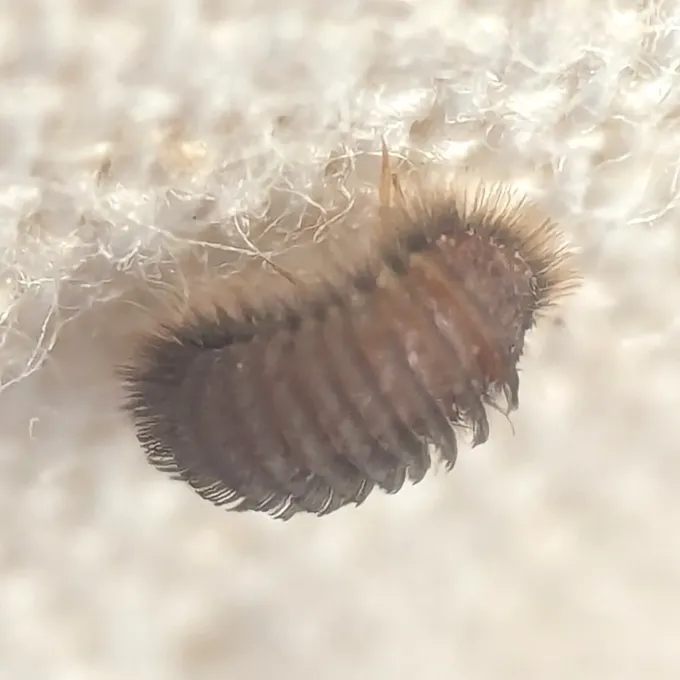
Description
How to identify
Thylodrias contractus, commonly known as the odd beetle, is a distinct member of the Dermestidae family. It exhibits extreme sexual dimorphism, which sets it apart from typical beetles.
The adult male is a soft-bodied, slender beetle capable of flight. It possesses wings and antennae typical of the Coleoptera order, allowing it to move actively in search of mates.
The female, conversely, is neotenic; it remains in a larva-like form throughout its adult life, lacking wings and elytra. This makes identification difficult for those unfamiliar with the species.
Both sexes measure approximately 2 to 4 mm in length. Their bodies are covered in fine, light-colored setae, which provide a tactile sense and a protective covering against external factors.
As a synanthropic species, it thrives in human-made structures, particularly in laboratories, museum storage areas, and herbariums where high-quality organic matter is available.
What it damages
Thylodrias contractus is a significant threat to botanical collections and herbariums. Its larvae are specialized in consuming dried plant materials, rendering specimens unusable for research.
They feed on leaf blades, stems, flowers, and even seeds stored in dry collections. By skeletonizing the plant tissue, they destroy the diagnostic features required for accurate identification.
Beyond plant collections, these pests are known to damage insect displays, skins, and other animal-derived artifacts, reflecting the versatile diet of the Dermestidae family.
The damage often goes unnoticed for long periods because the larvae tend to feed in concealed areas, such as the undersides of leaves or within folded paper mounts.
Once a collection is infested, the spread can be rapid. The beetle's ability to live in low-moisture environments allows it to exploit dry plant samples that are otherwise unfavorable to other pests.
When it appears
Within climate-controlled buildings, Thylodrias contractus can breed and develop throughout the entire year, as the environment provides constant temperatures conducive to growth.
The primary period of adult activity, particularly the flight of males, often occurs in the warmer months when the ambient temperature spikes, triggering mating cycles.
The developmental period from egg to adult is variable, heavily dependent on the quality of the food source and room temperature, often taking several months to complete.
In winter, if the storage facility is not properly climate-controlled, development slows down, but the larvae remain active and continue to feed on available organic substrates.
Infestations often peak during late spring and summer, correlating with the natural annual cycles of many coleopteran species and the increase in overall facility temperatures.
Signs of infestation
The presence of fine, brown powdery frass on herbarium sheets or at the bottom of storage boxes is the most common early indicator of an infestation.
Cast larval skins (exuviae) are frequently found near damaged items. These translucent, segmented casings are clear evidence that the pest population is growing and molting.
Visible boreholes or irregular feeding marks on plant surfaces indicate that the larvae have been actively grazing on the tissues of the specimens.
In severe cases, you may observe adult males crawling on the surfaces of cabinets or flying toward light sources, which suggests a high-density infestation in the vicinity.
Specimens that appear brittle or have fragmented edges, accompanied by small accumulations of organic debris, are clear signals that immediate inspection is required.
Control measures
Preventive management is the most effective defense. All new additions to a collection should be quarantined and subjected to a deep-freeze treatment at -20°C for at least 72 hours.
Physical exclusion remains critical. Storing collections in tightly sealed, powder-coated steel cabinets prevents beetles from accessing the materials and limits cross-contamination.
Maintaining a clean storage area by vacuuming dust and debris eliminates alternative food sources and helps in the early detection of any emerging pest issues.
If an infestation is confirmed, chemical treatment of the storage area or professional fumigation may be necessary, provided that such treatments do not damage the sensitive plant specimens.
- Use pheromone-based traps to monitor male activity levels.
- Maintain low humidity levels to discourage dermestid development.
- Conduct regular, systematic visual inspections of all archive folders.
Taxonomy
- Latin name
- Thylodrias contractus
- Order
- Coleoptera (beetles)
- Family
- Dermestidae
- EPPO code
- THYLCO
Discussion
No discussions yet — be the first.