
Reesa vespulae
Reesa vespulae
Description
How to identify
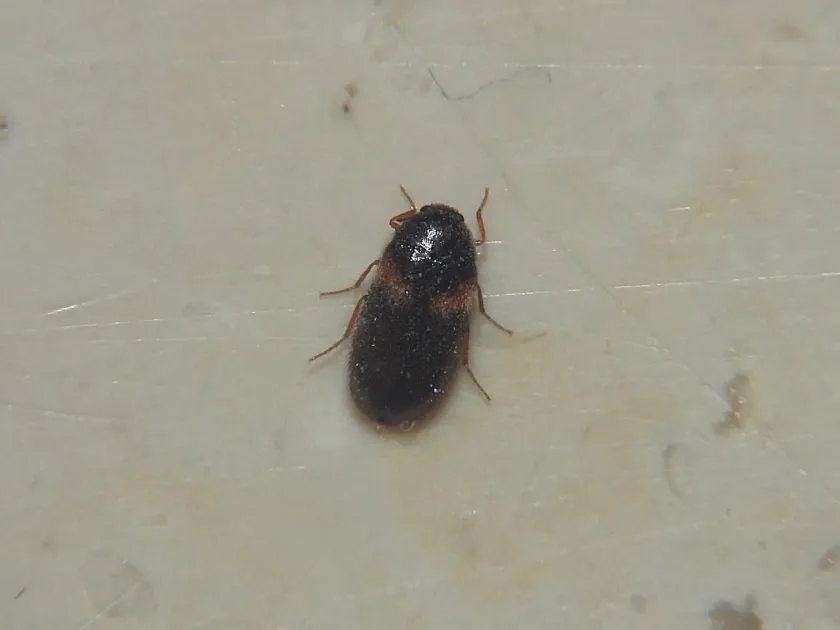
Reesa vespulae, commonly known as a type of carpet beetle, belongs to the family Dermestidae. Adult beetles are small, typically ranging from 2 to 4 millimeters in length, with an oval, dark brown or black body covered in fine hairs.
The larvae are distinct, characterized by their dense tufts of hair, which serve as protection against predators and aid in their movement through stored substrates. They are typically light brown to dark brown.
These insects are highly adaptable and capable of flight, which allows them to easily infiltrate and spread across large storage facilities, museums, or private dwellings.
Their life cycle is highly influenced by environmental conditions. Females lay eggs directly onto food sources, ensuring that the larvae have immediate access to nutrients upon hatching.
Because of their small size and secretive nature, they are often overlooked until a significant population has already established itself within a storage environment.
What it damages
Reesa vespulae is a serious stored product pest known for its polyphagous nature. It targets a wide variety of plant-based and animal-based products, causing significant economic losses.
In agricultural settings, larvae primarily feed on grains and legumes. They consume the internal contents of seeds, leaving behind only the outer shell, which ruins the quality of the crop for both processing and germination.
The pest also infests processed food items, including flour, cereals, dried fruits, and animal feed. Any infested product becomes contaminated with fecal matter, cast-off larval skins, and dead insects.
Beyond agricultural goods, this beetle is notorious for damaging museum collections, taxidermy specimens, and dried plant herbariums, as it consumes keratin and other dried organic residues.
The damage is cumulative; once an infestation begins, the population can grow rapidly if environmental conditions remain stable, eventually ruining entire batches of stored goods.
When it appears
As an indoor pest, Reesa vespulae can remain active throughout the year, provided that storage conditions are maintained at warm temperatures and low humidity.
There is no specific seasonal limitation for their activity in heated warehouses. Their life cycle continues uninterrupted as long as there is an adequate food supply.
In unheated areas, the insect may enter a state of dormancy during cold months, but it remains viable and can quickly resume development once temperatures rise in the spring.
The most active period for adult beetle movement and dispersal is typically spring and summer, correlating with natural increases in ambient temperature.
Because new infestations are often introduced via shipments of goods, vigilance is required regardless of the calendar season to prevent the establishment of the pest.
Signs of infestation
The most common sign of infestation is the presence of hollowed-out seeds or grains accompanied by small holes in packaging. Fine, flour-like dust often accumulates in the immediate vicinity of the infested material.
Adult beetles may be spotted crawling on walls, ceilings, or near light sources, particularly during the evening hours when they are most active.
For organic collections or herbariums, evidence of infestation includes crumbling organic matter and the presence of fine, web-like trails left by larvae as they move between items.
In bulk grain storage, an unexplained localized rise in temperature within the grain pile is often a reliable indicator of an active pest infestation causing metabolic heat.
Using sticky traps baited with pheromones or food attractants is an effective way to detect early stages of infestation before visual damage becomes obvious.
Control measures
Effective control starts with rigorous sanitation practices, including the regular removal of dust, grain spills, and old organic debris where larvae tend to hide and breed.
Professional fumigation is the standard industry method for eradicating established infestations in large-scale warehouses using approved chemical agents.
Physical treatments, such as freezing infested materials at very low temperatures or heating them to high temperatures, can effectively kill all developmental stages of the insect.
Installing fine-mesh screens on ventilation systems and sealing cracks in warehouse structures significantly reduces the risk of adult beetles entering from external sources.
Implementing a comprehensive monitoring program, including regular inspections and the use of pheromone traps, is essential for long-term pest prevention and management.
Taxonomy
- Latin name
- Reesa vespulae
- Order
- Coleoptera (beetles)
- Family
- Dermestidae
- EPPO code
- REEAVE
Discussion
No discussions yet — be the first.