
Reesa vespulae
Reesa
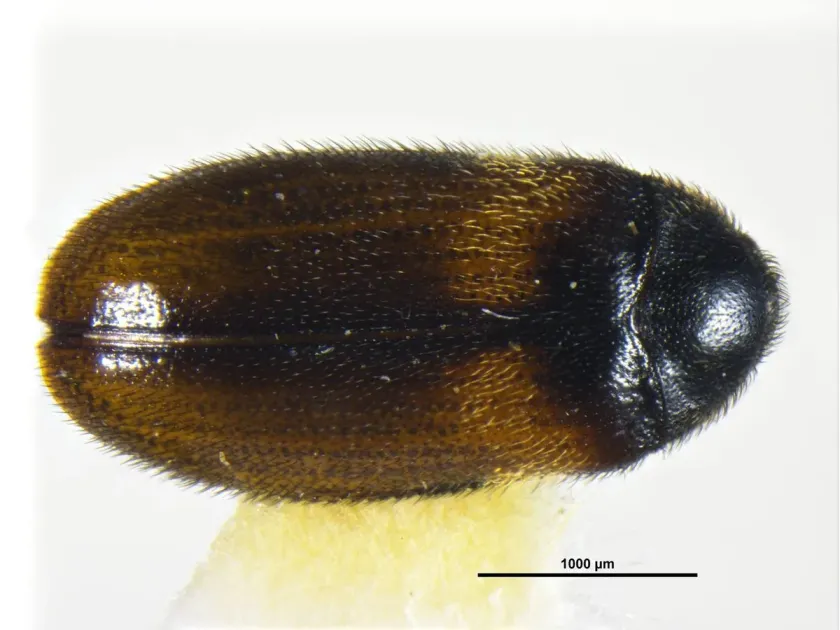
Description
How to identify
Reesa vespulae, commonly known as a type of carpet beetle, is a significant stored product pest belonging to the family Dermestidae. Adult beetles are small, typically ranging from 3 to 4 mm in length, with an oval-shaped body and a dark brown to black coloration.
The larvae are highly distinctive due to the long, hair-like bristles on their posterior end, which often form a brush-like appearance. These larvae are highly active and capable of crawling through tiny crevices, making them difficult to detect until an infestation is well-established.
This species is a synanthrope that thrives in human-made environments, particularly storage facilities, laboratories, and residential buildings. Their ability to survive in environments with limited resources makes them highly adaptable pests.
The life cycle encompasses four stages: egg, larva, pupa, and adult. While adult beetles play a role in reproduction and dispersal, the primary damage is caused by the larvae, which are known for their voracious feeding habits on various dry substrates.
Environmental conditions, particularly humidity and temperature, dictate the speed of their development. Populations can proliferate rapidly in stable, temperate indoor conditions, often going unnoticed for long periods if storage hygiene is neglected.
What it damages
Reesa vespulae is notorious for attacking a diverse range of products, including stored cereal grains, seeds, and legumes. In agricultural settings, larvae penetrate the grain kernels, consuming the endosperm and the embryo, which leads to total loss of viability for seed stock.
Beyond whole grains, this pest infests processed food products such as flour, breakfast cereals, dried milk, and various high-protein animal feeds. Their versatility allows them to thrive on substrates that other pests might bypass.
A major concern is their impact on biological collections, including dried plant specimens and herbarium samples. They are a common threat to museums and botanical institutions where they can destroy irreplaceable research materials.
Infestation results in significant product contamination due to the accumulation of frass, shed larval skins (exuviae), and silk webbing. This renders the food products unsuitable for consumption and lowers their market value.
Economic damage is twofold: the physical loss of stored commodities and the costs associated with remediation, fumigation, and the disposal of heavily infested batches of grain or food supplies.
Signs of infestation
The most immediate indicator of an infestation is the presence of fine dust or floury debris surrounding storage containers or grain heaps. This is the direct result of larvae fragmenting the grains during their feeding process.
The discovery of cast-off larval skins is a clear warning sign. These skins are often left in dark corners, under shelving, or near the edges of storage bins where the larvae have undergone molting.
Visible holes in seeds and grain kernels are indicative of larval activity. Upon closer inspection, these grains may appear hollowed out, sometimes containing frass or remnants of the larva itself.
In cases of heavy infestation, a distinct musty odor may be detected. This smell arises from the combination of insect waste, moisture accumulation within the infestation pockets, and the breakdown of damaged grain.
Monitoring using sticky traps or pheromone-based lures is an effective way to detect the presence of adult beetles before a major larval infestation causes widespread damage to the stored resources.
Control measures
Rigorous sanitation practices are the first line of defense. Keeping storage areas clean, removing spilled grain, and sealing cracks or crevices in warehouse walls are essential to minimize habitat availability.
Systematic inspection of incoming grain batches is crucial to prevent the introduction of the pest into the storage facility. Any suspicious items should be immediately isolated and treated or discarded.
Chemical control, including the fumigation of silos and warehouses, is a standard procedure for eradicating severe infestations. These treatments must be administered by professionals following strict safety guidelines.
Temperature management is a non-chemical alternative that is highly effective. Exposing grain to extremely cold or high temperatures can disrupt the life cycle of Reesa vespulae and mitigate population growth.
Implementing a comprehensive Integrated Pest Management (IPM) plan, which includes regular monitoring, exclusion techniques, and target-specific insecticide applications, is the best strategy for long-term protection.
Taxonomy
- Latin name
- Reesa
- Order
- Coleoptera (beetles)
- Family
- Dermestidae
- EPPO code
- REEASP
Discussion
No discussions yet — be the first.