
Megatoma undata
Megatoma undata
Description
How to identify
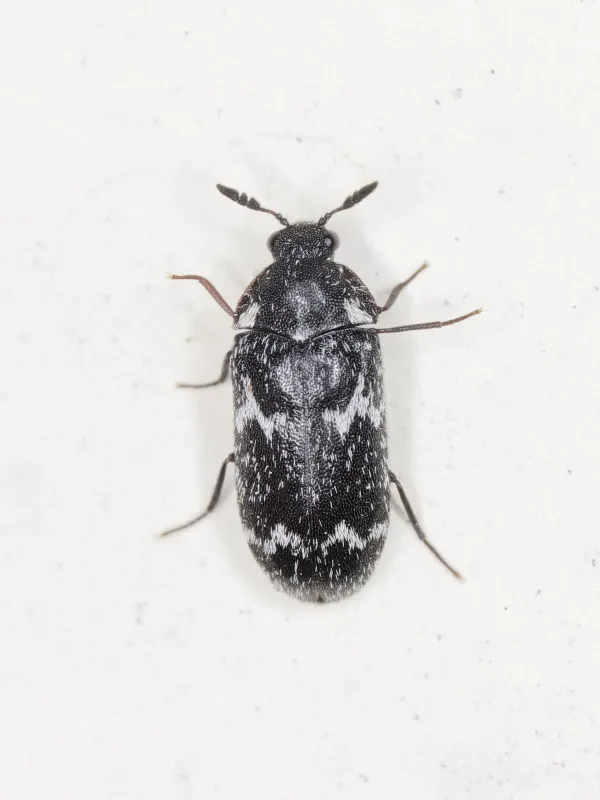
Megatoma undata is a beetle species belonging to the family Dermestidae, commonly known as the carpet beetles. Adult beetles typically measure between 4 to 7 millimeters in length.
The body of the beetle is oval-shaped and dark brown or black in color. A distinctive feature is the presence of wavy, lighter or golden-colored bands on the elytra, which makes this species relatively easy to distinguish from other dermestids.
The larvae are spindle-shaped and covered with long, stiff hairs, giving them a fuzzy appearance. They go through several molting stages, growing significantly in size throughout their development.
Adult beetles are diurnal and active in warm conditions. They are known for their defensive behavior, often dropping to the ground and remaining motionless when threatened, which helps them evade detection.
This species is well-adapted to human-made environments and is frequently found in warehouses, attics, and residential properties where dried animal or plant materials are stored.
What it damages
Megatoma undata is considered a significant stored product pest, particularly damaging to items rich in proteins. The larval stage is responsible for the majority of the damage caused by the species.
They infest a wide range of items, including wool, fur, leather goods, feathers, and processed meat products. In academic or museum settings, they can cause severe damage to dried insect collections, herbariums, and taxidermy specimens.
In agricultural storage, they target seed stocks, especially if there are any organic impurities present. Larvae are capable of chewing through various types of packaging, allowing them to access the products inside.
Beyond the physical destruction of the goods, the pests contaminate their environment with fecal pellets and cast-off larval skins. This secondary contamination often makes the entire stock unusable for sale or consumption.
The insects may also inhabit bird nests located in building eaves, using these sites as a reservoir before migrating into stored food areas within the building.
When it appears
The life cycle of Megatoma undata is highly dependent on environmental temperature. In heated buildings or warehouses, the beetle can maintain active breeding cycles throughout the entire year.
In natural or unheated environments, adult activity usually begins in the spring as temperatures rise consistently above 15–18 degrees Celsius. Peak reproductive activity typically occurs during the summer months.
A single generation typically completes its cycle in about one year, although this period can be shortened or extended based on food availability and consistent climate control.
Females lay eggs in clusters within cracks, crevices, or directly on the food source. The prolific nature of the female ensures the population can quickly expand if left unchecked in favorable conditions.
Pupation occurs inside the final larval skin, providing the developing insect with an extra layer of protection against environmental fluctuations and potential predators.
Signs of infestation
Key indicators of an infestation include small holes in packaging or the surface of stored goods. Fine debris and dust-like particles around the area of infestation are common signs of larval feeding activity.
The presence of empty, yellow-brown larval exuviae (cast-off skins) is a definitive sign of a well-established and reproducing population in the area.
Adult beetles found near windows, light fixtures, or hidden in wooden floor gaps are signs that an active colony exists nearby, indicating a need for a thorough inspection of the premises.
Infested wool or fur items often display patchy, irregular bald spots and holes, accompanied by a buildup of powdery waste matter from the larvae.
A distinct smell of decaying organic material may be present in cases of severe infestation, particularly if the larvae have consumed large quantities of meat or animal-based products.
Control measures
Strict sanitation is the foundation of Megatoma undata control. Regular cleaning of storage areas, specifically removing dust and organic debris, eliminates the food source required by the larvae.
Physical exclusion is essential; sealing cracks in walls, floors, and door frames helps prevent the pests from migrating into storage areas or establishing new nesting sites.
Products should be stored in containers made of materials resistant to pest penetration, such as heavy-duty plastic, glass, or metal, to protect long-term stocks.
For high-density infestations, professional chemical treatment, including surface insecticides or facility fumigation, may be required to eliminate the pest population completely.
- Implement regular warehouse cleaning schedules.
- Inspect all incoming goods for signs of existing larvae.
- Maintain low humidity to create an inhospitable environment for the pests.
- Use pheromone or sticky traps to monitor adult beetle activity.
Taxonomy
- Latin name
- Megatoma undata
- Order
- Coleoptera (beetles)
- Family
- Dermestidae
- EPPO code
- MGTMUN
Discussion
No discussions yet — be the first.