
Megatoma
Megatoma
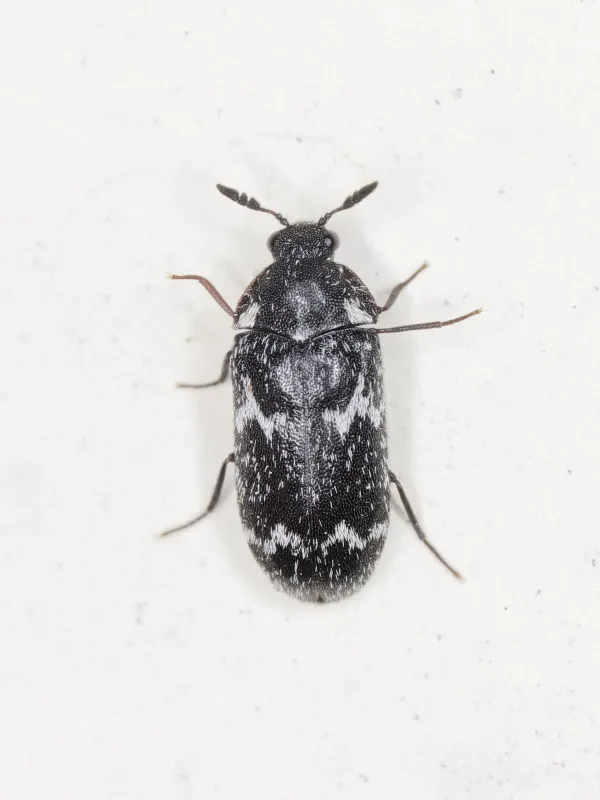
Description
How to identify
Megatoma is a genus of beetles belonging to the family Dermestidae, within the order Coleoptera. These beetles are typically small with an oval or elongated body shape, often covered in dense setae or scales.
Adult beetles usually display dark coloration, sometimes with distinctive patterns on the elytra. Their larvae are recognized by their spindle-shaped bodies and a thick coat of hairs, which is characteristic of many dermestids.
The life cycle involves complete metamorphosis, consisting of the egg, larval, pupal, and adult stages. This process allows the species to adapt efficiently to various indoor conditions.
Megatoma species are known for their resilience and ability to survive in environments with low humidity, often thriving in long-term storage facilities.
Correct identification often requires expert examination of specific morphological structures, such as antenna segments, due to their similarity to other related genera.
What it damages
Megatoma acts as a significant pest of stored goods, primarily targeting materials of both plant and animal origin. The larvae are responsible for the vast majority of the damage caused.
In agricultural settings, they infest various grains, legumes, and oilseeds. By feeding on the embryo and endosperm of the seeds, they render the product useless for both processing and germination.
Beyond plant materials, these insects are known to consume animal-based goods, including stored furs, dried meat, and natural fibers, posing a threat to museums and collections.
The severity of the infestation is exacerbated by the contamination of products with larval molts, excrement, and dead insect parts, which degrade quality.
Massive outbreaks can occur rapidly, leading to significant economic losses if proper sanitary protocols are not maintained within the storage facility.
When it appears
In climate-controlled or heated storage facilities, Megatoma can complete its life cycle throughout the year, as they do not require a dormant phase if conditions are stable.
Activity levels for adults peak during the warmer months, as increased ambient temperatures stimulate mating behavior and promote wider dispersal across the facility.
Larvae remain active in cooler conditions, although their developmental rate decreases significantly as temperatures drop, leading to slower growth cycles.
In unheated environments, they can overwinter in the larval stage, entering a period of physiological dormancy until favorable conditions return in the spring.
Management of the insect population is most effective when synchronized with the natural increase in beetle activity during the transition to warmer spring and summer seasons.
Signs of infestation
The most common sign of infestation is the presence of shed larval skins (exuviae) found in corners, under storage pallets, or along the edges of the grain mass.
Visible damage to stored seeds appears as small, irregular holes or hollowed-out kernels, often accompanied by fine dust-like frass.
Adult beetles may be observed crawling on walls, near window frames, or lights, particularly during periods of high activity and mating.
A distinctive musty odor emanating from the storage area is often a warning sign of heavy infestation and the subsequent microbial growth caused by beetle activity.
Infested materials often show signs of webbing or structural breakdown, indicating long-term feeding activity by the larval population.
Control measures
Prevention starts with rigorous sanitation practices, including the removal of spilled grain, dust, and debris that serve as primary food sources for the larvae.
Fumigation of storage facilities using phosphine-based products is considered the most effective chemical measure for eliminating established populations at all life stages.
Regular maintenance of the facility, including sealing cracks and crevices, is essential to prevent beetles from finding refuge or moving between storage zones.
Pheromone traps are highly recommended for early detection and monitoring, allowing warehouse managers to intervene before an infestation reaches a critical level.
- Maintain low humidity in storage areas.
- Rotate stocks to prevent long-term exposure.
- Use contact insecticides for surface treatment.
Taxonomy
- Latin name
- Megatoma
- Order
- Coleoptera (beetles)
- Family
- Dermestidae
- EPPO code
- MGTMSP
Discussion
No discussions yet — be the first.