
Peruvian hide beetle
Dermestes peruvianus
Description
How to identify
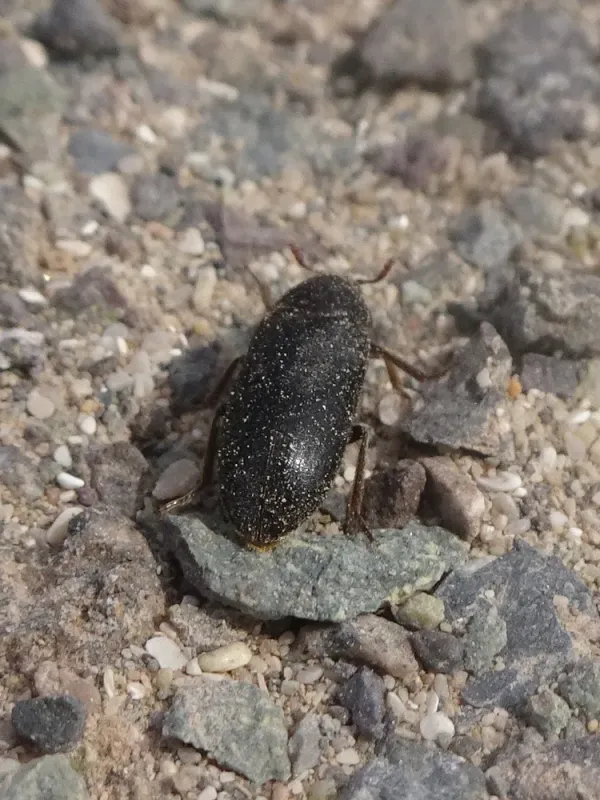
The Peruvian hide beetle (Dermestes peruvianus) is a member of the family Dermestidae within the order Coleoptera. Adult beetles typically measure between 6 and 10 millimeters in length.
The body of the adult beetle is oval-shaped and dark brown or black in color. The elytra are covered in fine, dense hairs, giving the insect a matte appearance.
The larvae are distinct from the adults, possessing an elongated, bristly, and dark-colored body. The larval stage is the primary feeding phase, during which the insect causes significant structural and material damage.
The life cycle consists of complete metamorphosis, comprising egg, larva, pupa, and adult stages. Under favorable conditions, the life cycle is rapid, allowing for multiple generations per year.
These beetles are well-adapted to indoor environments, where they thrive in stored products, food warehouses, and areas with accumulated organic debris.
What it damages
While the Peruvian hide beetle is primarily associated with animal-based products, it is a significant pest in warehouses where it can infest grain mixtures, especially if they are contaminated with organic materials.
The damage is caused by both larvae and adults consuming the products and contaminating the surrounding stock with frass, larval skins, and insect fragments.
The beetles and their larvae are known to chew through various packaging materials, including plastic and cardboard, which exposes the contents to further contamination by mold and other pests.
In the agricultural sector, the presence of these beetles can lead to the condemnation of entire grain or seed lots due to health and sanitation regulations regarding pest contamination.
Constant feeding activity in confined storage spaces can lead to severe financial losses if the population is not detected and controlled at an early stage.
Signs of infestation
The most evident sign of infestation is the presence of adult beetles crawling on floors, walls, or near storage containers, particularly during the evening hours.
Finding shed larval skins (exuviae) is a diagnostic indicator of an active breeding population, as these skins accumulate where the larvae develop.
Small, irregular holes in product packaging are typical signs of larval penetration, indicating that the insects have gained access to the food source inside.
The presence of fine, dust-like powder mixed with larval excrement within the stored material is a clear indication that the insects have been feeding for an extended period.
An unusual, musty odor in a storage area often correlates with large populations of dermestid beetles and the breakdown of organic material within the facility.
Control measures
Effective control begins with rigorous warehouse hygiene, including the removal of dust, grain spills, and any animal remnants that provide a food source.
Maintaining low humidity and cool temperatures within storage facilities is essential to discourage the development and rapid reproduction of the beetle population.
Pheromone traps serve as an excellent monitoring tool, allowing facility managers to track beetle activity and identify the source of the infestation early.
In cases of severe infestation, professional fumigation or the use of approved residual insecticides is necessary to eliminate the pest from hidden breeding sites.
- Seal all structural cracks and crevices where insects might hide or breed.
- Use pest-resistant, durable packaging materials for long-term storage.
- Implement regular inspections of stored goods, focusing on dark, undisturbed corners.
Taxonomy
- Latin name
- Dermestes peruvianus
- Order
- Coleoptera (beetles)
- Family
- Dermestidae
- EPPO code
- DERMPE
Discussion
No discussions yet — be the first.