
Larder beetle
Dermestes murinus
Description
How to identify
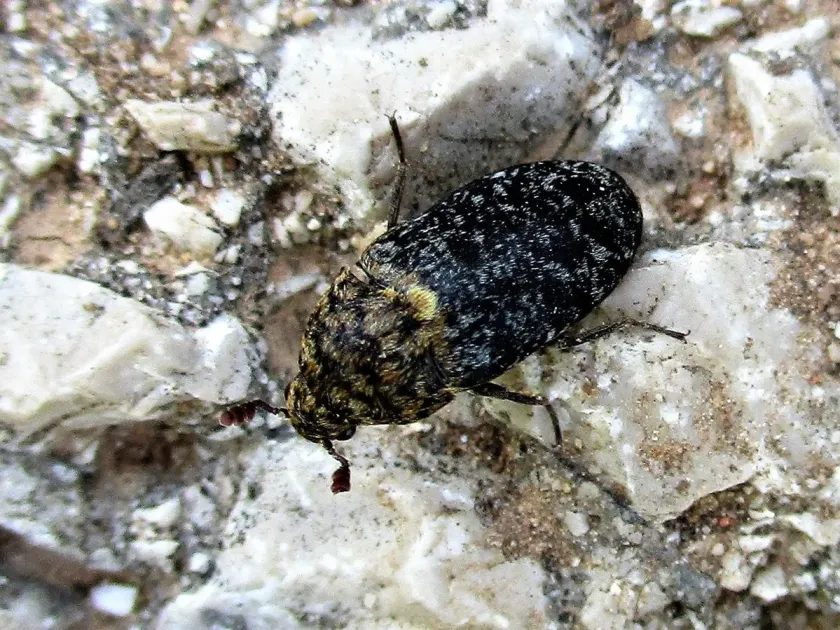
The Larder beetle (Dermestes murinus) is a member of the Dermestidae family, belonging to the order Coleoptera. Adult beetles measure between 7 and 10 mm in length and are covered in dense black and gray hairs, which form a distinct mottled pattern on their back.
The larvae of this pest are spindle-shaped and highly mobile, covered with long setae. As they grow, larvae pass through several instars, becoming more active and capable of penetrating deep into stored food items or animal-derived products.
Adults possess well-developed sensory organs, allowing them to locate food sources over significant distances. While primarily active during the day, they often seek shelter within substrates when disturbed or during periods of low activity.
The life cycle encompasses egg, larva, pupa, and adult stages. Depending on environmental factors such as temperature and humidity, the development of one generation can range from several months to a full year.
In nature, these beetles are common inhabitants of bird nests, rodent burrows, and carcasses. They act as natural scavengers, but they become destructive pests once they enter human storage facilities.
What it damages
The primary damage is caused by the larvae, which possess robust mandibles for chewing. They feed predominantly on protein-rich animal materials, including dried fish, cured meats, leather, hides, wool, and taxidermy specimens.
In agricultural and food processing facilities, the Larder beetle can infest stored grains, flour, and animal feeds if these materials are contaminated with animal-based ingredients or insect remains.
Beyond the direct consumption of products, the beetles contaminate them with frass (excrement) and cast-off larval skins, rendering the goods unacceptable for trade and human or animal consumption.
Significant economic losses occur in warehouses storing raw materials like hides, feathers, or biological collections, as the larvae can quickly destroy these items if left unchecked.
Due to the cryptic nature of the larvae, infestations often go unnoticed in the early stages, allowing the population to proliferate in hidden crevices, making detection difficult until visible damage occurs.
When it appears
In heated buildings or climate-controlled warehouses, the Larder beetle can maintain a continuous life cycle year-round, provided the temperature remains favorable for their development.
In unheated environments, adult activity peaks during the spring and summer months, as beetles engage in flight to seek new breeding sites and food sources.
In the autumn, insects often migrate in search of protected overwintering sites, which increases the likelihood of infestations entering buildings during this seasonal transition.
The optimal temperature for development is between 20°C and 25°C; however, temperatures significantly outside this range will slow down larval metabolism and development.
High humidity levels can facilitate the growth of molds, which may serve as an additional food source for larvae, indirectly supporting larger populations in damp environments.
Signs of infestation
The first indication of an infestation is typically the appearance of irregular holes in leather, wool, or fur products, often accompanied by fine dust or debris underneath the damaged items.
Upon inspecting storage areas, one may find shed larval skins (exuviae), which are yellow-brown in color and accumulate in areas where larvae are actively feeding.
Adult beetles are frequently spotted crawling on windowsills, near floor cracks, or on the surface of infested materials, especially on warm, sunny days.
A persistent, musty odor in storage rooms can also serve as an indicator of a heavy infestation, resulting from the accumulation of waste and frass in hidden spaces.
The use of sticky traps baited with pheromones or food attractants is a highly effective way to monitor for beetle presence and assess the severity of an infestation before it reaches critical levels.
Control measures
Sanitation is the most critical control measure. Regularly cleaning storage areas to remove dust, debris, and any spilled organic material is essential to prevent infestations.
Surface treatment with contact insecticides approved for food-storage areas can help control adult beetle populations and prevent the establishment of new colonies.
Thermal control methods, including heating infested items to 50–60°C or freezing them at low temperatures, are highly effective and environmentally safe ways to eliminate pests.
Exclusion strategies, such as sealing cracks and crevices, installing screens on vents, and managing rodent populations, are vital to prevent beetles from entering storage facilities.
- Implement a consistent monitoring program using pheromone traps.
- Schedule regular professional pest control inspections.
- Inspect all incoming raw materials and packaging for signs of infestation.
- Use fumigation for severe infestations in large volumes of stored commodities.
Taxonomy
- Latin name
- Dermestes murinus
- Order
- Coleoptera (beetles)
- Family
- Dermestidae
- EPPO code
- DERMMU
Discussion
No discussions yet — be the first.