
Larder beetle
Dermestes maculatus
Description
How to identify
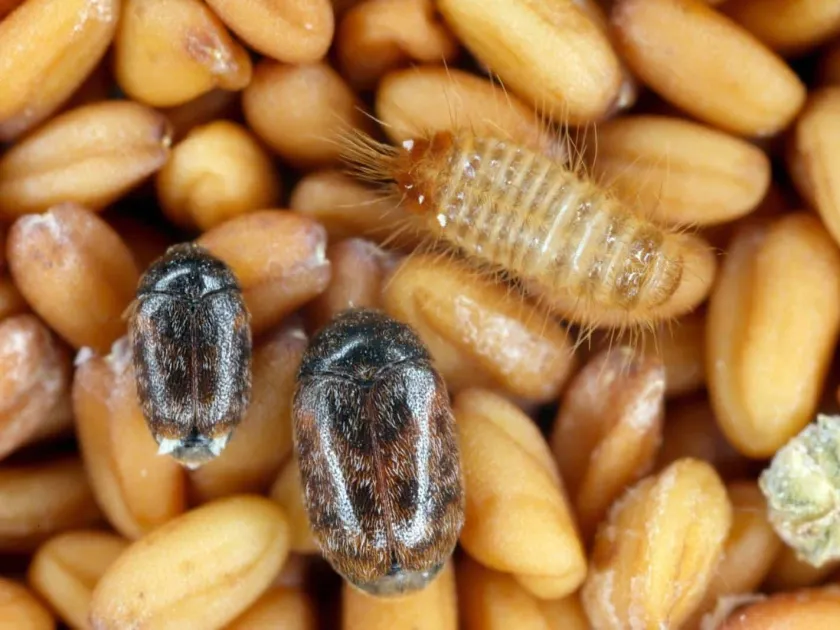
The larder beetle (Dermestes maculatus) belongs to the order Coleoptera and the family Dermestidae. Adult beetles are oval in shape, typically 6–10 mm long, and have a dark, almost black color with a fine, yellowish-white pubescence on the underside.
A distinctive feature of this species is the presence of a small tooth-like projection at the end of each elytron. Larvae are covered with long, dense hairs and possess characteristic sclerotized urogomphi on the last abdominal segment, aiding in movement.
The life cycle encompasses eggs, larvae (which go through several molts), pupae, and adults. Under optimal temperature conditions of 25–30 °C, the life cycle is completed within 40 to 50 days, and the adults are capable of flight.
Females lay eggs directly onto protein-rich substrates. A single female can produce up to 800 eggs throughout her lifespan, which allows the population to expand rapidly if conditions are favorable for development.
These insects are highly adaptable to different environments but thrive in warm, stable conditions with high organic content. They are most active in stored product facilities where proteins are readily available for larval development.
What it damages
The larder beetle is a primary pest of stored products of animal origin, including dried fish, cured meats, cheese, hides, furs, and animal-based feed products. They infest warehouses where such materials are stored for extended periods.
The damage is caused primarily by the larvae, which burrow into the products to feed. Beyond feeding, the larvae can damage non-food items, such as wood, insulation, or packing materials, by boring into them to create pupation chambers.
The presence of larder beetles leads to significant economic loss due to direct product consumption and contamination. Their shed skins, feces, and hair remnants can render products unfit for human or animal consumption.
In addition to food spoilage, the beetle population can cause respiratory or skin irritation for workers due to the airborne larval hairs, which are shed during the development process and can accumulate in dust.
While not a field pest, their presence in agriculture facilities is usually a sign of poor sanitation or improper management of agricultural waste, such as carcasses or organic debris near storage areas.
Signs of infestation
The most common sign of an infestation is the discovery of irregular, bored holes in infested goods. Accumulated larval cast skins found in corners, crevices, or near storage containers are also strong indicators.
Adult beetles are often seen scurrying across surfaces or near light sources. Their activity is higher in areas where food residues are left exposed, making monitoring in these spots highly effective.
Damaged wood or packaging surfaces that show small, round entry holes indicate that larvae have moved to these areas for pupation. These holes are often overlooked until the adult beetles emerge from the material.
A foul, organic odor often characterizes areas with massive larder beetle populations, resulting from the accumulation of frass and decomposing organic matter within the storage space.
Sticky traps and pheromone-based monitors are essential tools for early detection. Regular physical inspections of hidden spaces, such as wall voids and underneath equipment, are crucial for effective management.
Control measures
Sanitation is the most critical defense against larder beetles. Regularly cleaning the facility of spilled feed, animal debris, and dust removes the food sources necessary for larval survival and population growth.
Sealing cracks and crevices in floors and walls prevents larvae from finding suitable pupation sites. Maintaining a tidy warehouse environment significantly lowers the risk of an established infestation.
If an infestation occurs, professional fumigation or the application of residual insecticides may be necessary. It is important to select treatments that comply with safety regulations for food-handling environments.
Environmental control, such as lowering the temperature in storage areas, can slow the beetle's life cycle. Ensuring that stock is rotated on a first-in, first-out basis reduces the likelihood of long-term exposure to the pest.
- Regular warehouse sanitation and debris removal.
- Use of insect light traps and pheromone monitors.
- Structural sealing to prevent pupation.
- Proper storage and stock rotation protocols.
Taxonomy
- Latin name
- Dermestes maculatus
- Order
- Coleoptera (beetles)
- Family
- Dermestidae
- EPPO code
- DERMMA
Discussion
No discussions yet — be the first.