
Larder beetle
Dermestes lardarius
Description
How to identify
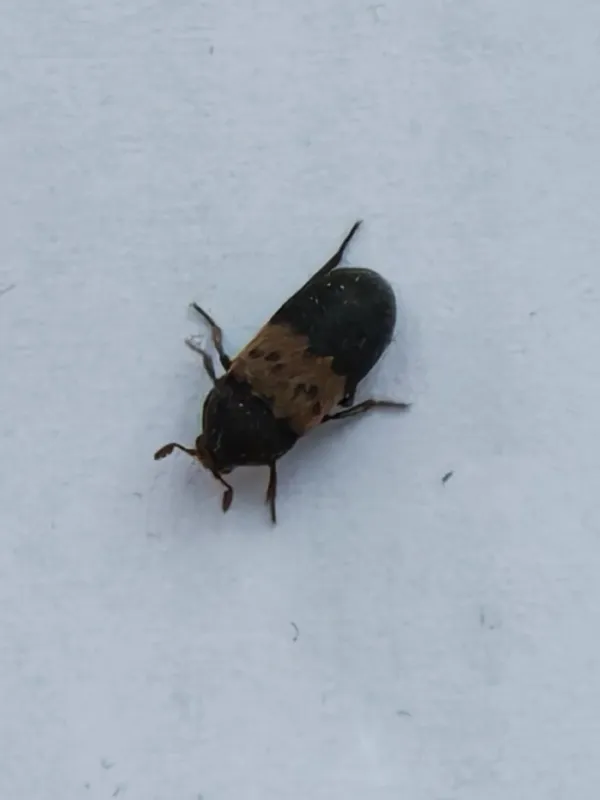
The larder beetle (Dermestes lardarius) belongs to the Dermestidae family, a group of beetles known for feeding on dried organic matter. The adult beetle is typically 7-9 mm long, with a dark brown to black coloration.
The most distinctive feature of the larder beetle is a pale, yellowish-grey band across the upper portion of its wing covers (elytra). This band is decorated with three small black dots on each side, making it easy to recognize.
Larvae of this species are hairy and brownish, reaching up to 15 mm in length. They are characterized by two distinct, curved, chitinous hooks known as urogomphi located at the posterior end of their body.
The life cycle undergoes complete metamorphosis, including egg, larva (5-8 stages), pupa, and adult. Under favorable conditions, the entire life cycle can be completed in less than two months.
Adult beetles are strong flyers and are often attracted to light, which helps them invade warehouses, homes, and food processing facilities to find suitable substrates for egg-laying.
What it damages
The larder beetle is a serious pest of stored products containing animal proteins. It attacks bacon, ham, cured meats, dried fish, cheese, and various pet foods made from meat or bone meal.
In addition to food items, these pests are known to damage non-food goods such as hides, furs, leather, feathers, and wool. They can cause severe damage to collections, including insect specimens and taxidermy.
Larvae cause the most damage by boring into the food source. They often create extensive tunnel systems that destroy the structural integrity of the product and leave it riddled with waste.
When ready to pupate, mature larvae are known to bore into hard materials, including wood, cork, or even thin insulation, which can cause secondary structural damage in storage facilities.
Large-scale infestations can lead to total loss of inventory, as contaminated products become heavily infested with larval skins, frass, and excrement, making them unfit for commerce or consumption.
Signs of infestation
The most common sign of an infestation is the presence of adult beetles crawling on surfaces, particularly near stored food, windowsills, or baseboards during the twilight hours.
The discovery of cast-off larval skins is a strong indicator of a breeding population. These light-brown skins often accumulate in corners, cracks, or along the edges of storage shelves.
Visible surface damage on food products, such as holes or hollowed-out sections, suggests that larvae are actively feeding within the product. This is often accompanied by a distinct, musty odor.
Damage to packaging, especially cardboard boxes or plastic films, is another sign. Larvae can chew through these materials to reach the nutrient-rich items stored inside.
In severe cases, you may find the larvae themselves or pupae within the commodity or in small holes bored into adjacent wooden supports, indicating an established infestation.
Control measures
Rigorous sanitation is the primary control measure. All storage areas should be kept clean, and any spilled feed or food scraps must be removed immediately to eliminate food sources.
Stored products should be inspected regularly and kept in tightly sealed containers made of metal or heavy-duty plastic to prevent the beetles from entering.
Temperature control is highly effective. Storing items at temperatures below 10°C (50°F) significantly slows down larval development, while freezing can kill all life stages of the pest.
Professional pest control services may use approved contact insecticides or fumigation techniques to treat cracks, crevices, and voids where beetles and larvae are likely to hide.
- Seal all structural gaps, cracks, and crevices in floors and walls.
- Install mesh screens on windows and ventilation points to block entry.
- Use sticky traps to monitor for beetle activity and identify the source of infestation.
Taxonomy
- Latin name
- Dermestes lardarius
- Order
- Coleoptera (beetles)
- Family
- Dermestidae
- EPPO code
- DERMLA
Discussion
No discussions yet — be the first.