
Dermestes frischi
Dermestes frischi
Description
How to identify
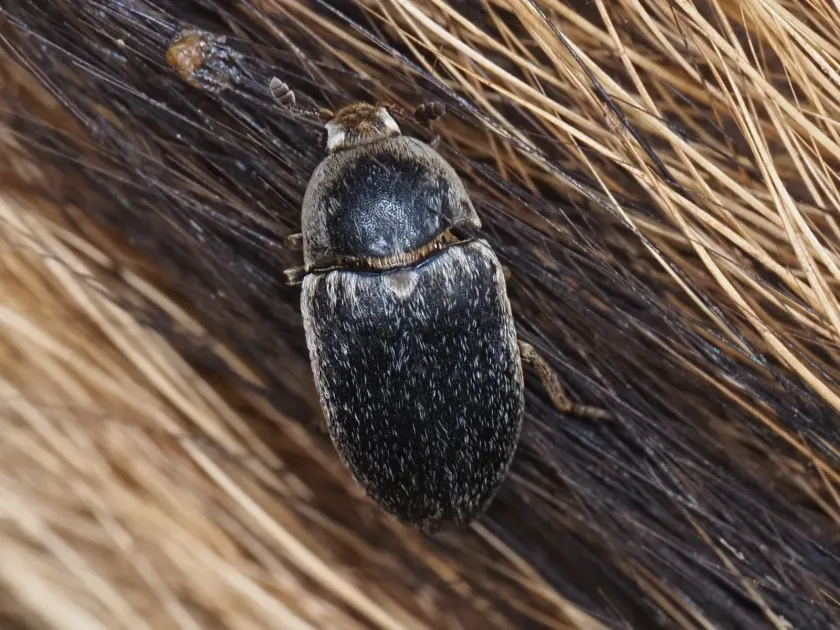
Dermestes frischi is a species of beetle belonging to the family Dermestidae, the order Coleoptera. Adult beetles are typically 6 to 10 mm long, with a robust, oval-shaped body that is dark brown to black in coloration.
The adults are characterized by a subtle light-colored pubescence along the sides of the pronotum, which provides a distinct identification mark when examined under magnification.
The larvae are covered with long, stiff, and dense brown bristles (setae), giving them a fuzzy appearance. They are highly active and mobile, which helps them navigate through complex stored product environments.
The life cycle involves complete metamorphosis, consisting of the egg, larva, pupa, and adult stages. Adults are strong fliers, which facilitates their quick dispersal throughout storage facilities.
This species is highly resilient, capable of thriving in low humidity and various temperature ranges, making it a persistent pest in grain elevators, museums, and food warehouses.
What it damages
Dermestes frischi is a polyphagous pest that primarily infests stored animal-based materials, including hides, furs, dried meat, fish meal, and various protein-rich dry food products.
In grain facilities, they often congregate in areas containing dust, spilled grain, and other organic debris. While they are scavengers by nature, they can cause significant damage to packaging materials during their search for food.
Larvae are notorious for boring through plastic films, burlap sacks, and paper packaging, which compromises the integrity of the stored goods and exposes them to further contamination.
Feeding damage is often accompanied by the accumulation of larval cast skins, frass (excrement), and body fragments, which significantly degrade the quality and market value of the infested products.
In industrial settings, the beetles can settle in inaccessible structural gaps or machinery, creating hidden breeding reservoirs that are extremely difficult to eradicate without professional intervention.
When it appears
In heated environments such as commercial warehouses, Dermestes frischi can maintain a continuous life cycle, breeding year-round if food sources remain available and temperatures stay favorable.
Peak breeding activity typically occurs during the warmer months, when rising temperatures increase metabolic rates and encourage adult beetles to disperse and seek new oviposition sites.
In unheated warehouses, development may slow down or enter a state of quiescence during the winter, though larvae and pupae often remain viable even in cool conditions, ready to resume activity as soon as the weather warms.
The number of generations per year is highly dependent on environmental factors, with optimal conditions allowing for several rapid generations within a single season.
Adult dispersal is most notable during late spring and summer, as increased mobility allows the beetles to colonize new areas, often migrating from outdoor waste sites into stored product facilities.
Signs of infestation
The presence of Dermestes frischi is often first noticed by the discovery of small, ragged holes in packaging materials, indicating that larvae have successfully penetrated the container.
Observation of larval cast skins (exuviae) in corners, crevices, or under storage pallets is a primary indicator of an established and growing population within a facility.
Direct sightings of the fuzzy-looking larvae or the dark-colored adult beetles in dust or near food supplies provide definitive evidence of an active infestation.
A musty or offensive odor emanating from storage areas often accompanies heavy infestations, resulting from the accumulation of waste products and decomposition of damaged organic materials.
Seeing adult beetles on walls, window ledges, or near light sources during the day suggests that the population density is high and that immediate control measures are necessary.
Control measures
The most effective strategy for managing Dermestes frischi is strict sanitation, including the regular removal of dust, grain spills, and dead insects that provide food and harborages for the larvae.
Monitoring using pheromone-baited traps or adhesive boards is essential for detecting the presence of the pest early, allowing for targeted interventions before a full-scale infestation occurs.
Chemical control usually involves the application of residual insecticides to empty storage structures, crevices, and voids where the pests may hide, ensuring a clean environment before new stock arrives.
For already infested goods, professional fumigation is often required to eliminate all life stages of the pest, ensuring that the infestation is cleared from both the product and the packaging.
- Maintain a dry, cool storage environment to limit the beetle's reproductive potential.
- Use high-quality, pest-resistant packaging to prevent larvae from penetrating food supplies.
- Implement an Integrated Pest Management (IPM) program that emphasizes exclusion and rapid sanitation.
Taxonomy
- Latin name
- Dermestes frischi
- Order
- Coleoptera (beetles)
- Family
- Dermestidae
- EPPO code
- DERMFR
Discussion
No discussions yet — be the first.