
Dermestes bicolor
Dermestes bicolor
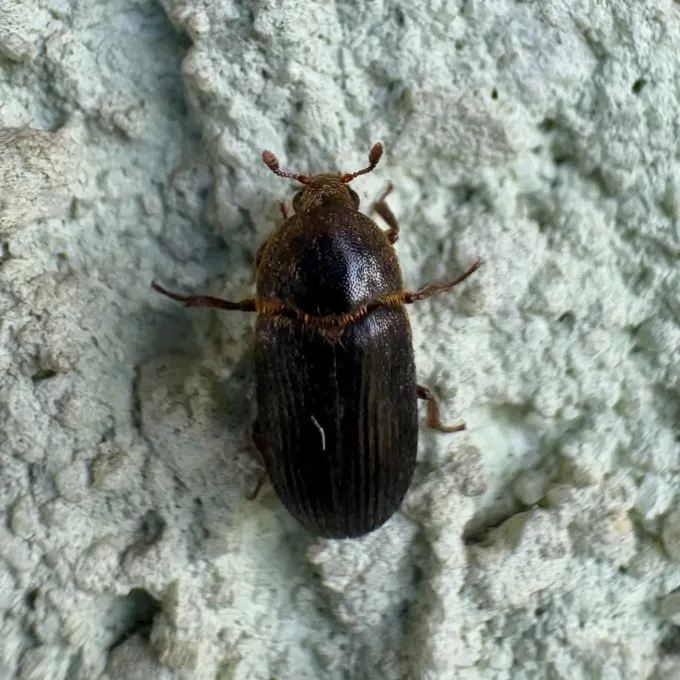
Description
How to identify
Dermestes bicolor is a species of beetle belonging to the family Dermestidae. These beetles are commonly known for their role as pests of stored animal-derived products.
Adult beetles typically reach a length of 7 to 9 mm. Their body is covered with dense hairs, and they exhibit a distinct color pattern with lighter areas on the elytra, which helps in field identification.
The larvae are highly mobile and characterized by a brownish color covered in long, dense bristles, giving them a fuzzy appearance often referred to as "woolly bears."
They thrive in environments rich in organic matter, such as bird nests, animal carcasses, or warehouses storing hides, furs, and protein-rich food items.
The lifecycle follows complete metamorphosis: egg, larva, pupa, and adult. The developmental rate is highly influenced by temperature and humidity levels.
What it damages
Dermestes bicolor is a serious pest of stored commodities including dried meat, fish, skins, furs, and wool products, causing significant economic damage.
In industrial settings, they frequently infest animal feed stocks, particularly those high in protein content, such as bone meal or fish meal, rendering them unsuitable for use.
Although they are not primary pests of cereal grains, they are often found in grain storage facilities where they feed on dead insect remains and organic debris.
The damage is primarily caused by larval feeding, as they bore deep into the product, leaving behind extensive tunnels and significant amounts of frass.
The presence of these beetles degrades the quality of goods and raises serious hygiene concerns, often leading to total loss of inventory in affected areas.
When it appears
Adults are most active during warmer months, which is when they typically migrate to seek out new breeding sites, including birds' nests under roofs or inside buildings.
In climate-controlled warehouses or heated residential buildings, the beetle can maintain its activity throughout the entire year, avoiding seasonal dormancy.
Optimal development typically occurs at temperatures around 25°C. Under these conditions, the lifecycle can be completed within a few months, allowing for rapid population growth.
As temperatures drop, the beetles tend to seek shelter in cracks, crevices, or structural gaps, where they may remain inactive until favorable conditions return.
Summer months often see an increase in sightings as beetles disperse, which is the critical time for implementing preventative monitoring measures.
Signs of infestation
Infestation is often first noticed by the presence of small, irregular holes or bore-holes in stored skins, furs, or dried animal products.
The presence of shed larval skins (exuviae) is a primary indicator of larval development and an active infestation within a particular storage space.
Accumulation of "dust" or fine powder beneath shelves and near baseboards signifies that larvae have been actively feeding and breaking down the substrate.
Adult beetles are frequently observed near light sources or windows, as they are attracted to light during their dispersal and mating phases.
A musty or offensive odor emanating from stored goods can sometimes indicate a significant buildup of larvae and their waste products within the material.
Control measures
Sanitation is the most critical control measure. This includes the removal of organic debris, dust, and discarded products from all corners of the warehouse.
Regular inspection and removal of bird nests from building exteriors is essential, as these serve as reservoirs for future infestation.
Chemical control using residual insecticides on surfaces and within wall voids can be effective when combined with proper cleaning protocols.
Storing susceptible products in hermetically sealed containers or in cold storage environments can effectively prevent colonization by Dermestes species.
- Regular vacuuming of storage areas to remove hidden organic matter.
- Installing physical barriers like fine-mesh screens on vents.
- Using pheromone traps to monitor adult beetle activity levels.
- Professional fumigation if the infestation has reached a critical stage.
Taxonomy
- Latin name
- Dermestes bicolor
- Order
- Coleoptera (beetles)
- Family
- Dermestidae
- EPPO code
- DERMBI
Discussion
No discussions yet — be the first.