
Larder beetle
Dermestes
Description
How to identify
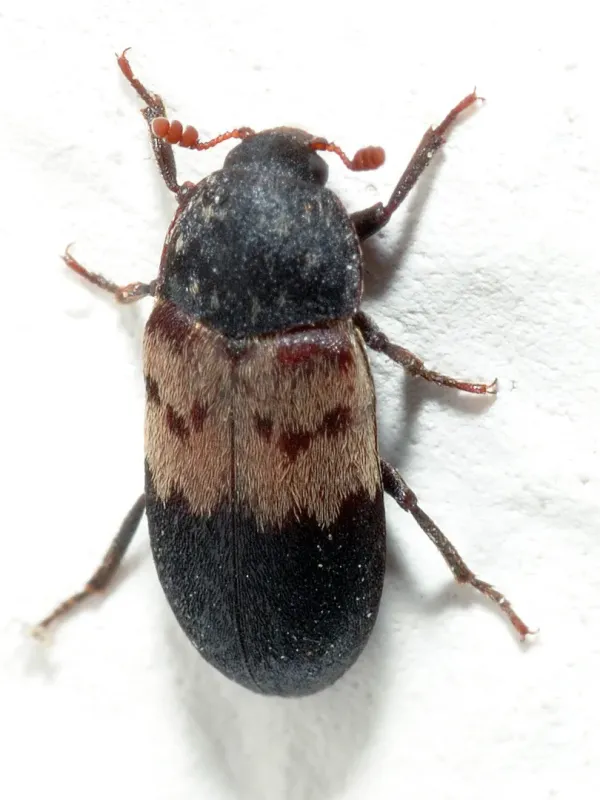
Larder beetles belong to the order Coleoptera and the family Dermestidae. Adult beetles typically have an oval or elongated body, measuring 3 to 10 mm in length, usually colored in dark, brown, or black tones, often with a patterned appearance due to fine hairs.
Larvae are more easily recognizable than adults: they have an elongated body covered with dense tufts of stiff, dark hairs, giving them a bristly appearance. The life cycle involves complete metamorphosis: egg, larva, pupa, and adult.
The reproduction rate of the larder beetle depends directly on environmental temperature and humidity. Under optimal conditions (20–30°C), a single female can lay up to a hundred eggs, preferring hidden, difficult-to-access locations.
The larvae demonstrate high survivability and are capable of surviving for long periods without food, which makes them extremely dangerous for warehouses. Activity can occur year-round if the storage facilities are heated.
It is important to distinguish between various Dermestes species, such as the common larder beetle (Dermestes lardarius), as their food preferences may vary slightly, although the general principles of control remain consistent.
What it damages
The primary food source for larder beetles is animal-based products rich in protein and keratin. These include leather, fur, wool, dried meat, fish, as well as entomological collections and taxidermy specimens.
In agricultural warehouses, the pest often damages grain products, flour, and animal feed, especially if these items contain animal-derived additives or traces of other insect activity. Damaged products become unfit for commercial use.
In grain storage facilities, larder beetles can penetrate bags and packaging, chewing through materials, which leads to secondary infestation by microorganisms and mold. Because of their feeding habits, they are often considered secondary pests.
The pest is dangerous not only because it destroys stock but also because it degrades warehouse infrastructure: wooden structures, packaging made of natural materials, and even equipment insulation if it contains organic components.
Mass reproduction of larder beetles in a facility leads to significant economic losses, spoilage of product quality, and the need for complete disinfestation, which causes operational downtime and financial damage.
Signs of infestation
A primary indicator of infestation is the presence of specific larval skins (exuviae), which are shed during the molting process. Finding these on the floor or near shelving is a strong signal of pest activity.
A characteristic sign of larval activity is the presence of hollowed-out sections in food products, accompanied by frass (excrement) that looks like a fine, dark powder. In cases of severe infestation, materials may crumble completely.
Adult beetles are active near light sources and are frequently noticed on windowsills or around light fixtures. The appearance of adults often indicates a large population of larvae developing in hidden spots.
Damaged packaging or sacks often show ragged, torn holes chewed by larvae while searching for food. A distinct, musty odor may also develop, indicating the decomposition of organic residues.
Inspecting inaccessible areas, such as subflooring, cracks in the floor, spaces behind baseboards, and ventilation shafts, often allows for the identification of the breeding hotspot where larvae and pupae congregate.
Control measures
The fundamental method of control is strict adherence to warehouse sanitation standards. Regular wet cleaning using disinfectants is essential to prevent the accumulation of dust and organic residues that provide food for larvae.
An effective control method involves the use of specialized contact-action insecticides. Warehouse treatment should be conducted during periods when products are absent or via aerosol dispersal in empty storage rooms.
For population monitoring, pheromone traps or adhesive indicators are recommended. They allow for the early detection of pest entry, enabling intervention before significant damage occurs.
Thermal treatment (heating products to critical temperatures) is an environmentally safe method for destroying eggs and larvae in grain masses or in warehouses with finished products where chemical use is restricted.
- Sealing all cracks and crevices in the building.
- Conducting regular quarantine inspections of all incoming raw materials.
- Maintaining low humidity levels within storage areas.
- Properly disposing of all infested product batches through burning or deep burial.
Taxonomy
- Latin name
- Dermestes
- Order
- Coleoptera (beetles)
- Family
- Dermestidae
- EPPO code
- DERMSP
Discussion
No discussions yet — be the first.