
Khapra beetle (Attagenus smirnovi)
Attagenus smirnovi
Description
How to identify
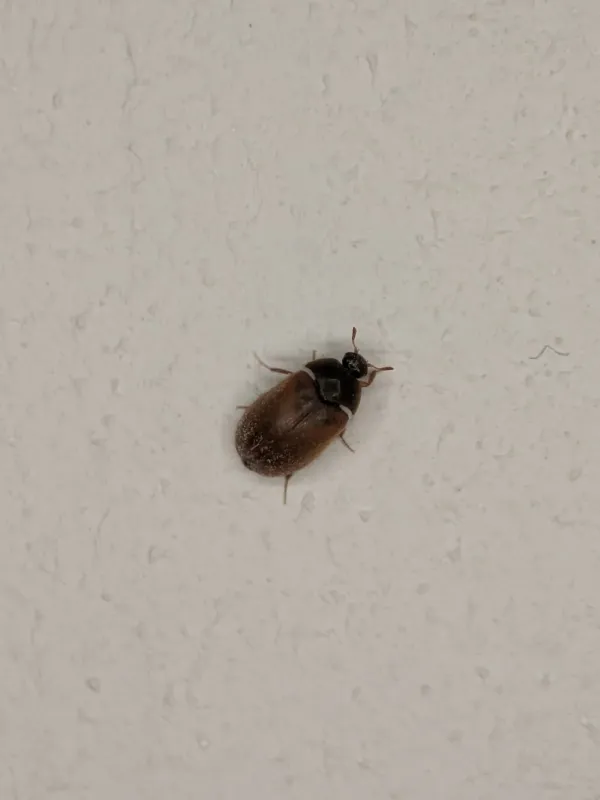
Attagenus smirnovi, commonly known as the Smirnov beetle, is a small beetle belonging to the Dermestidae family. Adult beetles are about 3 mm long with a distinct oval shape and a dark brown or blackish color.
The larvae of this species are elongated and covered in thick, bristly hairs, giving them a fuzzy appearance. They are highly active and go through several molting stages, leaving behind shed skins as a clear indicator of their presence.
The life cycle encompasses four stages: egg, larva, pupa, and adult. This insect is highly adapted to indoor environments with stable heating, which allows it to reproduce throughout the year, unlike species that rely on seasonal cycles.
These beetles are primarily nocturnal or secretive, preferring to live in dark, undisturbed areas. They are frequently found in cracks, wall voids, and deep inside stored goods where they can remain undetected for long periods.
Their biological resilience makes them particularly successful in colonizing human dwellings and storage facilities. A single female can lay numerous eggs directly into a food source, ensuring the larvae have immediate access to nutrients.
What it damages
The larvae are the primary cause of damage due to their strong mandibles and specialized diet. They feed on materials containing keratin, including wool, fur, leather, feathers, and dried protein-rich food items.
In storage warehouses, they are major pests for grains, cereals, flour, and dried fruits. They tunnel into packaging and consume the product from within, often leaving only empty husks or debris behind.
Beyond direct consumption, the beetles contaminate products with their excrement and cast skins. This makes the affected goods unsuitable for consumption or commercial sale, leading to significant financial losses for producers.
The damage is cumulative; as the population grows, the destruction spreads rapidly through stacks of goods. Because the larvae can hide deep within materials, manual inspection of every individual item is often required to assess the full extent of the damage.
Their ability to survive on very low moisture levels allows them to thrive in warehouse conditions that might be unsuitable for other common storage pests, further complicating management efforts.
Signs of infestation
The most common sign of an infestation is the presence of adult beetles near windows or light sources, as they are attracted to light. Their appearance is a strong indicator of an established colony nearby.
The presence of shed larval skins (exuviae) in hidden corners, behind furniture, or among stored fabrics is a definitive sign of activity. These skins often accumulate in the areas where the larvae have been feeding.
Physical damage to fabrics typically appears as irregular holes or thin, worn-out patches where the fibers have been consumed. In food products, the presence of powdery frass or clumping indicates larval feeding.
A musty or stale odor in storage rooms can often be traced back to a high concentration of larvae and their waste products. If food packaging shows tiny exit holes, it is almost certainly a sign of an ongoing infestation.
Regular monitoring of dark, enclosed spaces using traps can help identify infestations early before they spread to other parts of the storage facility or home.
Control measures
The first step in control is thorough mechanical sanitation. Vacuuming all cracks, crevices, and storage areas is essential to remove larvae, eggs, and food debris that sustain the population.
Insecticides specifically labeled for use against dermestids can be applied to infested areas. Contact sprays or dusts used in wall voids or along baseboards provide residual protection against adult beetles.
Prevention involves sealing all vulnerable goods in airtight plastic containers. This simple measure prevents adult beetles from accessing food sources and prevents larvae from spreading to clean items.
For sensitive items, extreme temperatures are highly effective. Freezing infested materials for several days or applying controlled heat can kill all life stages of the beetle without the need for chemical treatment.
In cases of severe warehouse infestations, professional fumigation is recommended. Professional services can reach hidden areas that manual cleaning cannot, ensuring the complete elimination of the pest population.
Taxonomy
- Latin name
- Attagenus smirnovi
- Order
- Coleoptera (beetles)
- Family
- Dermestidae
- EPPO code
- ATTGSM
Discussion
No discussions yet — be the first.