
Red-winged carpet beetle
Attagenus rufipennis
Description
How to identify
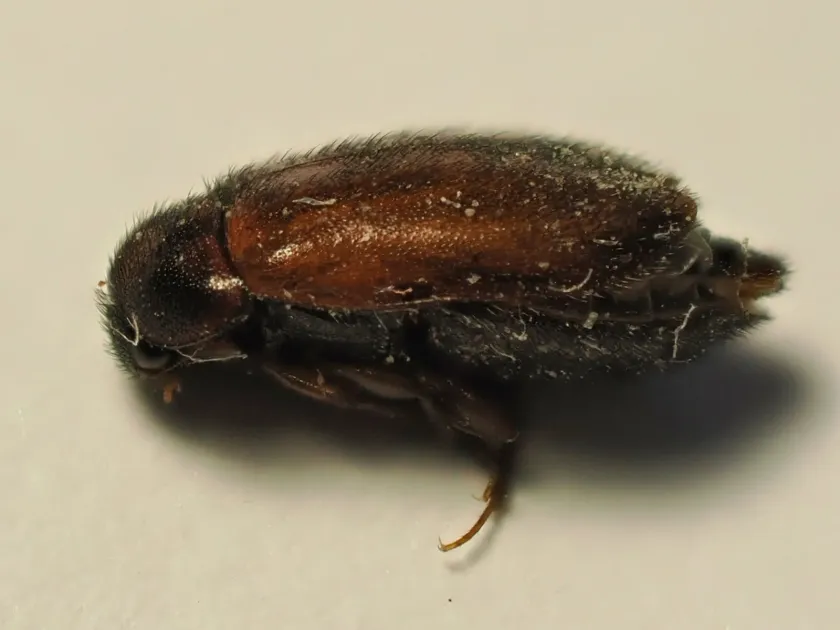
The red-winged carpet beetle (Attagenus rufipennis) belongs to the order Coleoptera and the family Dermestidae. Adult beetles are small, oval-shaped insects typically measuring between 3 to 5 mm in length.
The body is covered with fine hairs, and the coloration ranges from dark brown to almost black, with the defining feature being the reddish-brown or rust-colored elytra, which provides its common name.
Larvae are elongated and covered with dense hairs, featuring a characteristic tuft of long bristles at the posterior end, often called a tail brush. They are highly active and typically inhabit dark, secluded areas.
The life cycle progresses through four stages: egg, larva, pupa, and adult. Adult beetles are capable of flight, which aids in the rapid colonization of various storage facilities.
Optimal conditions for reproduction include temperatures above 20-25 degrees Celsius and the presence of dry organic debris, which is common in grain stores and food processing plants.
What it damages
The red-winged carpet beetle is a significant pest of stored products. It primarily targets dry materials of plant and animal origin found in warehouses and domestic settings.
Damage is mainly caused by the larvae, which feed on cereals, flour, grains, animal feed, as well as dried fruits, vegetables, and oilseeds.
Within grain storage facilities, the beetle can consume the germ of the seed, which severely reduces seed viability and germinability, rendering the batch unfit for planting purposes.
Besides plant-based food, this species can damage textiles, including leather, wool, fur, and insect collections, making it a threat to the light industry and museums.
Infested materials become contaminated with feces, cast larval skins, and insect remains, causing spoilage and making the product unsuitable for human or animal consumption.
Signs of infestation
The primary sign of infestation is the physical presence of adult beetles on surfaces such as walls, window sills, or inside bags containing stored goods.
In stored products, one can find discarded larval skins, which give the material a dusty or cluttered appearance upon inspection.
Damaged grains often show visible excavations and chewed areas, while in flour or cereals, dense clumps formed by larval silk may be observed.
Under heavy infestation, the storage area may develop a specific unpleasant odor resulting from larval excrement and the decay of damaged organic material.
The discovery of pupae in crevices, floor gaps, or seams of storage bags is a clear indicator that the population is actively breeding within the facility.
Control measures
The foundation of effective control is strict sanitation within the facility, which includes regular cleaning and the removal of dust and organic debris from all inaccessible nooks.
Maintaining temperature and moisture control is essential, as lower temperatures and reduced humidity significantly inhibit the development and reproduction of these beetles.
Fumigation of the storage facility or specific grain batches using approved and regulated insecticides is a standard professional method for managing large-scale infestations.
The use of pheromone or sticky traps helps in the early detection of the pest, allowing for monitoring of adult populations during their peak activity periods.
- Sealing all cracks and crevices in storage infrastructure.
- Using high-quality, pest-proof packaging materials for storage.
- Preventive disinfestation of empty warehouses before receiving new harvests.
Taxonomy
- Latin name
- Attagenus rufipennis
- Order
- Coleoptera (beetles)
- Family
- Dermestidae
- EPPO code
- ATTGRU
Discussion
No discussions yet — be the first.