
Varied carpet beetle
Attagenus pellio
Description
How to identify
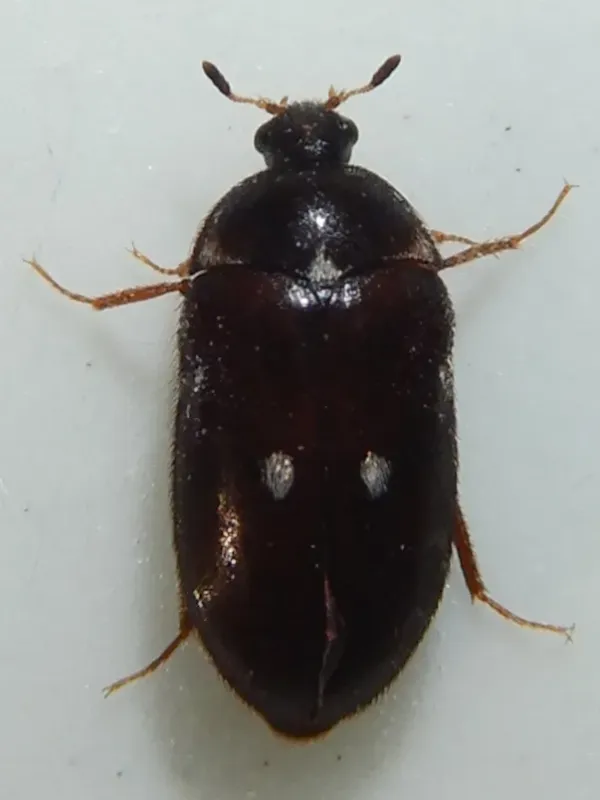
The Varied carpet beetle (Attagenus pellio) is a member of the family Dermestidae within the order Coleoptera. The adult beetle is small, measuring 4–6 mm in length, with a convex, oval body covered in dark scales.
A distinctive feature of this species is the presence of two white spots on the elytra, located near the base. The head is small and tucked into the pronotum, with characteristic clubbed antennae.
The larvae are up to 10 mm long, reddish-brown in color, and densely covered with hairs. A prominent tuft of long, stiff hairs at the posterior end of the body is a key diagnostic feature.
The species undergoes a complete metamorphosis: egg, larva, pupa, and adult. In heated indoor environments, the lifecycle takes approximately one year, enabling continuous reproduction.
Females lay up to 100 eggs in secluded areas such as floor gaps, fabric folds, or fur crevices, ensuring the larvae have immediate access to food upon hatching.
What it damages
This beetle is a serious pest of stored products, specifically those of animal origin. The larvae are keratin feeders and prefer natural fur, wool, leather, felt, and silk.
Industrial storage facilities for raw materials and textile warehouses often suffer significant economic losses due to larval feeding, which ruins large quantities of stock.
In museums and private collections, these pests pose a threat to taxidermy specimens, insect collections, and bookbindings containing animal glue or leather.
While they primarily target keratin, larvae can occasionally consume stored grain, dry fruits, and other organic matter if their preferred food source is unavailable.
Damage usually manifests as irregular holes, patchy thinning of fabrics, or completely destroyed surfaces of leather goods, rendering them unsalvageable.
When it appears
Adult beetles are most active during the spring and summer, which corresponds to their mating season. During this time, they are frequently spotted near windows and light sources.
The larval stage is the most destructive and occurs year-round under stable indoor temperatures, leading to continuous damage throughout the calendar year.
Warmer temperatures above 20°C enhance larval metabolism, leading to faster growth rates and more intensive feeding patterns during the summer months.
In autumn, adult beetles may migrate to find suitable overwintering sites, making this a critical period for inspection and preventive measures.
High humidity combined with poor ventilation promotes fungal growth, which further attracts these beetles to contaminated areas of storage facilities.
Signs of infestation
The presence of these pests is typically identified by visible damage to susceptible items: bare patches in fur, small holes in garments, or eaten edges on leather.
In infested areas, you will find cast-off larval skins (exuviae) resulting from molting, as well as fine, granular frass (excrement) that looks like dark powder.
- Adult beetles visible on windowsills.
- Irregular holes in natural fiber fabrics.
- Concentration of larvae in dark corners or floor cracks.
- Empty larval skins left behind after molting.
- Dark, granular excrement deposits on stored goods.
Control measures
The primary control measure is stringent sanitation, which includes regular vacuuming to remove organic debris, dust, and lint from corners, carpets, and floor crevices.
Freezing affected items or storing them in unheated areas during winter can effectively kill all developmental stages, as they are susceptible to prolonged exposure to cold.
For significant infestations in warehouses, professional contact insecticides or fumigation treatments are necessary to ensure the elimination of hidden larval populations.
Storing susceptible goods in airtight containers or protective plastic covers prevents adult beetles from accessing these materials to lay eggs.
Using sticky pheromone traps allows for early detection of adult populations, enabling prompt intervention before the pest can establish a major colony.
Taxonomy
- Latin name
- Attagenus pellio
- Order
- Coleoptera (beetles)
- Family
- Dermestidae
- EPPO code
- ATTGPE
Discussion
No discussions yet — be the first.