
Attagenus elongatulus
Attagenus elongatulus
Description
How to identify
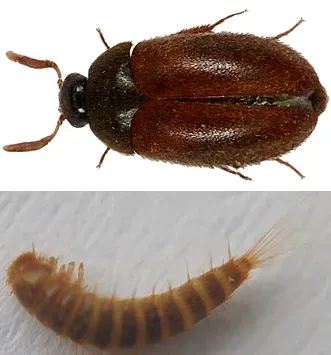
Attagenus elongatulus is a species of beetle belonging to the family Dermestidae (skin beetles) and the order Coleoptera. Adult beetles are small, typically measuring 3–5 mm in length, with an elongated oval shape and a dark brown or blackish color.
The larvae are highly characteristic, covered with dense, stiff brownish hairs and featuring a distinct tuft of longer bristles at the posterior end of their body, often resembling a small tail.
These insects undergo complete metamorphosis (egg, larva, pupa, adult), allowing them to adapt efficiently to the stable, protected environments found in warehouses and food storage facilities.
They lead a cryptic lifestyle, preferring dark, secluded spaces such as cracks, floor crevices, and areas where organic debris accumulates, making them difficult to detect early.
The development time depends heavily on ambient temperature and moisture levels, with warm environments significantly accelerating their reproductive rate and potential to cause damage.
What it damages
The primary damage is inflicted by the larvae, which possess strong mandibles capable of consuming a wide variety of plant-based and animal-based products.
Commonly affected crops include stored wheat, corn, rice, barley, and various processed commodities such as flour, cereal products, and oilseeds kept in warehouse conditions.
Larvae consume the endosperm and germ of grains, which directly reduces both the nutritional quality of the product and its viability for germination if intended as seed.
Attagenus elongatulus is known for its ability to penetrate standard packaging materials like paper bags or thin plastics, facilitating cross-contamination throughout the entire storage site.
Beyond direct feeding, the accumulation of larval exuviae (shed skins), excreta, and fecal matter contaminates the grain mass, promoting the growth of molds and pathogenic bacteria.
Signs of infestation
A primary indicator of an infestation is the presence of numerous shed larval skins found near baseboards, in warehouse corners, or on the surface of grain stacks.
Close inspection of stored grains reveals kernels with irregular feeding marks, small exit holes, and the presence of fine powdery debris resulting from larval feeding activity.
The observation of adult beetles near light sources or on the exterior surfaces of grain piles during warmer months is a strong sign of an established breeding population.
An unusual, musty, or unpleasant odor emanating from the storage facility often indicates significant larval activity and the subsequent spoilage of stored organic materials.
Diagnostic screening of grain samples using standard sieve methods is the most reliable way to detect low-density populations of larvae before they cause extensive damage.
Control measures
Sanitation is the most critical preventative measure; keeping warehouse floors, walls, and equipment free of spilled grain and dust minimizes potential breeding sites for the beetles.
Chemical control usually involves fumigation with phosphine-based products, which are effective at penetrating bulk stored grain to eradicate all life stages of the insect.
In colder regions, cold storage or keeping facility temperatures consistently low can serve as a non-chemical method to suppress metabolic activity and prevent population explosions.
Sealing warehouses, using pest-proof containers, and installing mesh screens on ventilation systems are essential steps to prevent re-entry and movement of the pest.
Upon detection of an infestation, affected batches should be quarantined, cleaned via mechanical aspiration, or treated with contact insecticides to stop the spread to non-infested areas.
Taxonomy
- Latin name
- Attagenus elongatulus
- Order
- Coleoptera (beetles)
- Family
- Dermestidae
- EPPO code
- ATTGEL
Discussion
No discussions yet — be the first.