
Larder beetle (Attagenus)
Attagenus
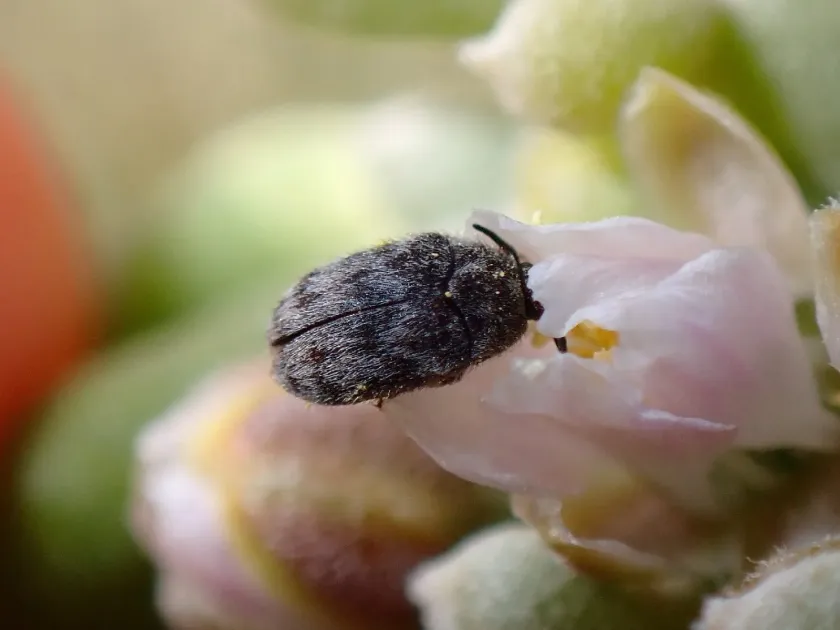
Description
How to identify
The genus Attagenus belongs to the family Dermestidae, widely known as skin beetles or larder beetles, which are notorious pests of stored organic materials.
Adult beetles are typically small, oval-shaped insects ranging from 3 to 6 mm in length, often covered with fine hairs or scales that create a patterned appearance.
The larvae are distinctively elongated, covered in dense, stiff hairs, and are often referred to as "woolly bears" due to their characteristic fuzzy look.
Their life cycle consists of complete metamorphosis: egg, larva, pupa, and adult, with the development time heavily influenced by temperature and food availability.
These insects are highly resilient, capable of surviving in adverse conditions and prolonged starvation, which makes them difficult to eradicate completely.
What it damages
Attagenus beetles cause significant economic damage by feeding on a wide variety of dried products, including grains, flour, cereals, and oilseeds.
In agricultural settings, they are particularly dangerous to seed storage, where larvae consume the germ of the seed, effectively destroying its viability.
Beyond plant-based products, they are known to damage textiles, leather, furs, and natural fiber items, posing a risk to both warehouse and household environments.
The larvae are capable of penetrating common storage containers, such as paper bags, cardboard boxes, and thin plastic films, to access stored reserves.
Damage is not limited to weight loss; infestation results in heavy contamination of the product with excrement, shed skins, and pupal cases, rendering the goods unmarketable.
Signs of infestation
The most common sign of an infestation is the presence of discarded larval skins found in corners, crevices, or near the base of storage bags.
Fine, dusty debris appearing around stored commodities is a reliable indicator of active larval feeding occurring within the product mass.
Small, irregular holes in packaging or damage to the surface of grain kernels indicate that larvae have been burrowing into the material.
Seeing adult beetles on windowsills or near light sources during the day is often an indication of a growing population in hidden areas of the building.
A musty odor in the storage area, combined with visible particulate matter, suggests that the population level has reached a significant, damaging threshold.
Control measures
Sanitation is the cornerstone of Attagenus control; keeping storage areas free of dust, debris, and spilled grain is essential to prevent infestations.
Regular inspections and the use of pheromone traps allow for early detection, enabling farmers and warehouse managers to take action before damage scales up.
Physical control methods, such as heat treatment of grain or deep freezing of infested areas, are highly effective against all life stages of the beetle.
Chemical control involving the application of residual insecticides in empty storage structures is recommended when a persistent infestation is detected.
- Seal all cracks and crevices in storage room floors and walls.
- Maintain low humidity levels (ideally below 12%) in storage zones.
- Rotate stocks on a "first-in, first-out" basis to prevent long-term colonization.
Taxonomy
- Latin name
- Attagenus
- Order
- Coleoptera (beetles)
- Family
- Dermestidae
- EPPO code
- ATTGSP
Discussion
No discussions yet — be the first.