
Varied carpet beetle
Anthrenus scrophulariae
Description
How to identify
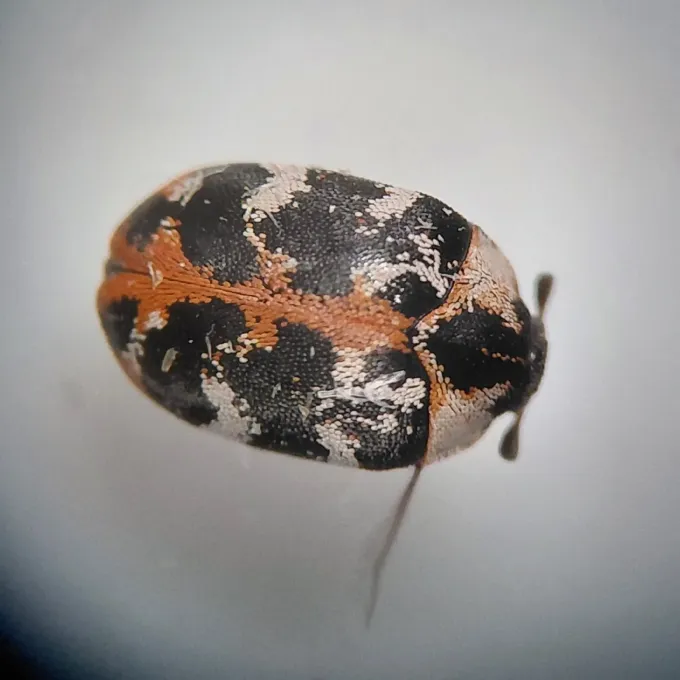
The varied carpet beetle (Anthrenus scrophulariae) is a member of the family Dermestidae. Adult beetles are small, oval-shaped, measuring 2.5 to 3.5 mm in length, and covered in scales that form a mottled pattern of white, black, and red.
Larvae are typically spindle-shaped, covered in thick brownish hairs, and reach about 4–5 mm in length. They are highly active and possess a robust chewing mouthpart designed for consuming tough biological materials.
The life cycle progresses through four stages: egg, larva, pupa, and adult. In indoor environments with stable temperatures, this cycle can repeat multiple times per year, leading to potential outbreaks in storage facilities.
Adult beetles are often found outdoors feeding on pollen and nectar, but they frequently enter buildings through windows or vents, where they proceed to lay eggs in sheltered, protein-rich environments.
The resilience of this species allows it to thrive in low-humidity conditions, making it a persistent and difficult pest to eradicate once it establishes a breeding colony in a warehouse or home.
What it damages
As a serious pest of stored animal products, the varied carpet beetle primarily causes damage during the larval stage. They consume keratin, which is found in hair, fur, skin, and various natural fibers.
They infest stored hides, leather goods, wool rugs, feather products, and stuffed animal specimens. In agricultural settings, they may damage animal feeds, dried meat, and processed fish products, rendering them commercially worthless.
The feeding activity of the larvae results in irregular holes, thinning of fabrics, or complete destruction of the structural integrity of natural materials. Even synthetic fabrics can be damaged if they are soiled with food residues or oils.
Secondary damage occurs through the accumulation of larval skins (exuviae) and frass (waste material), which contaminate the products and pose significant hygiene risks to stored items.
The economic impact is most severe in warehouses and museum archives, where a single infestation can spread rapidly if the damaged items are not isolated and treated immediately.
Signs of infestation
The most common sign of an infestation is the presence of adult beetles near windows or light sources, as they are attracted to daylight. Spotting these small, spotted insects is often the first indicator of a problem.
Larval skins shed during the molting process are frequently found in dark corners, along baseboards, or within the folds of damaged fabrics, serving as a clear indicator of active breeding populations.
Damage to textiles, such as clean-cut holes or patches of lost hair on furs, is a classic sign of dermestid activity. The damage is often concentrated in areas where the material is undisturbed for long periods.
A dusty appearance on products, caused by the buildup of larval waste and fine particles of the damaged material, suggests that an infestation has reached a significant level.
In cases of severe infestation, a distinctive odor caused by the accumulation of excrement and decaying larval material may become noticeable in confined storage areas.
Control measures
Sanitation is the most effective preventative measure. Regular vacuuming and thorough cleaning of storage areas remove eggs, larvae, and the organic debris that provides food for the beetles.
Sealing storage areas by installing fine-mesh screens on windows and vents prevents adult beetles from entering. Inspecting all incoming shipments of animal-based goods is essential to avoid introducing the pest.
Chemical control using insecticides or fumigants should be performed by professionals, especially in environments where food is stored. Only chemicals registered for specific storage applications should be utilized.
Temperature control is highly effective; freezing infested items at temperatures below -18°C for several days or using heat treatments can kill all life stages of the beetle without chemical residues.
Monitoring programs using pheromone-based traps help identify early activity of the varied carpet beetle, allowing for targeted intervention before the population grows to uncontrollable levels.
Taxonomy
- Latin name
- Anthrenus scrophulariae
- Order
- Coleoptera (beetles)
- Family
- Dermestidae
- EPPO code
- ANTRSC
Discussion
No discussions yet — be the first.