
Carpet beetle
Anthrenus flavipes
Description
How to identify
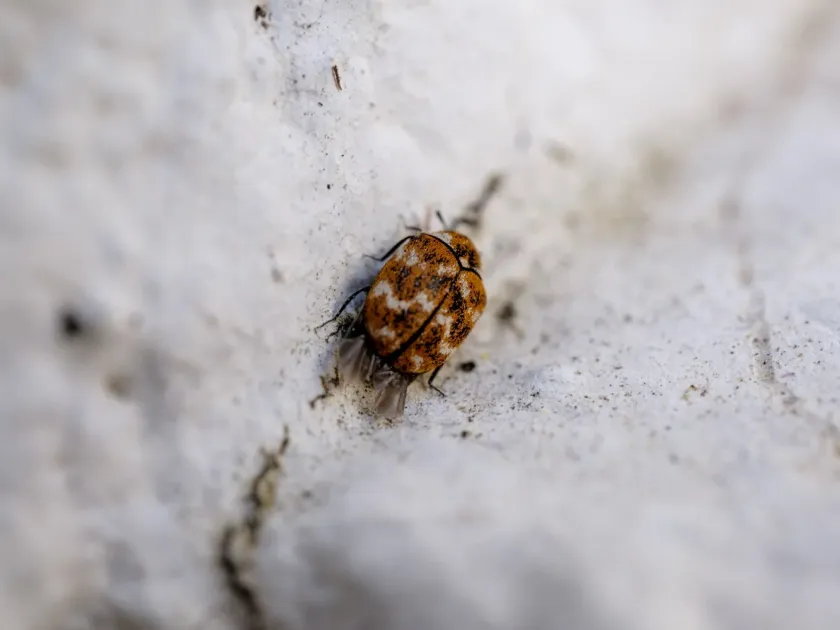
The carpet beetle (Anthrenus flavipes) is a member of the Dermestidae family, well-known for its ability to damage organic materials. Adult beetles are small, usually 2-3 mm long, with a mottled appearance due to white, yellow, and black scales on their dorsal side.
The larvae, which are the main destructive stage, are elongated, covered in dense tufts of hair, and are highly active. They undergo several molts as they grow, shedding their skin, which often remains as a sign of their presence.
Their life cycle includes egg, larva, pupa, and adult stages. In temperature-controlled indoor environments, they can breed continuously, completing their cycle regardless of external seasons.
Adult beetles prefer light and are often found outdoors on flowers, feeding on pollen and nectar, while the larvae prefer dark, undisturbed areas.
They are highly resilient and capable of surviving in various indoor environments, provided there is a steady source of keratin-based food.
What it damages
Carpet beetle larvae have specialized mouthparts designed to digest keratin, a protein found in wool, silk, fur, leather, and animal feathers. This makes them a significant threat to textiles and animal-based collections.
In warehouses and agricultural storage, they can damage stored biological products, such as dried meat, fish meal, or even natural fiber packaging materials.
Museum collections, insect specimens, and herbaria are particularly vulnerable to these pests, as larvae can quickly destroy delicate organic structures.
Damage often appears as irregular holes in clothing, rugs, or tapestries, often in areas that are hidden from view, such as under furniture or in dark corners.
Because they are small, they can hide in narrow cracks and crevices, making it difficult to detect an infestation until significant damage has occurred.
Signs of infestation
The most common sign of a carpet beetle infestation is the presence of cast-off larval skins. These thin, translucent shells are left behind every time the larva molts.
You may also observe fine, sand-like frass (droppings) near the infested material. The color of this frass often matches the color of the material the larvae have been consuming.
Visible damage to carpets, upholstery, or wool garments, manifesting as bare patches or jagged holes, is a clear indication that a colony is active nearby.
Finding adult beetles on windowsills is a frequent sign, as adults are attracted to light and attempt to exit buildings once they reach maturity.
A musty odor in areas with stagnant air can sometimes indicate a large, long-term infestation that has produced a significant amount of waste products.
Control measures
Sanitation is the first line of defense. Regular vacuuming of carpets, rugs, and storage areas removes food sources like hair, lint, and food crumbs that sustain larvae.
For infested items, physical methods are highly effective. Freezing items for several days or applying sustained heat can eliminate all stages of the insect life cycle.
Residual insecticides can be applied to cracks and crevices where larvae are known to hide, though this should be handled with care regarding safety guidelines.
- Seal storage containers to prevent adult beetles from laying eggs.
- Inspect new or secondhand items before introducing them to the home or warehouse.
- Use pheromone-based monitoring traps to detect early activity.
- Maintain low humidity and good ventilation to discourage infestation.
If an infestation becomes widespread within a facility, professional fumigation or heat treatment is recommended to ensure the total eradication of the pest.
Taxonomy
- Latin name
- Anthrenus flavipes
- Order
- Coleoptera (beetles)
- Family
- Dermestidae
- EPPO code
- ANTRFL
Discussion
No discussions yet — be the first.