
Australian carpet beetle
Anthrenocerus australis
Description
How to identify
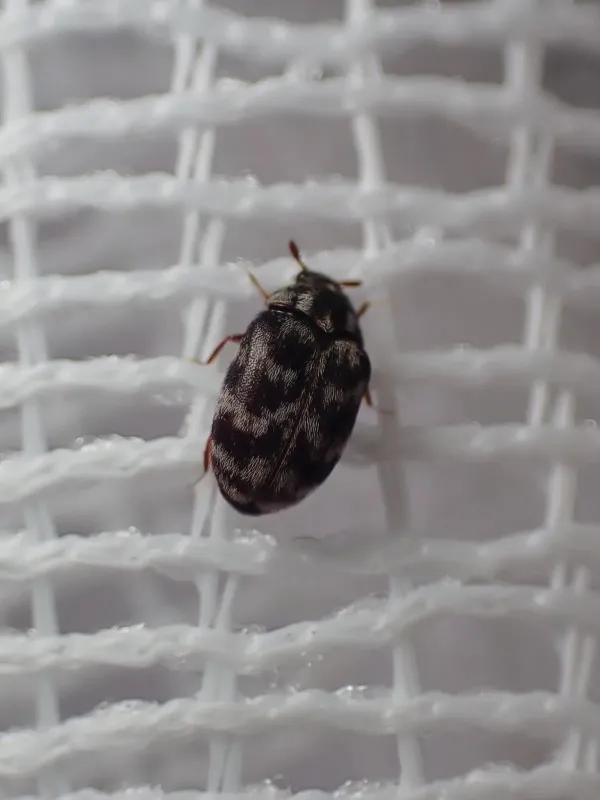
The Australian carpet beetle (Anthrenocerus australis) is a member of the family Dermestidae within the order Coleoptera. Adult beetles are small, typically measuring between 2 and 3 millimeters in length.
They have an oval shape and a dark-colored body featuring distinct light-colored transverse bands across their wing covers (elytra) formed by scales.
The larval stage is the most destructive, characterized by a furry appearance due to dense tufts of hair covering their bodies, often referred to as "woolly bears."
These insects are highly adaptable, capable of surviving in various environments ranging from private homes and museums to large-scale industrial warehouses.
As an invasive species in many parts of the world, they are frequently transported globally via shipping containers and infested dry goods.
What it damages
Larvae are polyphagous, meaning they feed on a vast range of materials. Their diet includes both plant-based agricultural products and animal-derived fibers.
In agricultural settings, they represent a significant threat to stored seeds, grains, and processed cereals, causing direct nutritional loss.
Beyond food supplies, they are notorious for damaging keratin-based items, such as wool, fur, leather, feathers, and synthetic materials contaminated with organic debris.
The damage is not limited to consumption; the accumulation of excrement and cast-off larval skins often renders the remaining product unsuitable for sale or human consumption.
Their ability to thrive in extremely dry conditions makes them particularly resilient pests in storage facilities where moisture levels are intentionally kept low.
When it appears
The life cycle of Anthrenocerus australis is largely influenced by the environmental conditions of the storage facility rather than external seasonal changes.
In temperature-controlled environments, such as warehouses or heated buildings, the beetle can complete multiple generations throughout the year.
Ideal conditions for rapid development are found at temperatures ranging from +20°C to +25°C, coupled with the availability of suitable food sources.
The total time required for a full generation varies significantly depending on environmental factors, typically taking several months to complete.
Adult flight activity, which facilitates the dispersal of the population, often increases during warmer periods, allowing them to colonize new storage areas.
Signs of infestation
Signs of infestation usually begin with the discovery of cast larval skins (exuviae) left behind in cracks, corners, or within packaging materials.
Careful inspection of stored goods may reveal small, irregular holes in packaging or visible feeding damage on the surfaces of stored commodities.
A fine, dust-like powder consisting of larval waste is a primary indicator of an active population presence within a grain or fiber pile.
- Surface pitting or shredding on fabrics or grain-based materials.
- Presence of live or dead adult beetles near light sources or windows.
- Specific organic odors associated with long-term pest activity and excrement buildup.
Consistent monitoring using pheromone-based traps is highly effective in detecting the presence of these beetles before extensive damage occurs.
Control measures
Good sanitation is the cornerstone of control; this includes regularly cleaning up grain dust, debris, and any spills that might attract and support larval populations.
Empty storage spaces should be treated with appropriate contact insecticides, following all safety regulations for warehouses storing agricultural commodities.
Regulating humidity and ensuring adequate ventilation can create a less hospitable environment, thereby slowing down the development rate of larvae.
If a product is confirmed to be infested, specialized fumigation methods are required to eliminate all life stages, including eggs and larvae hidden deep in the material.
Implementing a strict monitoring program with sticky traps and regular site inspections is crucial for early detection and mitigation of potential outbreaks.
Taxonomy
- Latin name
- Anthrenocerus australis
- Order
- Coleoptera (beetles)
- Family
- Dermestidae
- EPPO code
- ATNCAU
Discussion
No discussions yet — be the first.