
Anthrenocerus
Anthrenocerus
Description
How to identify
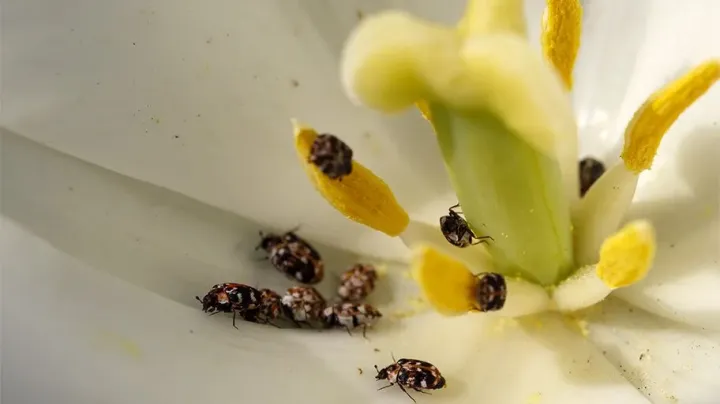
Anthrenocerus is a genus of beetles belonging to the family Dermestidae, within the order Coleoptera. Adult beetles are generally small, featuring an oval or rounded body shape covered with fine scales that often form a distinct pattern.
The larvae of this pest are significantly different from the adults: they have an elongated body form covered with dense hairs, making them resemble small, furry caterpillars. The larval stage is the most active phase regarding feeding and damage.
The insect undergoes a complete metamorphosis, including egg, larva, pupa, and adult stages. While adult beetles are often found on flowers in the wild, the larvae prefer dry organic remnants in indoor environments.
These insects are highly adaptable to various temperature conditions, allowing them to successfully colonize warehouses, barns, residential areas, and museums where protein-rich food sources are available.
Identifying the specific species often requires microscopic examination, as the morphological characteristics of adults can overlap with other dermestid beetle species commonly found in human-made environments.
What it damages
In the agricultural sector, Anthrenocerus represents a serious threat as a stored product pest. It feeds on animal-based products and can also damage grain and legume seeds if they contain organic debris.
The primary damage is caused by the larvae, which are capable of chewing through packaging, dry food concentrates, and animal feed. They efficiently digest keratin, making leather, fur, wool, and dried meat products their preferred food sources.
In warehouse environments, they damage storehouse equipment, including filter fabrics, burlap, ropes, and other natural fiber materials, leading to equipment deterioration and significant harvest losses during storage.
Infestation results not only in physical losses but also in sanitary hazards. Larvae leave behind excrement and shed chitinous skins, which renders the product unfit for consumption or industrial processing.
Under heavy infestation, this pest can quickly destroy significant volumes of commodity stocks, creating secondary infection points in ventilation systems and crevices of warehouse structures.
Signs of infestation
The first sign of an Anthrenocerus infestation is the discovery of adult beetles on windowsills or near light sources, as adults often seek to exit feeding sites to disperse and mate.
The presence of larval cast skins (exuviae) in storage areas is a clear indicator of pest activity. Larvae often leave behind fine frass or dust generated as a byproduct of their feeding.
Damaged materials typically feature characteristic puncture holes or eaten edges. In bags of grain or feed, one may observe a loose structure in affected areas where larval aggregation occurs.
When warehouse clothing or burlap is damaged, distinct paths or "trails" of eaten fibers are often visible, accompanied by a specific fine brownish residue in the folds of the material.
Infestation is sometimes detected only during detailed inspection of packaging, as larvae are secretive and typically avoid direct exposure to sunlight.
Control measures
The foundation of control is strict adherence to sanitary standards in warehouses and storage facilities. Regular cleaning of premises to remove debris, dust, and feed remnants deprives the pest of its food source and breeding sites.
To combat existing infestations, fumigation with specialized pesticides is effective, as these agents can penetrate hard-to-reach storage areas and eliminate pests at all life stages.
Physical control methods are crucial, including the use of hermetic packaging, dry cleaning of facilities with high-powered industrial vacuums, and maintaining low humidity levels in storage areas.
The use of traps with attractants allows for the early detection of the first individuals, enabling an assessment of the threat level before mass infestation of commodity stocks occurs.
Preventive measures also include the heat treatment of warehouse equipment and regular inspection of all stored product batches for the presence of larvae or evidence of feeding activity.
Taxonomy
- Latin name
- Anthrenocerus
- Order
- Coleoptera (beetles)
- Family
- Dermestidae
- EPPO code
- ATNCSP
Discussion
No discussions yet — be the first.