
Pachymerus nucleorum
Pachymerus nucleorum
Description
How to identify
Pachymerus nucleorum is a species of beetle belonging to the family Bruchidae (seed beetles). It is recognized as a significant pest primarily associated with the seeds of various palm species in tropical regions.
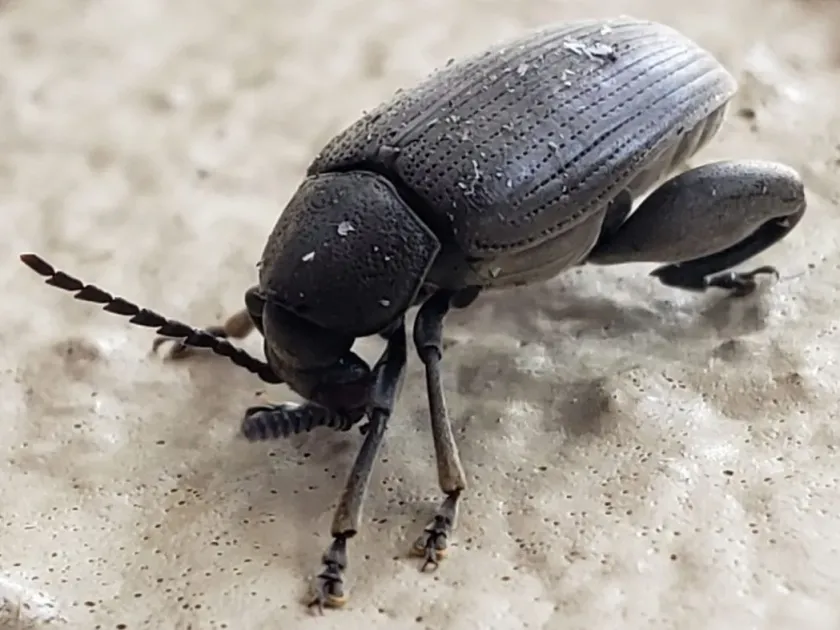
Adult beetles are robust insects, typically ranging in color from reddish-brown to dark brown. A defining anatomical feature is their enlarged hind femora, which are equipped with prominent teeth, characteristic of this beetle group.
The larvae are typically C-shaped, legless, and specially adapted for burrowing through the hard endosperm of palm seeds. They possess a heavily sclerotized head capsule with powerful mandibles.
Unlike many other agricultural pests, the primary damage caused by Pachymerus nucleorum is hidden deep within the seed coat, making initial infestation difficult to detect by visual inspection alone.
Adults are capable of strong flight, facilitating their dispersal across large areas to locate fresh, ripening palm fruits for oviposition during the reproductive season.
What it damages
The primary hosts of Pachymerus nucleorum are the fruits of various palm trees, most notably the coconut palm (Cocos nucifera), as well as species within the Attalea, Syagrus, and Bactris genera.
Larvae bore directly into the seed, consuming the endosperm. This feeding behavior renders the seed non-viable, which is catastrophic for commercial nurseries and conservation efforts focused on palm propagation.
In large-scale plantations, the infestation leads to significant yield losses. The destruction of the nut's interior reduces the quality of the harvested produce, making it unsuitable for processing.
Infested fruits are prone to premature drop. Once on the ground, these fruits often become secondary infection sites for fungi and opportunistic bacteria, further degrading the agricultural product.
For conservation and ecological balance, the beetle poses a risk by destroying a large proportion of seed reserves, thereby limiting the natural regeneration of specific palm populations in the wild.
When it appears
The developmental cycle of Pachymerus nucleorum is closely tied to the fruiting phenology of its host palms. In tropical environments, breeding can occur throughout the year without distinct pauses.
The female beetle deposits eggs onto the surface of the fruit. After hatching, the larva bores into the seed, where it undergoes several larval instars and eventually pupates within the seed cavity.
Environmental factors, particularly temperature and relative humidity, play a critical role in determining the speed of the life cycle. Warmer temperatures generally accelerate larval growth.
Mass emergence of adult beetles typically coincides with the peak fruiting season, as this provides a steady supply of new, vulnerable nuts for the next generation of offspring.
In storage conditions, if temperature and humidity remain within optimal ranges, the pest can continue to develop and propagate, leading to devastating losses in stockpiled palm nuts.
Signs of infestation
The most reliable indicator of an infestation is the presence of small, circular exit holes on the outer shell of the palm nut, created by emerging adult beetles.
Close inspection of the fruit surface may reveal small, discrete egg clusters deposited by females. These are often inconspicuous but can be seen under magnification.
Upon cracking an infested nut, one will find the interior completely hollowed out, containing frass (boring dust) and fecal pellets, along with larvae, pupae, or remnants of the developing insects.
Infested nuts are noticeably lighter in weight compared to healthy, solid nuts. This weight reduction is a result of the total consumption of the seed's energy-dense endosperm.
A foul, fermented odor often accompanies a heavy infestation. This smell results from the metabolic waste of the larvae and the subsequent rot of the tissue damaged during the boring process.
Control measures
Cultural control measures are the first line of defense; these include the prompt harvesting of fruits and the rigorous collection and destruction of fallen nuts to break the beetle's life cycle.
Fumigation is the most effective method for protecting stored seed materials. Hermetic sealing combined with appropriate insecticides can eradicate hidden larvae within the nuts.
Biological control agents, particularly parasitic wasps that prey on the larvae of Pachymerus nucleorum, can be utilized to keep beetle populations below economic injury levels.
Strict phytosanitary inspections and quarantine protocols are essential when transporting palm fruits or seeds across borders to prevent the accidental introduction of this pest into new areas.
In seed banks or research facilities, regular monitoring and the use of cold storage can effectively prevent infestation, as lower temperatures inhibit the development of the beetle's larvae.
Taxonomy
- Latin name
- Pachymerus nucleorum
- Order
- Coleoptera (beetles)
- Family
- Bruchidae
- EPPO code
- PACMNU
Discussion
No discussions yet — be the first.