
Pachymerus beetle
Pachymerus cardo
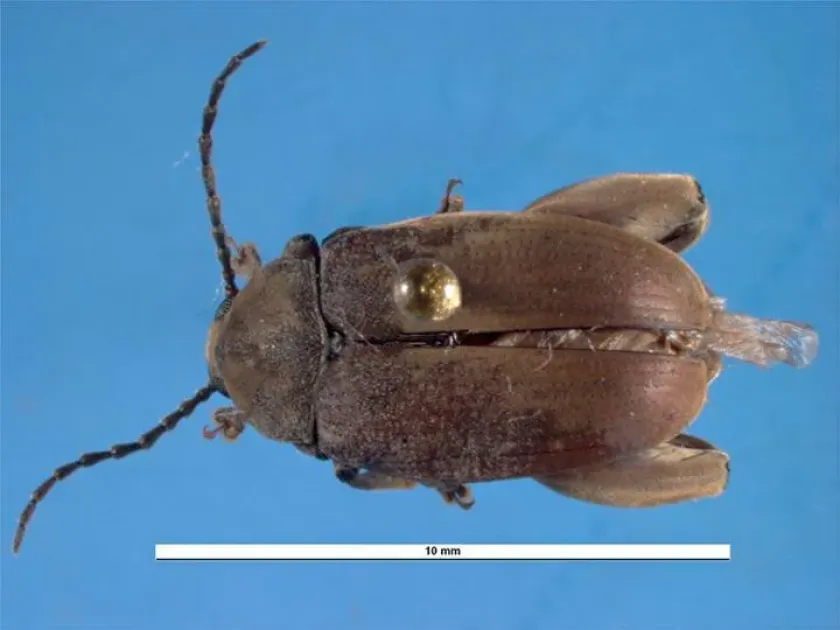
Description
How to identify
Pachymerus (Pachymerus cardo) is a species of beetle belonging to the family Bruchidae, order Coleoptera. These insects are well-known seed feeders often associated with agricultural damage.
Adult beetles possess a robust, compact body structure, typically dark brown or black. A key identification feature is the enlarged hind femora, which often feature prominent, sharp teeth.
The larvae are small, fleshy, and C-shaped, adapted for consuming the inner contents of seeds. They are rarely seen on the surface as they spend their entire development cycle shielded by the seed coat.
Their life cycle depends on the presence of suitable host seeds, where the female deposits eggs. The larvae then bore directly into the seed to begin their development.
Expert identification requires examination of male genitalia and specific morphological traits to distinguish them from other closely related species within the Bruchidae family.
What it damages
The primary economic damage is caused by the larvae feeding inside the seeds. They consume the germ and endosperm, rendering the seeds useless for germination or human consumption.
These pests primarily target legume and palm seeds. In agricultural settings, they can rapidly compromise stored grain stocks if conditions are favorable for their development.
Infested seeds are often contaminated with larval frass and debris, which decreases the quality and safety of the product for consumption or processing.
Severe infestations can lead to significant yield losses. Because the development is hidden, the damage often remains unnoticed until the adult beetles emerge, leaving visible holes.
The loss of nutritional value and viability makes the product commercially worthless once the internal damage has occurred, necessitating rigorous quality control.
Signs of infestation
The most distinctive sign of infestation is the presence of small, circular emergence holes in the seed coat, created by adults when they finish their development.
Careful observation may reveal oviposition marks — small spots or patches on the seed surface where the female attached her eggs during the reproductive phase.
A noticeable decrease in the mass of the grain batch is another indicator, as the internal tissue is consumed, leaving behind shells and powdery waste.
Adult beetles crawling on storage bags or within warehouses indicate a mature, ongoing infestation that requires immediate corrective action.
- Circular exit holes on seeds.
- Presence of powdery residue (frass) inside storage containers.
- Reduced seed germination capacity.
- Adult beetles observed in storage rooms.
- Seeds feeling abnormally light in weight.
Control measures
Strict quarantine protocols are essential to prevent the entry of Pachymerus into non-infested regions through the trade of agricultural commodities.
Maintaining low moisture levels in stored grain is crucial, as the pest thrives in moist environments. Drying seeds to recommended levels is a key preventative measure.
Fumigation is the most effective method for controlling established infestations in warehouses, as gases can penetrate seeds to kill larvae and adults.
During the growing season, timely insecticide applications can manage beetle populations before they lay eggs on the maturing seeds.
Regular sanitation of warehouses, cleaning of grain residue, and equipment disinfection are vital practices to minimize the risk of recurring infestations.
Taxonomy
- Latin name
- Pachymerus cardo
- Order
- Coleoptera (beetles)
- Family
- Bruchidae
- EPPO code
- PACMCA
Discussion
No discussions yet — be the first.