
Pachymerus
Pachymerus
Description
How to identify
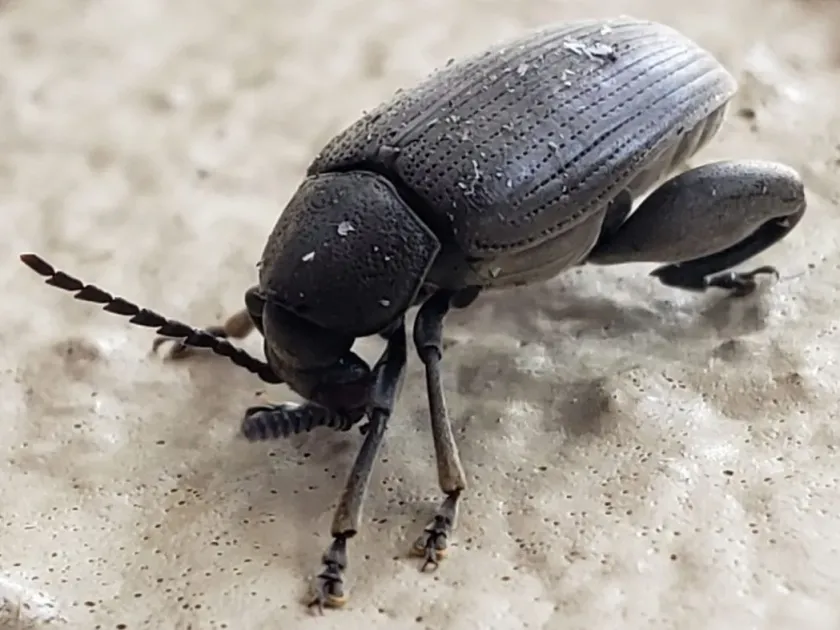
Pachymerus is a genus of beetles belonging to the family Bruchidae (seed beetles) within the order Coleoptera. These insects are characterized by a robust body, often with enlarged hind femora that feature distinct spines.
Adult beetles are typically oval in shape and exhibit a dark brown or blackish coloration, sometimes with intricate mottled patterns on their elytra. The larvae are grubs, white in color, and specially adapted to bore through the hard coats of seeds.
The life cycle involves complete metamorphosis, with eggs laid on the surface of seeds. Once hatched, the larvae penetrate the seed coat to feed and develop within the interior, protected from the external environment.
Adults are strong fliers and are attracted to the seeds of various palm species and legumes. They are often active during warmer seasons when they seek suitable hosts for oviposition.
Because the larval stage occurs entirely within the seed, identifying early-stage infestations requires precise diagnostic methods such as X-ray imaging or careful visual inspection for oviposition marks.
What it damages
The primary damage caused by Pachymerus is the destruction of the seed embryo and endosperm, rendering the seeds non-viable. This is particularly devastating for palm oil seeds and stored legumes.
Infestation reduces the commercial value of the crop by significantly lowering its weight and quality. In storage facilities, an uncontrolled population can destroy an entire inventory of seed stock within weeks.
The larvae create tunnels throughout the seed, consuming its nutrient-rich contents. This internal degradation turns the healthy seed into a brittle husk filled with larval waste products.
Secondary damage occurs when the entry and exit holes created by the beetles become sites for fungal colonization. This leads to mold growth, which can contaminate surrounding healthy seeds in the batch.
Farmers and exporters suffer substantial economic losses not only from the destruction of their products but also from the high cost of mandatory quarantine treatments or the complete rejection of contaminated shipments.
Signs of infestation
The most recognizable sign of an infestation is the presence of perfectly round exit holes on the surface of the seeds, which occur when the adult beetle emerges.
Fine, dusty material, consisting of larval excrement and consumed seed particles, can often be found near the storage area or underneath bags of infested produce.
Infested seeds feel lighter than healthy ones. When shaken, they may emit a hollow sound, indicating that the inner tissue has been consumed by the developing larva.
Adult beetles may be spotted crawling on the surface of storage containers or near cracks in the facility walls. Their presence confirms an active population that requires immediate management.
In some cases, the surface of the seed might show tiny, discolored spots which are the result of egg-laying activity, although these can be very difficult to detect with the naked eye.
Control measures
Rigorous phytosanitary measures are essential to prevent the spread of Pachymerus through international trade. All imported seed lots should be inspected thoroughly by quarantine services.
Fumigation is the most effective method for eradicating infestations within a warehouse. Using gas fumigants ensures that the toxic substance reaches larvae hidden deep inside the seeds.
Proper sanitation in storage facilities is vital. Regularly cleaning floors, corners, and equipment removes potential shelter sites and remnants of seeds that could support the insect population.
Controlled-atmosphere storage, utilizing low temperatures or specific gas mixtures, can effectively slow down or halt the developmental cycle of the beetle larvae.
Pheromone monitoring traps can be employed in storage facilities to detect the presence of adult beetles early, allowing for targeted and timely control interventions before widespread damage occurs.
Taxonomy
- Latin name
- Pachymerus
- Order
- Coleoptera (beetles)
- Family
- Bruchidae
- EPPO code
- PACMSP
Discussion
No discussions yet — be the first.