
Sophora seed beetle
Megabruchidius sophorae
Description
How to identify
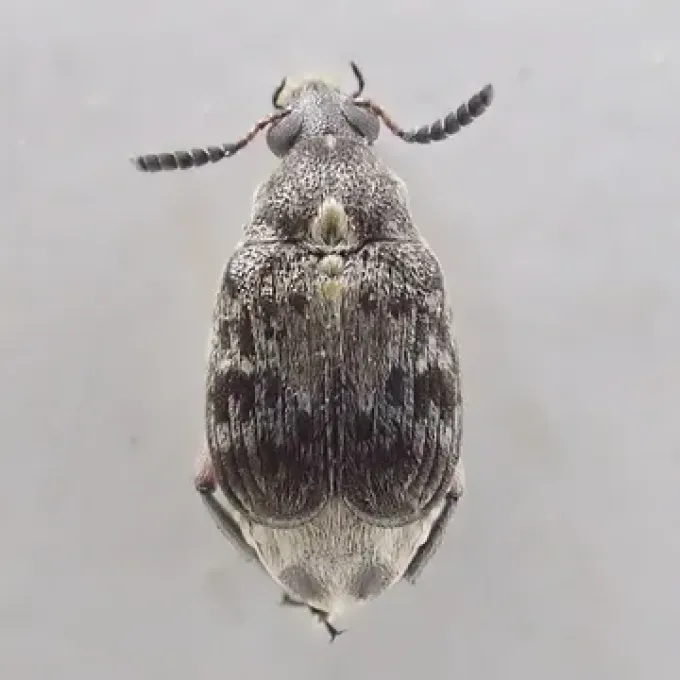
The Sophora seed beetle (Megabruchidius sophorae) is a member of the Bruchidae family (weevils), which are specialized beetles that inhabit and consume seeds of plants. It is a significant pest of the Styphnolobium japonicum (Sophora) tree.
Adult beetles are small, typically measuring 3 to 5 mm, with a robust body and elongated rostrum. Their coloration is generally dark with mottled patterns, providing excellent camouflage against the woody surface of pods and branches.
The larvae are white, C-shaped, and possess powerful mouthparts designed for tunneling through hard, woody seed coats. They remain concealed inside the seeds throughout their larval and pupal stages.
Taxonomically, the species is closely associated with its host plant, showing high specialization in its life cycle, which is strictly synchronized with the flowering and seed development stages of the Sophora tree.
Under favorable environmental conditions, the population can expand rapidly, making this beetle a common pest in nurseries and urban landscapes where its host plants are frequently cultivated for ornamental purposes.
What it damages
The primary damage occurs within the pods of the host tree. Adult females oviposit (lay eggs) on the surface of young, developing pods. Upon hatching, the larvae immediately bore into the seed, consuming the internal tissues.
The larva destroys the embryo and the endosperm of the seed, effectively rendering it sterile and useless for germination. This causes severe losses in viable seeds for propagation purposes.
High levels of infestation can lead to significant fruit drop, impacting the health and aesthetics of the tree, and in severe cases, nearly 100% of the seed crop within a specific batch can be infested.
As the larvae feed, they create tunnels, weakening the structure of the seed and allowing opportunistic fungi and pathogens to colonize the interior, which further degrades the quality of the surrounding pod tissue.
Once the larvae reach maturity, they pupate inside the seed and emerge as adults, leaving behind a distinctive, clean exit hole that serves as the most reliable indicator of the pest's presence.
When it appears
The activity of adults typically begins during the flowering phase of the Sophora tree. During this time, they feed on pollen and floral nectar, which provides the necessary nutrients for egg production.
Oviposition coincides with the development of the pods. This period, usually mid-to-late summer, is critical for the pest's life cycle as the emerging larvae require fresh, developing seeds for their survival.
The larval stage occupies the majority of the summer and autumn. During this time, they stay protected inside the hardening seeds, remaining largely immune to external environmental changes or predators.
Wintering occurs primarily in the adult or late-larval stage within the seeds that have fallen to the ground or remained attached to the tree branches throughout the cold season.
In spring, as temperatures rise, the surviving adults emerge from their dormant state to seek out new growth and reproductive sites, initiating the next annual cycle.
Signs of infestation
The most diagnostic sign of an infestation is the presence of small, perfectly circular exit holes on the outer shell of the seed pods. These are created by emerging adults departing the seed.
- Accumulation of fine, powdery dust (frass) on the surface of seeds inside storage bags.
- Premature yellowing or shedding of pods in summer.
- Seeds appearing hollow or lightweight when handled.
- The presence of live or dead adult beetles found in seed storage containers.
Upon inspecting a cross-section of an infested seed, the entire interior will be found completely hollowed out, often with the remains of the larval or pupal stages visible inside.
In ornamental nurseries, the presence of these exit holes on a large percentage of pods indicates a need for immediate intervention to prevent the further spread of the beetle to the next season's crop.
Control measures
Management of the Sophora seed beetle requires a multi-faceted approach, combining mechanical cleanup and chemical control where necessary. Sanitation is the first line of defense.
Collecting and destroying all pods immediately upon maturity, and removing any fallen debris from under the trees, significantly reduces the population of overwintering larvae and adults.
In professional settings, systemic insecticides applied during the pod development stage can effectively prevent the larvae from successfully penetrating the seeds after they hatch.
For stored seeds, fumigation or freezing at sub-zero temperatures for an extended period is highly effective at eradicating any hidden larvae or pupae, ensuring the safety of the seed batch for future planting.
Regular monitoring using traps and field inspections allows for timely chemical applications, minimizing the overall need for heavy pesticide use by targeting only the most vulnerable periods of the insect's life cycle.
Taxonomy
- Latin name
- Megabruchidius sophorae
- Order
- Coleoptera (beetles)
- Family
- Bruchidae
- EPPO code
- MBRCSO
Discussion
No discussions yet — be the first.