
Palm seed borer
Caryobruchus
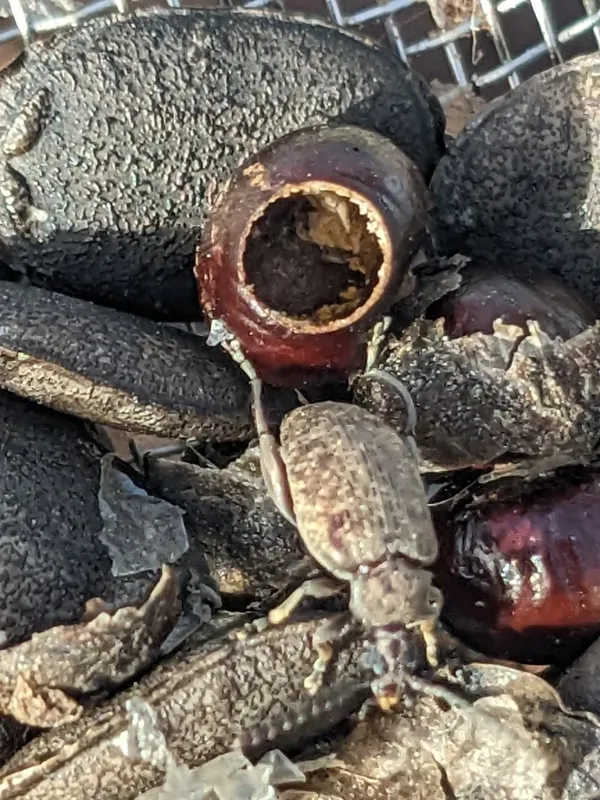
Description
How to identify
The palm seed borer (genus Caryobruchus) belongs to the family Bruchidae (seed beetles) within the order Coleoptera, known for attacking seeds of various palm species.
Adult beetles typically possess a stout, robust body, often with dark brown or mottled coloration that helps them blend in with palm fruits and debris.
The life cycle involves an egg stage, a larval stage which causes the actual damage, a pupal stage, and the adult stage capable of flight and reproduction.
Larvae are characterized by a whitish, grub-like appearance with a tough head capsule, specifically adapted for boring into hard endosperm tissues.
Taxonomically, the genus is well-defined by specific morphological traits of the pronotum and elytra, allowing entomologists to distinguish them from other seed-attacking beetles.
What it damages
Damage is primarily caused by larvae that bore into the seeds of palm trees, consuming the endosperm and destroying the seed embryo.
This pest attacks both developing fruits on the tree and seeds stored in warehouses, posing a significant risk to nursery operations and seed traders.
Once a seed is infested, its germination rate drops dramatically, often to zero, rendering the seed completely useless for cultivation purposes.
The structural damage caused by the larvae creates entry points for secondary pathogens like fungi and bacteria, leading to the decay of the entire seed lot.
In high-density seed storage environments, the palm seed borer can destroy the majority of a shipment if not detected and treated in a timely manner.
Signs of infestation
The most distinctive sign of infestation is the presence of perfectly round exit holes on the surface of the palm seeds or hard nut casings.
Careful inspection may reveal tiny, flattened eggs deposited by the female beetle on the outer surface of the palm seeds or fruits.
A fine, powdery dust or "frass" often accumulates around infested seeds, indicating that larvae are actively feeding and burrowing inside the endosperm.
Seeds may appear lighter in weight than healthy specimens; this density loss can often be detected through simple handling or water-based flotation tests.
The presence of adult beetles crawling or flying near palm seed collections is a clear indication that a life cycle is established within the facility.
Control measures
Stringent phytosanitary inspection of imported seeds is the first line of defense to prevent the introduction of this pest into new growing regions.
Heat treatment methods, controlled at precise temperatures, are effective at killing eggs and larvae without compromising the biological viability of the seed.
Commercial seed lots can be managed using specialized fumigation techniques in sealed chambers to ensure the elimination of all life stages of the borer.
Sanitation is critical in storage areas; removing all organic waste and cull seeds helps interrupt the life cycle and reduces the population of the pest.
Monitoring programs using pheromone traps can help early detection, allowing for rapid intervention before the infestation spreads across the entire inventory.
Taxonomy
- Latin name
- Caryobruchus
- Order
- Coleoptera (beetles)
- Family
- Bruchidae
- EPPO code
- CRBRSP
Discussion
No discussions yet — be the first.