
Bean weevil
Callosobruchus phaseoli
Description
How to identify
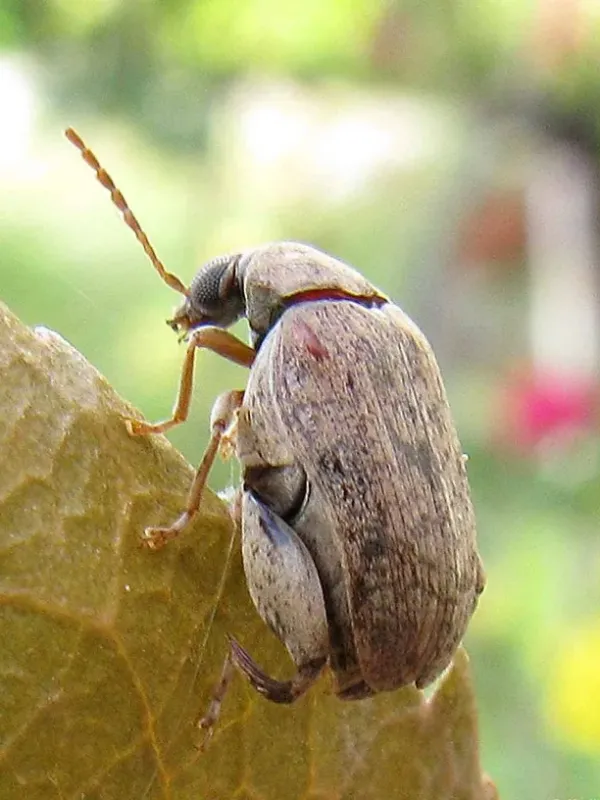
The bean weevil (Callosobruchus phaseoli) is a destructive member of the Bruchidae family. The adult beetle is small, typically ranging from 3 to 4 mm in length, and possesses an oval-shaped body covered with fine, mottled brownish-gray hair.
Key morphological features include distinct dark markings on the elytra and specialized tooth-like structures on the hind legs. The beetle’s head is relatively small and directed downwards, featuring strong mandibles adapted for navigating through seed husks.
The larval stage is white, with a curved body, and is primarily found inside the seed. It undergoes several instars before pupating within a specially constructed chamber inside the bean. The development from egg to adult is highly temperature-dependent.
Under favorable conditions, specifically temperatures between 25°C and 30°C, the lifecycle can be completed in about a month. In climate-controlled storage facilities, multiple overlapping generations can occur, leading to severe population explosions.
Females lay eggs directly on the seed coat, cementing them firmly in place. Each female can lay up to 60 eggs during her short lifespan, focusing on seeds of susceptible legume species, which facilitates rapid infestation within storage units.
What it damages
The primary host for this pest is the common bean, although it also attacks other legumes like mung beans and chickpeas. Damage begins in the field during the ripening stage and continues aggressively throughout the storage phase of the crop.
Larvae bore into the seed immediately after hatching, feeding on the cotyledons and embryo. This destruction renders the seeds non-viable for planting and significantly reduces their nutritional value and marketability for human consumption.
Infested seeds are characterized by a loss of mass and the presence of numerous circular exit holes. As the larvae feed, they create tunnels, effectively turning the interior of the bean into a powdery substance of frass and debris.
The presence of infested beans can lead to secondary contamination by fungi and bacteria. The waste products of the larvae often cause a bitter taste and an unpleasant odor, making the entire batch unacceptable for food processing.
In large-scale storage, a bean weevil infestation can cause total loss of product if left unchecked. Because they can complete their lifecycle entirely within the seed, they are considered a major quarantine pest in global agricultural trade.
Signs of infestation
Early identification of an infestation involves spotting tiny, white, oval-shaped eggs glued to the seed coat. These are often difficult to see without a magnifying glass but are a clear indicator of active egg-laying by adult females.
The most recognizable sign of damage is the appearance of perfectly round, smooth-edged holes on the beans. These holes are where the mature beetles have emerged from the pupal chamber inside the seed.
Visual inspection of the seed surface often reveals a duller texture or slight depressions where larvae are feeding just below the surface. In heavily infested batches, fine dust may be visible at the bottom of storage containers.
Sensing an infestation can also be done by checking the weight and density of the seeds. Infested beans will feel significantly lighter and may rattle when shaken. When broken open, the interior will show tunnels and the presence of larvae or pupae.
Monitoring using pheromone traps can provide data on the presence and density of adult beetles in storage environments. This helps in making timely decisions regarding the application of control measures before the population reaches an uncontrollable level.
Control measures
Effective management begins with strict sanitation practices. Cleaning storage areas thoroughly to remove all residues, dust, and infested debris is critical for disrupting the lifecycle and preventing the re-infestation of new batches.
Harvesting crops as early as possible after maturation reduces the window of opportunity for field infestation. Once harvested, beans should be dried to a moisture content below 14%, which significantly hinders the growth and reproduction of the weevils.
Cold storage is a highly effective non-chemical control method. Exposure to temperatures below 10°C retards metabolic activity, and deep freezing at -15°C for several days will kill all life stages of the bean weevil without affecting seed quality.
- Fumigation of grain storage facilities with approved pesticides.
- Using hermetic storage bags to prevent adult insects from entering.
- Monitoring with pheromone traps for early detection of beetle activity.
- Application of diatomaceous earth as a physical deterrent in small storage.
For industrial storage, chemical fumigation remains the most reliable method for neutralizing large infestations. It is essential to ensure that any pest control treatment used is compatible with the intended end-use of the product, particularly for food-grade crops.
Taxonomy
- Latin name
- Callosobruchus phaseoli
- Order
- Coleoptera (beetles)
- Family
- Bruchidae
- EPPO code
- CALSPH
Discussion
No discussions yet — be the first.