
Cowpea weevil
Callosobruchus maculatus
Description
How to identify
The cowpea weevil (Callosobruchus maculatus) is a destructive pest belonging to the order Coleoptera and the family Bruchidae, specifically affecting stored legumes.
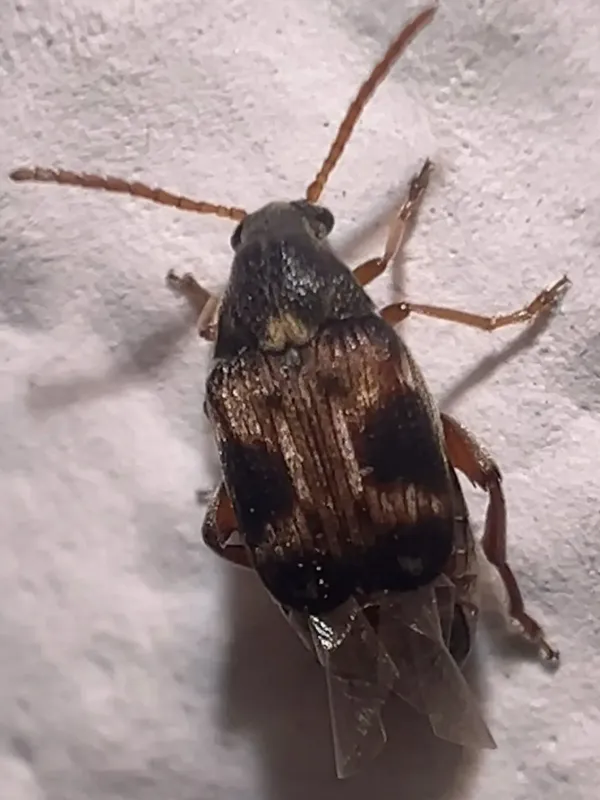
The adult beetle is small, typically measuring between 2.5 and 4 mm in length, with a robust, oval-shaped body and a distinctive reddish-brown coloration.
A key identification feature is the presence of four dark spots on the elytra (wing covers), which gives the species its common and scientific names.
The larvae are C-shaped, legless, and white, equipped with specialized mouthparts for burrowing into hard seeds to feed on the internal tissues.
This species is highly adapted to stored product environments, where it can thrive in warm conditions and rapidly increase its population density.
What it damages
The cowpea weevil primarily attacks legume seeds, including cowpeas, mung beans, chickpeas, lentils, and various types of dry beans.
Larvae penetrate the seed coat and consume the internal seed contents, effectively destroying the embryo and food reserves required for germination.
Heavy infestations lead to significant weight loss in grain stocks, often rendering the entire batch unfit for both human consumption and planting.
Beyond physical destruction, the presence of larval waste products and dead insects introduces pathogens and contamination, reducing the quality of the food supply.
Economic losses are severe, as damaged grain becomes unmarketable and requires costly processing or disposal to prevent further spread.
When it appears
The life cycle of the cowpea weevil is highly temperature-dependent; under optimal conditions (25-30°C), a generation can be completed in just 25 to 30 days.
In warm climates or heated storage facilities, the insect can breed continuously throughout the year, resulting in multiple overlapping generations.
Field infestation often begins when adults fly to maturing legume pods, laying eggs on the surface before the crop is harvested and moved to storage.
Overwintering typically occurs within the grain, where the larvae or pupae remain protected inside the seed until temperatures rise and activity resumes.
Transportation of infested seeds is the primary means of long-distance dispersal, allowing the pest to colonize new storage facilities rapidly.
Signs of infestation
The earliest sign of infestation is the presence of tiny, oval-shaped white eggs glued to the surface of the seeds by the female beetle.
Circular exit holes, often with a raised circular "cap," are the most visible indication that adult beetles have successfully emerged from the seeds.
Infested seed lots often contain a significant amount of "frass" (fine powdery dust), which is the byproduct of larval feeding and excavation.
Grain that has been heavily damaged will often lose its luster and may become light or hollow, making it easily distinguishable from healthy, intact seeds.
- Adult beetles crawling or flying near grain containers.
- Musty or sour odors emanating from the storage area.
- Decreased germination rates in seeds intended for planting.
Control measures
Sanitation is critical; cleaning storage bins thoroughly to remove residual grain and debris is the first line of defense against potential infestations.
Maintaining low temperatures in storage facilities (below 10°C) is an effective way to suppress larval development and prevent population explosions.
Fumigation using phosphine-based products is the standard industrial method for eliminating active infestations within sealed grain silos or warehouses.
Seed treatment with approved systemic insecticides prior to planting helps protect the crop from early-stage damage by emerging beetles.
Utilizing pheromone traps allows for the early detection of adult weevils, enabling proactive management before the infestation spreads throughout the entire stock.
Taxonomy
- Latin name
- Callosobruchus maculatus
- Order
- Coleoptera (beetles)
- Family
- Bruchidae
- EPPO code
- CALSMA
Discussion
No discussions yet — be the first.