
Cowpea weevil
Callosobruchus chinensis
Description
How to identify
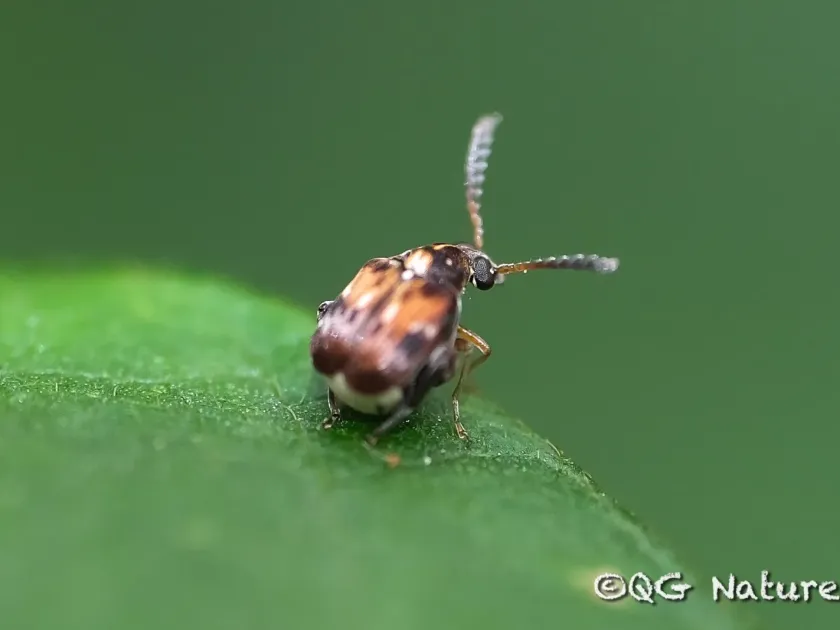
The cowpea weevil (Callosobruchus chinensis) is a serious pest belonging to the seed beetle family, known for causing significant damage to pulse crops. Adult beetles are small, typically ranging from 2.5 to 4 mm in length, and possess a reddish-brown body with distinct patterns on the elytra.
Males can be easily identified by their serrated antennae, while females generally have smaller antennae. They are strong fliers and can easily spread throughout grain storage facilities if not properly controlled.
The larvae are white, legless, and C-shaped, perfectly adapted to live inside the grain. Upon hatching, the larva bores directly into the seed, where it completes its development, pupating inside the grain kernel.
Females lay oval, translucent eggs on the surface of seeds, fastening them firmly with an adhesive secretion. A single female can produce a large number of eggs, leading to rapid population growth under favorable conditions.
The life cycle is highly dependent on temperature and moisture levels. In warm environments with high humidity, the insect can complete its life cycle in as little as 3 to 4 weeks, leading to multiple generations in a single storage season.
What it damages
The primary hosts of the cowpea weevil are pulses, including cowpeas, mung beans, chickpeas, lentils, and soybeans. While they primarily attack dried seeds, they can also infest crops in the field as they approach maturity.
The larvae feed on the interior of the seed, destroying the embryo and the seed endosperm. This renders the grain entirely useless for planting and severely degrades its quality for human consumption.
Infestation results in significant weight loss and decreased nutritional value of the pulses. The accumulated larval waste and emergence holes facilitate the growth of mold and secondary pests, leading to further spoilage.
Damage is characterized by distinct circular exit holes in the seeds where adult beetles emerged. These seeds are often referred to as "weevily" and are rejected in commercial trade due to poor aesthetics and health concerns.
In large-scale storage, this pest can cause massive economic losses within months. If not monitored, a small initial infestation can quickly escalate to destroy an entire stockpile of legumes.
Signs of infestation
The most visible sign of infestation is the presence of small, circular holes in the seeds, which are the exit points for mature adults. These holes are typically about 1 to 2 mm in diameter.
Careful inspection of the seed surface may reveal white, shiny eggs attached to the coat. These are often seen in clusters and indicate an active infestation that will soon lead to larval tunneling.
A musty odor in the storage area is a common indicator of significant beetle activity. The smell results from a combination of larval waste and the decomposition of the damaged seeds.
Presence of adult beetles flying or crawling on storage containers is a clear sign of an ongoing outbreak. They are most active during warm periods and are attracted to light sources in warehouses.
When shaking a bag of infected pulses, one might notice fine, powdery debris. This "dust" is composed of frass and seed particles ejected by the larvae, signaling that the interior of the seeds is being consumed.
Control measures
Effective management begins with sanitation. Cleaning storage facilities thoroughly before and after every harvest season is crucial to eliminate overwintering populations of the beetle.
Physical control methods such as cold storage or heat treatment are highly effective. Freezing the seeds at -10 degrees Celsius or heating them to 50-60 degrees Celsius kills all stages of the insect without damaging the seed's viability.
Hermetic storage, using airtight bags or containers, prevents new infestations and suffocates existing insects by creating an oxygen-depleted environment inside the storage unit.
Chemical fumigation is a last resort for large commercial stocks, requiring professional handling to ensure all life stages of the weevil are eradicated while keeping the grain safe for trade.
- Maintaining low grain moisture (below 12%)
- Regular monitoring using sticky or pheromone traps
- Sorting and grading seeds before long-term storage
- Rapid post-harvest drying to prevent field-to-storage transition
Taxonomy
- Latin name
- Callosobruchus chinensis
- Order
- Coleoptera (beetles)
- Family
- Bruchidae
- EPPO code
- CALSCH
Discussion
No discussions yet — be the first.