
Bean weevil
Callosobruchus ademptus
Description
How to identify
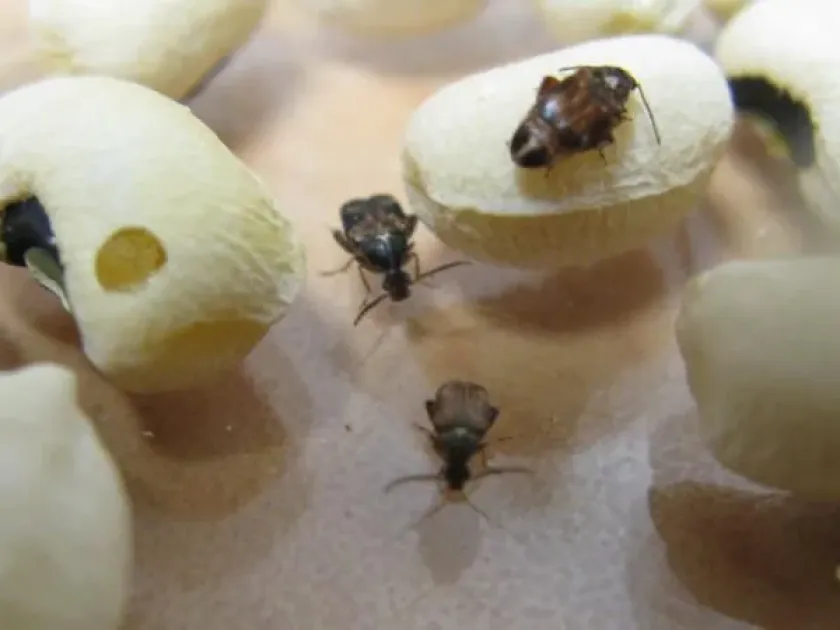
The bean weevil (Callosobruchus ademptus) is a significant pest belonging to the Bruchidae family. The adult beetle is small, typically measuring 2 to 4 millimeters in length, with a brownish-gray, pubescent body that features subtle mottled markings on the elytra.
The larval stage is characterized by legless, white grubs with a well-developed head capsule suitable for penetrating the tough outer coats of bean seeds. They spend their entire development cycle inside the seed, making them difficult to detect until they emerge as adults.
Bean weevils are strong fliers, which facilitates their movement between infested fields and storage facilities. They prefer warm environments and high humidity, which significantly accelerates their reproductive cycles and population growth.
Females deposit eggs directly onto the surface of the beans, attaching them with a secreted adhesive. Upon hatching, the larvae immediately bore into the interior of the seed, sealing their entry point with frass and tissue.
The developmental speed is temperature-dependent. Under optimal tropical or warm temperate conditions, multiple generations can emerge per year, leading to rapid and exponential increases in population density in storage silos.
What it damages
The bean weevil primarily infests various species of beans, although it is known to damage other leguminous seeds, such as mung beans and cowpeas. This makes the species a major threat to agricultural economies and food security.
Larval feeding destroys the cotyledons and the embryo of the seed. This causes direct losses in seed viability, making infested beans unsuitable for both human consumption and as planting material for future harvests.
Heavy infestation levels can lead to almost total destruction of the stored product. Beyond the loss of biomass, the presence of larval feces and waste products contaminates the remaining grain, causing foul odors and sanitary concerns.
Infestation often initiates in the field during the maturation phase of the crop. When these seeds are harvested and placed into storage, the infestation continues to spread, potentially affecting entire stockpiles if not addressed promptly.
The exit holes created by emerging adults compromise the structural integrity of the seed coat, creating entry points for secondary pathogens like fungi and bacteria, which cause further spoilage and quality degradation.
Signs of infestation
The earliest signs of an infestation are minute, circular spots on the surface of the bean seeds. These spots represent the sites where newly hatched larvae have penetrated the seed coat, often covered by a pale, filmy egg remnant.
As the insects mature, they create distinct, circular exit holes in the seed coat. These holes, typically 1 to 2 millimeters in diameter, indicate that an adult beetle has already vacated the seed and that the infestation is established.
Accumulation of "bean dust" or fine powder at the bottom of storage bags or containers is a strong indicator of larval activity. This debris consists of seed tissue fragments and excrement left behind by the developing larvae.
Infested seeds lose their luster and density, often appearing shriveled or lightweight when compared to healthy beans. A characteristic hollow sound may be heard when shifting the grain, indicating extensive internal tunneling.
The presence of adult beetles near storage areas or on surfaces, especially near light sources, is a clear warning sign. Regular monitoring of the storage environment is essential to detect the pest before massive damage occurs.
Control measures
Proactive agricultural management is key to preventing losses. Early harvesting is recommended to minimize the time beans spend exposed to weevils in the field, as late-season crops are most vulnerable to egg-laying.
Post-harvest drying is critical; reducing seed moisture content to below 15 percent significantly hinders larval development and survival. Storing beans in cool, dry conditions helps to suppress the reproductive rate of the pests.
For small-scale storage, freezing seeds at low temperatures or heat-treating them (above 50 degrees Celsius) are effective methods to kill eggs and larvae without chemical residues. Airtight containers can also prevent adult weevils from accessing the grain.
Professional grain storage facilities should implement regular fumigation and sanitation protocols. Cleaning warehouses and processing equipment thoroughly before adding new harvests is vital to prevent carry-over infestations.
- Use pheromone traps to monitor population levels.
- Sort and discard infested seeds prior to long-term storage.
- Employ approved chemical fumigants where required for bulk grain protection.
Taxonomy
- Latin name
- Callosobruchus ademptus
- Order
- Coleoptera (beetles)
- Family
- Bruchidae
- EPPO code
- CALSAD
Discussion
No discussions yet — be the first.