
Bean weevil
Callosobruchus
Description
How to identify
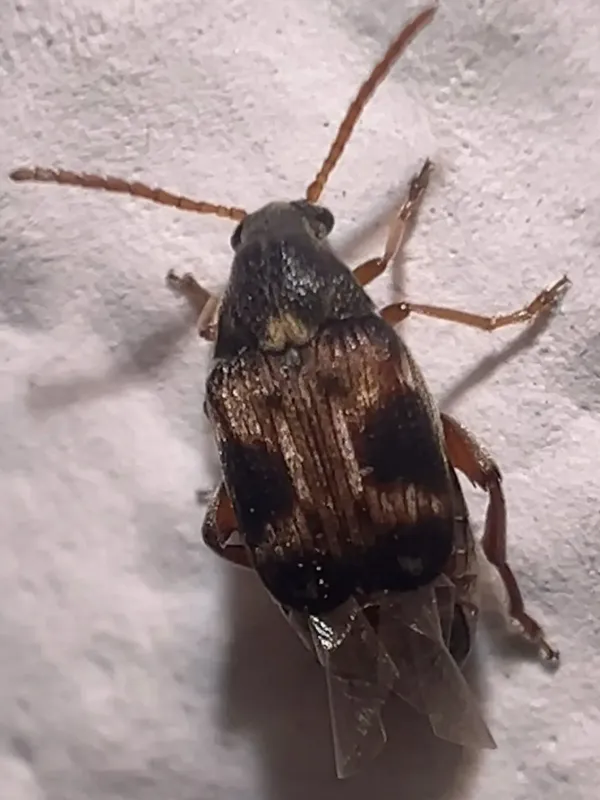
The bean weevil, scientifically known as Callosobruchus, is a significant member of the leaf beetle family. These small beetles typically measure between 3 and 4 mm in length and are recognized by their mottled, brownish wing covers.
The larval stage is characterized by a grub-like, legless, white body. The larvae are specialized for boring into the seeds of pulses, where they spend their entire development phase, protected from environmental threats and predators.
Adult females exhibit high fecundity, laying hundreds of eggs during their short lifespan. They attach these eggs firmly to the surface of individual seeds, ensuring a direct food source for the emerging larvae immediately upon hatching.
The lifecycle is highly temperature-dependent. In optimal conditions, such as warm storehouses, the generation cycle can be completed in as little as three weeks, allowing for rapid population explosions.
These insects are highly resilient and possess a sophisticated mechanism for penetrating seed coats, making them a formidable pest in both agricultural fields and food storage facilities.
What it damages
Bean weevils primarily infest legume crops, with pulses such as peas, beans, lentils, chickpeas, and soybeans being the most frequent targets of their destructive activity.
The primary damage is caused by the larvae, which bore into the seed interior. By feeding on the embryo and cotyledons, they hollow out the seed, leaving behind only the outer shell filled with frass and waste products.
Seeds attacked by bean weevils lose their viability, making them completely unsuitable for planting. Furthermore, the loss of nutritional value renders the grain useless for human consumption or animal feed.
Economic losses are severe, as large-scale infestations can quickly ruin entire stored batches, causing weight loss and reducing the quality standards required for the market.
Beyond physical destruction, the contamination of food products with insect remains and metabolic waste products poses significant sanitary risks to the affected grain supply.
Signs of infestation
The most visible indicator of an infestation is the presence of small, circular exit holes in the seed coat. These holes indicate that an adult beetle has successfully completed its development and emerged.
Close inspection of seeds often reveals the presence of tiny, translucent, or white oval-shaped eggs glued to the surface. These are particularly noticeable on the smooth surfaces of dried legumes.
Active adults moving on the surface of grain piles or inside storage containers are a sign of an ongoing infestation. In heavy infestations, one might hear the faint scratching sounds of larvae feeding inside the seeds.
A reduction in the germination rate of seed lots is a key diagnostic sign for farmers. When tested in water, damaged seeds tend to float, while healthy seeds remain submerged.
Fine dust or flour-like residue found at the bottom of storage bags is a definitive indicator of advanced larval feeding and indicates that the grain has been compromised for a significant duration.
Control measures
Effective management of bean weevil populations requires a multi-faceted approach focusing on prevention and the maintenance of hygienic storage conditions to disrupt the pest's lifecycle.
- Implementation of fumigation protocols for grain storage facilities.
- Thorough cleaning of harvesting machinery and storage bins to prevent carry-over infestations.
- Using high-quality, weevil-free certified seeds for new plantings.
- Controlled temperature storage, as cold inhibits the metabolic processes and reproduction of the beetles.
- Application of approved insecticides in field conditions during the critical flowering and podding stages.
Regular monitoring using pheromone-based traps is highly recommended. These traps act as an early warning system, allowing managers to intervene before the infestation reaches economic thresholds.
Strategic crop rotation and timely harvesting before the seeds become fully dry in the field can also significantly reduce the initial pressure from migrating weevils entering the field from adjacent areas.
Taxonomy
- Latin name
- Callosobruchus
- Order
- Coleoptera (beetles)
- Family
- Bruchidae
- EPPO code
- CALSSP
Discussion
No discussions yet — be the first.