
Broadbean seed beetle
Bruchus rufimanus
Description
How to identify
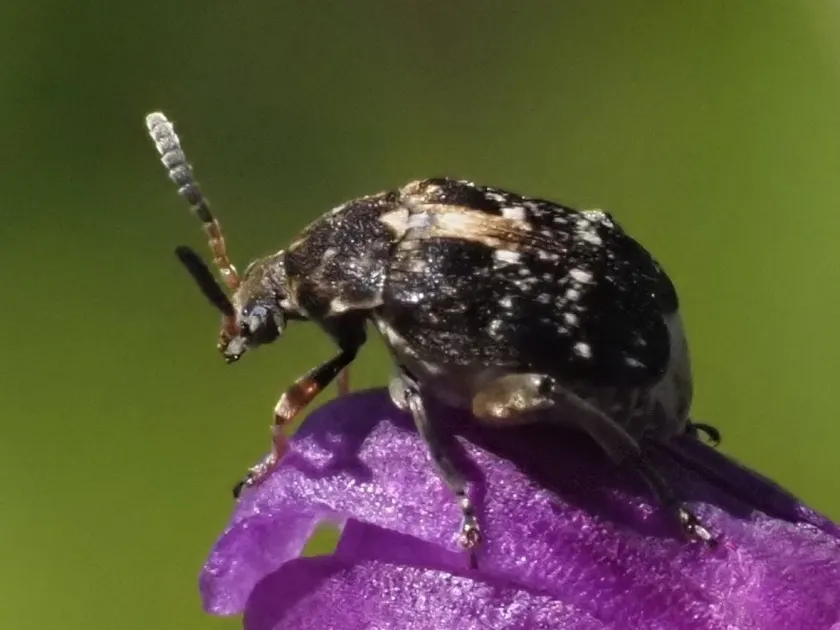
The Broadbean seed beetle (Bruchus rufimanus) is a member of the Bruchidae family within the order Coleoptera. Adult beetles are 3–4.5 mm long, with a dark, oval-shaped body covered in brownish-grey pubescence and white markings on the elytra.
A key diagnostic feature is the distinct tooth on the hind femora. Their developmental stages are hidden within the seeds of host plants, which protects them from environmental factors and standard insecticide treatments once inside.
What it damages
This pest primarily attacks fava beans, but also affects peas, lentils, and vetch. Larvae feed internally on the seed endosperm and germ, effectively destroying the seed's viability and nutritional value.
Infested seeds suffer significant weight loss and are often contaminated with insect waste, making them unfit for human consumption or agricultural sowing. High levels of infestation can lead to substantial market devaluation of the crop.
When it appears
Adults overwinter in storage facilities or within residual seeds in the field, emerging during the flowering period of host legumes. Females deposit eggs on the surface of young, developing pods.
Upon hatching, larvae bore directly through the pod wall into the seed, where they complete their development, pupate, and emerge as adults by late summer or autumn. This single-generation cycle ensures the infestation is carried over into harvested storage.
Signs of infestation
The most prominent sign of infestation is the appearance of circular exit holes on the seed coat. Infested beans often show visible darkened spots where larvae have entered or exited the tissue.
During the growing season, small, elliptical, yellowish eggs may be found attached to the outer surface of green pods. Post-harvest, live adults may be found moving amongst stored seeds or trapped within the bins.
Control measures
Effective management requires applying systemic or contact insecticides during the flowering stage before eggs are laid on the pods. Strict adherence to crop rotation and using certified, beetle-free seed stocks are critical prevention methods.
- Deep plowing post-harvest to bury infested crop residues.
- Fumigation of grain lots stored for seed or consumption to eliminate populations.
- Timely harvesting to reduce the period during which beetles can emerge and infest neighboring fields.
Taxonomy
- Latin name
- Bruchus rufimanus
- Order
- Coleoptera (beetles)
- Family
- Bruchidae
- EPPO code
- BRCHRU
Discussion
No discussions yet — be the first.