
Alfalfa seed weevil
Bruchidius varius
Description
How to identify
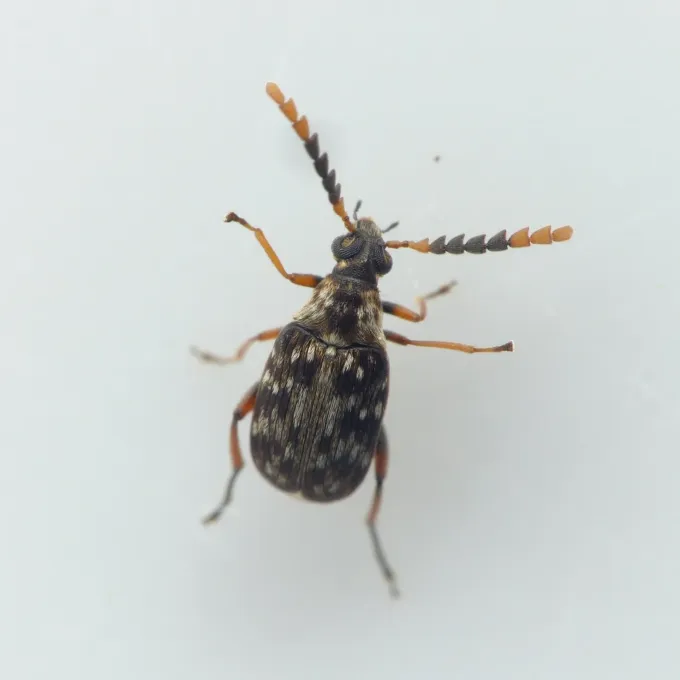
The adult Alfalfa seed weevil, scientifically known as Bruchidius varius, is a small beetle measuring between 2.2 and 3.2 mm in length. Its body is primarily black, but the elytra are covered in dense grey or yellowish hairs, creating a mottled appearance.
The head is relatively small and retractable into the prothorax. Its antennae are serrated and consist of 11 segments. The legs are robust and specialized for crawling on the flowering heads of its host plants.
Larvae are typically white, fleshy, and legless, which is a characteristic feature of Bruchinae subfamily members that develop internally within seeds. The head is usually slightly darker than the rest of the body.
Eggs are elongated and light yellow, laid singly on the surface of developing alfalfa pods. The female secures them with a fast-hardening secretion that protects the egg from environmental damage.
Pupae are free-living within the damaged seed. They appear white initially and slowly transition to a darker color as the development of the adult beetle progresses before it bores its way out.
What it damages
The primary host for this pest is alfalfa (Medicago sativa) and related legume species. The weevil poses a significant threat to seed production, causing both quantitative and qualitative losses in harvest.
Larvae bore directly into the developing seeds, consuming the endosperm and the germ. This destruction renders the seeds non-viable and completely useless for future planting or professional agricultural purposes.
The damage is often hidden; pods may look healthy from the outside while the internal seeds are being hollowed out. This makes it difficult for farmers to detect an infestation during the early growth stages.
In addition to direct seed loss, infestation promotes the growth of secondary fungi and molds on damaged seeds. This degradation drastically reduces the commercial value of the harvested seed lots.
In years with high pest pressure, the Alfalfa seed weevil can destroy up to half of the total seed yield, significantly impacting the economic viability of commercial alfalfa seed operations.
When it appears
Adult weevils overwinter in protected areas, such as seed warehouses, under plant debris, or in soil crevices. As temperatures rise in the spring, they become active and migrate toward alfalfa fields.
The peak flight activity coincides with the alfalfa flowering period. The beetles feed on pollen and nectar, and after mating, the females begin laying eggs on the young, forming pods.
Development is highly dependent on temperature. The life cycle from egg to adult takes approximately 4 to 6 weeks under warm conditions. Dry and hot weather is particularly conducive to rapid pest proliferation.
New generations of beetles emerge towards the end of summer. If the seeds are not harvested or processed in time, these beetles can continue their reproductive cycle within the storage facility.
Depending on the climatic zone, the pest may produce one to two generations per year. The second generation is often observed within storage containers, emphasizing the need for proper post-harvest management.
Signs of infestation
The most visible sign of infestation is the presence of small, circular exit holes on the pods, created when the adult beetle emerges from the seed. Before this, the pod surface may show small scarring from egg placement.
During the flowering stage, the presence of beetles can be confirmed by sweeping the field with a net. The beetles are highly active and will often drop to the ground when the plants are disturbed.
Close inspection of young pods may reveal tiny, light-colored eggs. These are often difficult to spot without a magnifying lens but can be identified by their specific placement on the pod surface.
Laboratory testing of seed samples will show internal chambers filled with frass and larval remains. A significant reduction in seed weight is a primary indicator of heavy infestation levels.
In warehouses, the accumulation of seed dust, broken seed coats, and debris under storage bags or at the bottom of silos is a classic sign of active infestation by the weevil.
Control measures
The most effective management strategy is timely harvesting. Collecting the crop as soon as it reaches maturity prevents the larvae from completing their development and emerging from the seeds.
Post-harvest processing, particularly thorough cleaning using gravity separators, is essential. These machines can effectively remove damaged and lightweight seeds where the weevil larvae reside.
Chemical control, if necessary, should be applied during the peak of adult activity, before the pods become too hardened and while the female is still actively seeking sites for oviposition.
- Rotate crops to break the life cycle of the pest.
- Eliminate volunteer alfalfa plants and legume weeds surrounding the fields.
- Fumigate stored seeds to kill any emerging adults or dormant larvae.
Integrated pest management also involves encouraging natural predators and parasitoids. However, diligent field monitoring and immediate post-harvest seed treatment remain the cornerstones of successful control.
Taxonomy
- Latin name
- Bruchidius varius
- Order
- Coleoptera (beetles)
- Family
- Bruchidae
- EPPO code
- BRCIVA
Discussion
No discussions yet — be the first.