
Cercis seed beetle
Bruchidius siliquastri
Description
How to identify
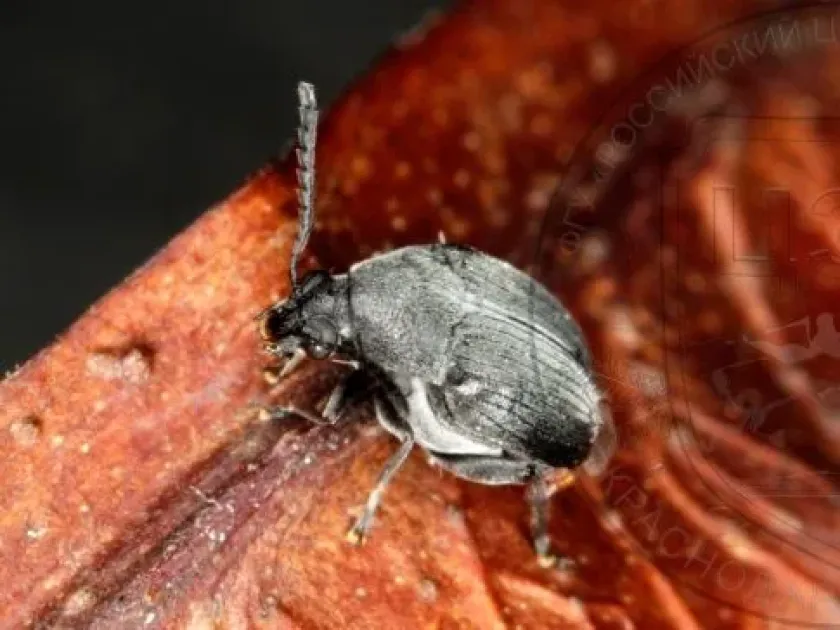
The Cercis seed beetle (Bruchidius siliquastri) is a small beetle belonging to the Bruchididae family within the Coleoptera order, known for infesting legumes.
Adult beetles are small, typically measuring 2 to 3 millimeters in length, with an oval-shaped body covered in fine brownish-grey hairs.
The head is partially concealed beneath the thorax, and the antennae are well-developed, playing a crucial role in locating suitable host plants for oviposition.
The larvae are legless, white-colored grubs that possess specialized mouthparts designed for burrowing into the hard tissue of seeds.
Identification is often confirmed by observing the distinctive circular exit holes left by adults on the surface of the infested seed pods.
What it damages
This pest specifically targets the seeds of the Cercis genus, commonly known as Redbud trees, including Cercis siliquastrum and Cercis canadensis.
Larval feeding activity occurs entirely within the seed, where the insect consumes the embryo and food reserves, rendering the seed unviable for germination.
Infestation causes significant economic losses in horticultural nurseries, as the quality and germination percentage of the produced seeds are drastically reduced.
Beyond destroying the seed, the beetle's activity creates entry points for various seed-borne pathogens and mold fungi, further degrading the stored material.
The cumulative damage to wild populations of Cercis can limit the natural regeneration of the trees in their native ecosystems.
When it appears
The adult activity period for Bruchidius siliquastri occurs in summer, coinciding with the development of the seed pods on the host trees.
Females deposit eggs on the surface of the young pods, and upon hatching, the larvae penetrate the seed coat to begin their feeding cycle.
Typically, the beetle completes one generation per year, although warmer climatic conditions may occasionally permit a partial second generation.
The insect typically overwinters in the larval or pupal stage inside the seed, remaining dormant until the following spring.
As temperatures rise in the spring, the beetles reach maturity, chew through the seed coat to emerge, and begin seeking mates to start the new season's cycle.
Signs of infestation
The most reliable sign of an infestation is the presence of small, perfectly circular emergence holes found on the dry seed pods or extracted seeds.
Internal inspection of a suspected seed will reveal the larva, pupa, or the presence of frass (larval excrement) and hollowed-out tissue.
Infested seeds are characterized by a significantly lower density, which can often be detected by checking their weight or floatation in water.
While the exterior of the pod might appear intact for some time, careful monitoring of the seed development stages can reveal the presence of eggs on the surface.
Adult beetles can be visually spotted crawling on the blossoms and developing pods during the late spring and summer months.
Control measures
Timely harvesting of seeds immediately upon maturity is the most effective way to prevent the beetles from emerging and spreading to other pods.
Thermal treatment of the collected seeds, such as freezing or controlled heating, can effectively kill the larvae without harming the seed's viability.
In nursery settings, the application of targeted insecticides during the beetle's peak oviposition period can protect the developing crop.
Sanitation practices, including the removal and destruction of fallen debris and infested pods under the canopy, are essential for reducing the local population.
Storage of seed stocks in airtight, cool, and dry conditions is recommended to prevent post-harvest re-infestation or the completion of the beetle's development.
Taxonomy
- Latin name
- Bruchidius siliquastri
- Order
- Coleoptera (beetles)
- Family
- Bruchidae
- EPPO code
- BRCISI
Discussion
No discussions yet — be the first.