
Albizzia bruchid
Bruchidius albizziae
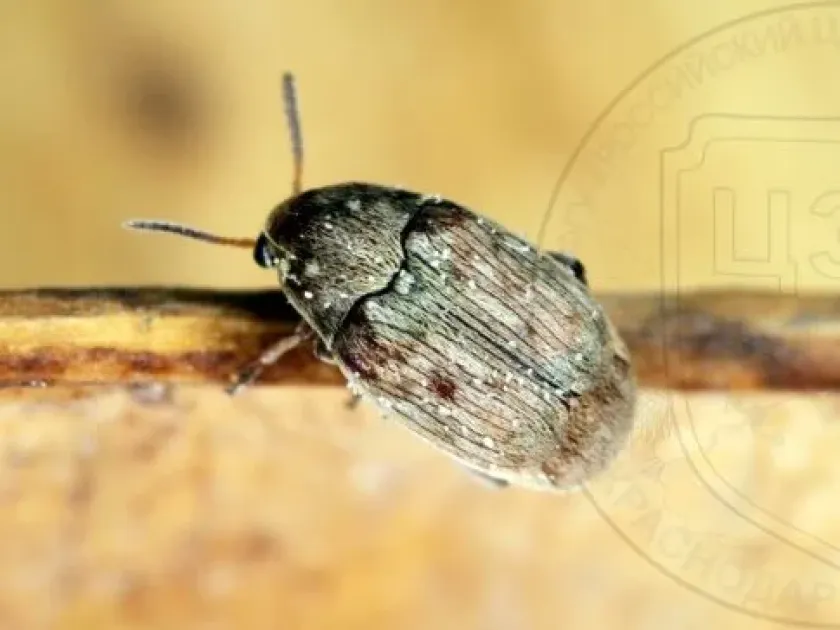
Description
How to identify
The Albizzia bruchid (Bruchidius albizziae) is a small beetle belonging to the family Bruchidae within the order Coleoptera. Adult beetles measure approximately 2–3 mm in length and possess an oval body densely covered with fine hairs, which gives them a mottled brown appearance.
The larvae are typically C-shaped, creamy-white in color, and possess a head partially retracted into the thorax. They are specialized seed feeders, spending their entire immature lifecycle within the confines of the host plant's seeds.
Adults are active fliers, capable of locating suitable host trees during the fruit development stage. Their behavior is highly adapted to the phenology of their host plants, specifically species within the legume family.
The lifecycle includes egg, larval, pupal, and adult stages. The transformation from larva to adult occurs entirely within the seed, providing the pest with a protected environment from external threats.
Species identification relies on micro-morphological analysis of the adult genitalia and pronotal structure, which is crucial for entomological surveys and pest monitoring programs.
What it damages
The primary host for Bruchidius albizziae is the silk tree, Albizia julibrissin. The larvae bore into the seeds, consuming the embryo and endosperm, effectively destroying the viability of the seed.
Besides Albizia, the beetle may attack seeds of related leguminous plants if they are in close proximity, potentially threatening nursery stocks and botanical collections.
Significant damage occurs during the fruit maturation period. Females lay eggs on the surface of the pods, and the newly emerged larvae drill directly into the developing seeds beneath the pod wall.
In addition to physical destruction, the emergence holes created by adult beetles facilitate the entry of secondary pathogens, such as fungi, which can cause rotting of any remaining healthy tissue inside the pod.
High infestation levels can result in the loss of nearly the entire seed harvest, making manual propagation of the host trees extremely difficult without proper intervention.
When it appears
The activity of adult beetles typically begins in mid-summer, corresponding with the flowering and fruit-setting period of the Albizia tree. Warm weather triggers their emergence and subsequent reproductive phase.
The reproductive cycle, including mating and egg-laying, usually spans several weeks. In regions with long growing seasons, the pest may produce more than one generation per year, depending on the availability of developing pods.
The insect typically overwinters as a mature larva or an adult inside dried pods that remain on the tree or have fallen to the ground, allowing it to survive through the colder months.
Spring emergence of adults marks the beginning of the new reproductive season, triggered by rising temperatures and the phenological development of the host tree.
Environmental factors like excessive rainfall or temperature fluctuations can influence the population dynamics, although the species is generally resilient due to the protected habitat provided by the host's seeds.
Signs of infestation
The most prominent sign of infestation is the appearance of small, round exit holes, approximately 1 mm in diameter, on the surface of dried seed pods after the beetles have emerged.
Once opened, infested seeds often appear hollowed out, containing fine, dusty frass (larval excrement). The seed coats may be dark, shriveled, or significantly lighter in weight compared to healthy seeds.
Careful observation during the egg-laying phase may reveal tiny, light-colored spots on the pod surface, which represent individual eggs glued to the epidermis.
Inside the pods, one may occasionally find remnants of pupal cases or mature beetles that failed to exit. The presence of these insects in large numbers in the tree crown during summer is a strong indicator of an active infestation.
- Circular exit holes on the exterior of the seed pods.
- Hollow or powdery seed remnants inside the pod.
- Accumulation of larval frass within the affected seed chambers.
Control measures
The most effective management strategy involves the timely collection of seeds as soon as the pods mature, preventing the beetles from completing their lifecycle and emerging to infest other areas.
Fumigation of harvested seeds in airtight containers using approved insecticides is the primary method for eliminating all developmental stages of the bruchid within the seeds.
For chemical-free control, subjecting seeds to deep-freeze temperatures for several days is an effective way to kill larvae and adults present inside the seed tissues.
Preventative spraying of tree crowns with systemic insecticides during the flowering phase can disrupt the egg-laying process and significantly reduce the percentage of infested pods.
Sanitation practices, including the removal and destruction of fallen pods and debris from the base of the trees, are essential to reduce overwintering populations and mitigate damage in subsequent years.
Taxonomy
- Latin name
- Bruchidius albizziae
- Order
- Coleoptera (beetles)
- Family
- Bruchidae
- EPPO code
- BRCIAB
Discussion
No discussions yet — be the first.