
Algarobius prosopis
Algarobius prosopis
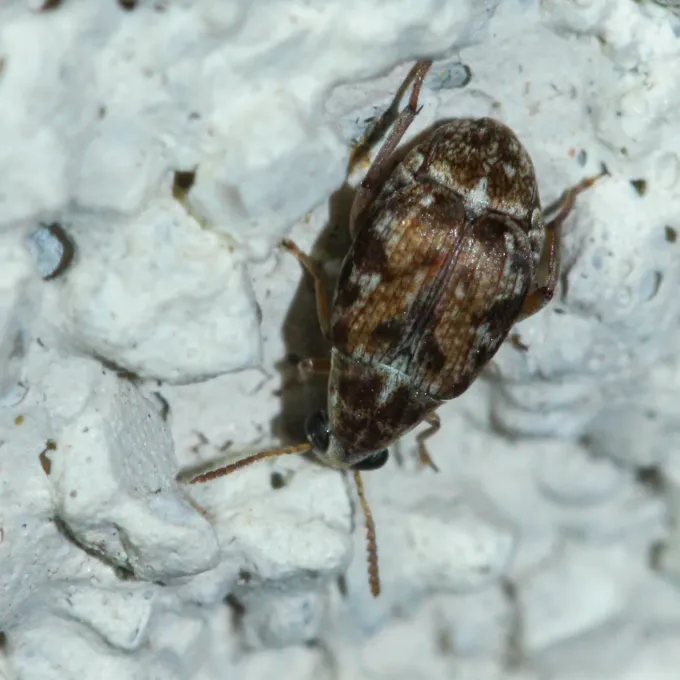
Description
How to identify
Algarobius prosopis is a species of beetle belonging to the family Bruchidae (seed beetles) within the order Coleoptera. It is a well-known specialist pest that thrives on the seeds of certain leguminous trees.
The adult beetle is small, typically ranging from 3 to 5 mm in length. Its body is compact with a mottled brown or grayish color, allowing it to blend in with the seed pods of its host plants.
The larvae are legless and undergo a complete metamorphosis. They spend their entire developmental period hidden inside the seed, relying on the nutrient-rich endosperm for their growth.
This species is highly adapted to arid and semi-arid environments where its host plants, such as Prosopis species, naturally grow and reproduce.
Identifying this pest often requires expertise in bruchid taxonomy, as it shares many physical traits with related species of the genus Algarobius.
What it damages
The primary host plants for Algarobius prosopis are species within the Prosopis genus, commonly known as mesquite, and various other legume species.
Larvae feed internally on the seeds, consuming both the endosperm and the embryo. This activity destroys the seed's viability, making it useless for germination.
Heavy infestations can lead to substantial seed loss, which significantly hinders the natural regeneration of native tree populations in impacted ecosystems.
Besides affecting germination, the feeding activity degrades the nutritional quality of the seeds, which are sometimes used as animal fodder in specific regions.
The infestation also facilitates the entry of secondary pathogens, such as molds and fungi, which can further rot the stored seed batches.
Signs of infestation
The most distinctive sign of infestation is the presence of small, circular exit holes on the surface of the dry seed pods or seeds themselves.
Careful inspection of the pods may reveal small, whitish, oval-shaped eggs glued to the surface, laid by females during the pod development stage.
When an infested seed is opened, it is often found to be hollowed out, containing frass (larval waste) and the remains of the consumed tissues.
In stored samples, you might notice a reduction in seed weight and the presence of powdery dust at the bottom of the containers, indicating internal damage.
Deformation of the pods or unusual discoloration can also indicate where larvae have been actively developing, even before the exit holes appear.
Control measures
Phytosanitary measures are the first line of defense to prevent the spread of Algarobius prosopis through international or regional trade of seeds.
Fumigation remains the most effective chemical method for treating large batches of seeds in storage to eliminate hidden larvae and eggs.
Physical control methods, such as freezing or heating the seeds at specific temperatures, can kill the pests without leaving chemical residues.
Good agricultural practices, including prompt harvesting of seeds and cleaning of storage areas, are essential to minimize the risk of recurring infestations.
- Chemical fumigation of seed storage facilities.
- Monitoring pest populations using pheromone-baited traps.
- Sanitation by removing and destroying infested pods.
Taxonomy
- Latin name
- Algarobius prosopis
- Order
- Coleoptera (beetles)
- Family
- Bruchidae
- EPPO code
- ALGAPR
Discussion
No discussions yet — be the first.