
Algarobius bottimeri
Algarobius bottimeri
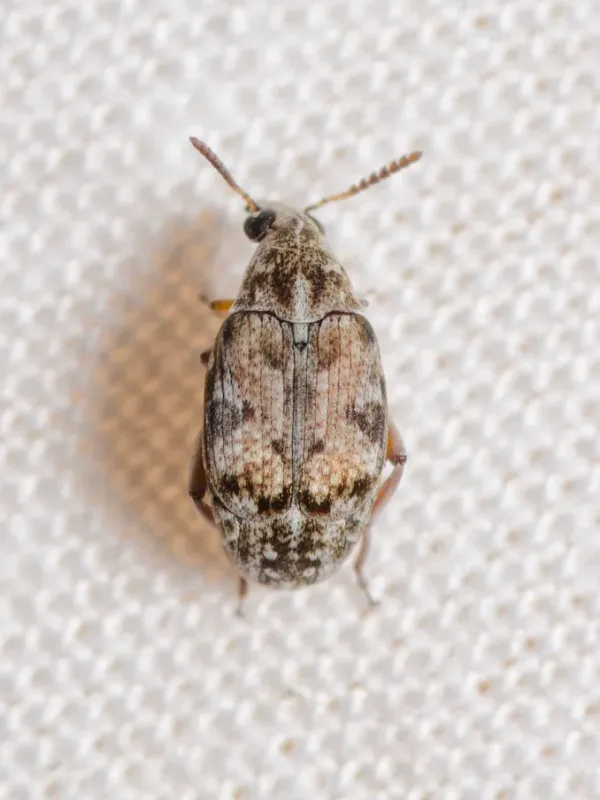
Description
How to identify
Algarobius bottimeri is a species of beetle belonging to the family Bruchidae, within the order Coleoptera. This insect is a specialized seed predator that has evolved to feed primarily on seeds of the Prosopis genus.
Adults typically exhibit the classic seed beetle body shape, generally featuring a brown or mottled coloration with darker patterns on the elytra. They usually measure between 3 and 5 mm in length.
The larvae are whitish, C-shaped grubs with reduced legs, designed to live entirely concealed within the seed coat of the host plant.
Female beetles oviposit their eggs directly on the surface of maturing pods. These eggs are often covered with a protective secretion that hardens into a durable, visible layer.
Field identification is difficult due to their cryptic lifestyle. Precise identification often requires microscopic examination of the male genitalia to distinguish this species from related Algarobius members.
What it damages
The primary hosts of Algarobius bottimeri are mesquite trees of the Prosopis genus. In areas where the pest is established, it can inflict significant damage on seed crops.
The damage occurs as larvae consume the internal contents of the seed, effectively destroying both the embryo and the endosperm, rendering the seed non-viable.
Massive infestations can decimate the seed bank, preventing natural regeneration of mesquite populations in both wild and managed ecosystems.
In nurseries that cultivate Prosopis for ornamental or restoration purposes, infestation leads to a drastic reduction in germination rates, causing financial losses.
Furthermore, the exit holes made by emerging adults serve as entry points for secondary pathogens, such as fungi, which can further degrade the quality of the harvested seeds.
When it appears
The life cycle of Algarobius bottimeri is tightly synchronized with the phenology of its host plant. Oviposition initiates as the pods reach maturity.
In warm climates, the species is capable of completing multiple generations within a single season, provided host material remains available on trees or the ground.
Adult activity peaks during periods of high temperatures, which often coincide with the final ripening stages of the Prosopis fruit.
The insect typically overwinters as a larva or pupa inside the seed pods. When spring temperatures rise, the new generation of adults emerges.
Generation turnover is heavily dependent on ambient temperature, with shorter development times observed during the hottest summer months.
Signs of infestation
Early signs of infestation include the presence of small, circular eggs attached to the exterior of the pods, which can be seen upon close inspection.
The most visible indicator of an infestation is the presence of small, perfectly circular exit holes on the pods, created by emerging adults.
Internal inspection of the seeds reveals cavities caused by larval feeding, often filled with frass and remnants of the consumed plant material.
A reduction in seed weight and visible darkening or surface degradation of the pods are also common indicators of high infestation levels.
In cases of severe damage, shaking the pods may produce a distinct rattling sound, indicating that the internal seeds have been hollowed out by the beetle larvae.
Control measures
Effective management includes sanitation measures, such as collecting and disposing of fallen pods promptly before the adult beetles have a chance to emerge.
For stored seeds, fumigation with appropriate insecticides is a standard practice to eliminate larvae and prevent damage during storage.
Biological control initiatives often explore the use of native parasitic wasps, which act as natural predators by laying their eggs inside the beetle larvae.
Cold storage treatments can be highly effective in killing all developmental stages of the pest within the seeds without the need for chemical residues.
Strict quarantine and phytosanitary regulations are essential to prevent the introduction of Algarobius bottimeri into new geographic regions through contaminated seed shipments.
Taxonomy
- Latin name
- Algarobius bottimeri
- Order
- Coleoptera (beetles)
- Family
- Bruchidae
- EPPO code
- ALGABO
Discussion
No discussions yet — be the first.