
Algarobius
Algarobius
Description
How to identify
Algarobius is a genus of beetles belonging to the family Bruchidae (seed beetles) within the order Coleoptera. These insects are specialists primarily associated with the seeds of plants in the Prosopis genus (mesquite trees).
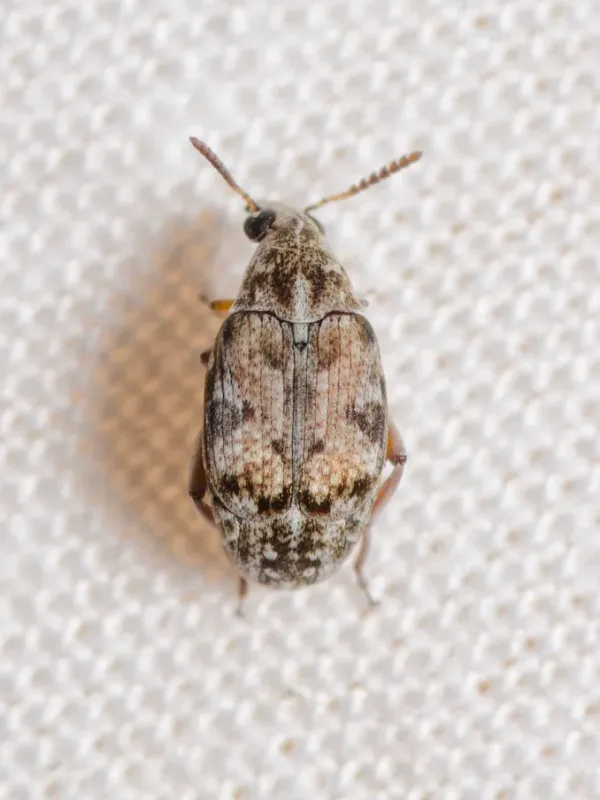
Adult beetles are small, typically ranging from 3 to 5 mm in length, with an oval body shape. Their coloration is generally dark with mottled patterns caused by fine scales on the elytra, which aids in camouflage.
The larval stage is characterized by a C-shaped, legless, whitish body, specially adapted for living within the dense endosperm of leguminous seeds. They possess strong mandibles capable of penetrating hard seed coats.
Taxonomically, Algarobius species are difficult to distinguish from other bruchids without microscopic examination of the male genitalia and specific elytral markings.
These pests are considered significant in forestry and agriculture because they can colonize and destroy vast quantities of seeds, directly impacting natural regeneration and commercial planting.
What it damages
The primary damage is caused by the larvae, which burrow into the seeds of Prosopis species. As they feed, they consume the embryo and endosperm, rendering the seed non-viable.
Multiple larvae can inhabit a single pod, leading to total destruction of the seed contents. This often goes unnoticed until the adult beetles emerge, leaving circular holes in the pods.
Economic losses are severe for seed producers who require high-quality germplasm for afforestation projects or fodder cultivation in arid environments.
Damaged seeds are often susceptible to secondary pathogens, including molds and bacteria, which can cause the rot of the entire seed lot during storage.
The feeding activity results in a significant reduction in seed weight and vigor, making the material useless for standard agricultural purposes.
When it appears
The life cycle of Algarobius is closely synchronized with the phenology of the host plant. They typically become active when the pods begin to reach physiological maturity.
Females deposit eggs on the surface of the pods. After hatching, the first-instar larva bores directly into the seed, where it remains protected until it pupates and eventually emerges as an adult.
In tropical and warm temperate climates, the beetle can complete multiple generations per year, provided that host seeds are available for colonization.
In stored seed batches, the population can increase rapidly if the storage environment is not properly monitored for temperature and humidity.
Developmental duration varies based on ambient conditions, with faster cycles occurring during peak summer months compared to cooler periods.
Signs of infestation
The most diagnostic sign of infestation is the appearance of small, circular exit holes on the surface of dry pods or individual seeds.
When an infested seed is opened, it often contains powdery frass (larval excrement) and the hollowed-out remnants of the seed structure, alongside live or dead insects.
Early-stage infestations may show tiny, discolored spots on the pod surface where the female has deposited eggs.
A noticeable decrease in the bulk density of the seeds is a strong indicator of heavy infestation, as the larvae consume the internal mass.
The presence of crawling adult beetles around seed containers is an immediate warning that the infestation has reached a mature stage.
Control measures
Effective management begins with post-harvest fumigation of all seed lots to eliminate eggs and larvae hidden within the seeds before storage.
Biological control strategies often focus on the use of parasitoid wasps that naturally prey on bruchid larvae, helping to keep wild populations in check.
- Prompt harvesting of pods before they fully dry and crack on the trees.
- Strict sanitation of storage areas to remove residual debris that might harbor the pests.
- Utilization of airtight storage bags to prevent re-infestation of clean seeds.
- Regular monitoring using traps to assess adult beetle density during peak maturity times.
- Heat treatment or freezing of seeds to eliminate infestations without chemical residues.
Chemical control via systemic insecticides is generally avoided in forestry settings, preferring integrated pest management (IPM) to maintain environmental safety.
Taxonomy
- Latin name
- Algarobius
- Order
- Coleoptera (beetles)
- Family
- Bruchidae
- EPPO code
- ALGASP
Discussion
No discussions yet — be the first.