
Zamia weevil
Rhopalotria slossoni
Description
How to identify
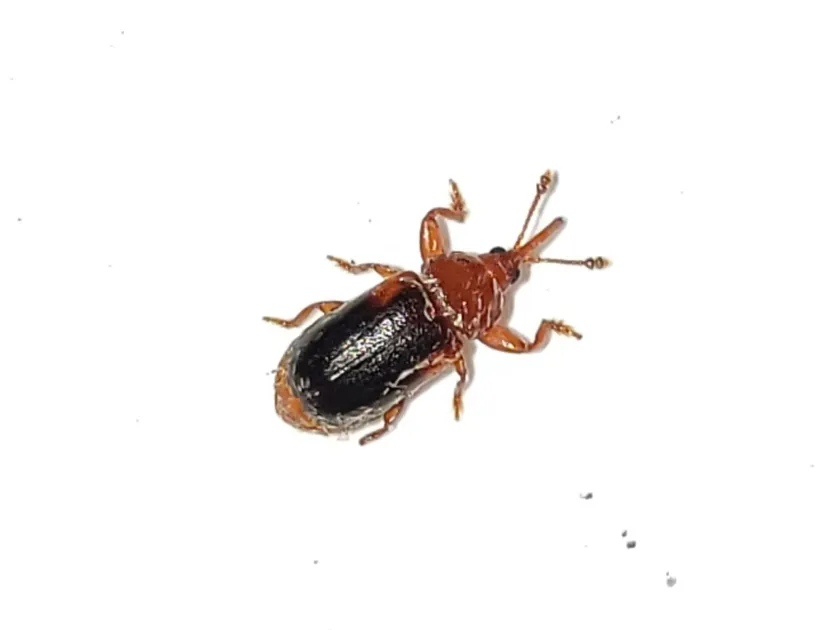
The Zamia weevil (Rhopalotria slossoni) is a member of the Curculionidae family within the order Coleoptera. This species is an obligate specialist known for its association with cycads of the genus Zamia.
Adult weevils possess a characteristic elongated snout and a small, robust body. Their coloration typically ranges from dark brown to black, providing camouflage against the plant's surface.
Larvae are legless, C-shaped, and creamy-white in color, specifically adapted to live and feed within the dense, protective tissues of the host plant's reproductive structures.
As a highly specialized herbivore, the morphology and biology of Rhopalotria slossoni are finely tuned to the phenology of their host plants, making them a unique subject in entomology.
Correct identification often relies on both the physical characteristics of the adult beetles and the distinctive damage patterns found within the reproductive cones of infected cycads.
What it damages
The Zamia weevil primarily infests the cones (strobili) of Zamia species. Both male and female cones serve as food sources and sites for larval development.
The larvae bore into the cone's tissues, consuming the interior and disrupting the development of seeds and pollen, effectively rendering the plant sterile.
Such feeding activities lead to the destruction of the reproductive organs, which is a major concern for both wild plant populations and conservatory collections of rare cycads.
The structural integrity of the cone is compromised, often resulting in decay, discoloration, and premature death of the cone before it can reach full maturity.
Secondary damage occurs when the necrotic tissues left by the weevils become breeding grounds for opportunistic fungi and bacteria, further weakening the host plant's overall health.
When it appears
The life cycle of the Zamia weevil is intricately synchronized with the cone-production season of its host plants. Adults emerge when the cycads begin to produce new strobili.
Mating and oviposition typically occur during the growth phase of the cones, ensuring that the hatching larvae have an immediate and continuous food source available.
The larval stage remains entirely within the cone, progressing through various instars while shielded from external predators and environmental stressors during the warmer months.
Overwintering is commonly observed in the pupal or late-larval stage, where the insects remain inside the remnants of the cones or within the plant canopy until the following season.
In greenhouse settings, where cycads may be induced to cone irregularly, the Zamia weevil may exhibit prolonged or overlapping generations, necessitating year-round vigilance.
Signs of infestation
Primary indicators of an infestation include the presence of small, circular exit holes on the outer scales of the cycad cones, left by emerging adults.
Fine, powdery frass or bore dust appearing on the surfaces of the plant or in the leaf axils adjacent to the cones is a definitive sign of active internal feeding by larvae.
Premature yellowing or browning of the cones is a major warning sign, indicating that the internal structure has been compromised and the cone is failing to develop correctly.
Deformed, stunted, or shriveled cones that fail to reach their typical species-specific size are clear consequences of larvae consuming the internal cone tissues.
Upon physical examination or dissection of an infected cone, the presence of distinct larval galleries and internal rotting tissue confirms the infestation by this specific weevil.
Control measures
The most effective management practice is manual sanitation: regularly inspect cycads for early signs of infestation and carefully remove and destroy all damaged cones.
Systemic insecticides can be utilized for control; however, care must be taken as many cycad species are highly sensitive to various chemical formulations and additives.
Preventative measures, such as applying contact insecticides at the start of the coning season, can help suppress the adult population before they have a chance to lay eggs.
In controlled conservatory environments, biological control options, including entomopathogenic fungi or nematodes, provide a safer alternative to conventional chemical pesticides.
Strict quarantine protocols should be enforced when importing or moving cycad specimens to ensure that the Zamia weevil is not introduced to new, vulnerable geographical areas.
Taxonomy
- Latin name
- Rhopalotria slossoni
- Order
- Coleoptera (beetles)
- Family
- Belidae
- EPPO code
- RHPTSL
Discussion
No discussions yet — be the first.