
Cycad weevil
Rhopalotria dimidiata
Description
How to identify
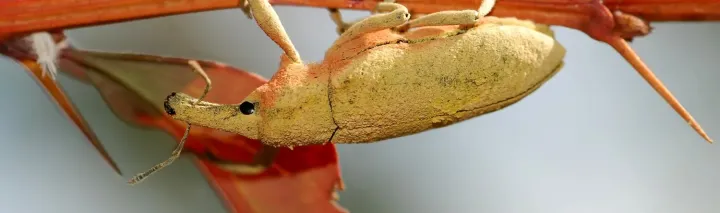
The Cycad weevil (Rhopalotria dimidiata) is a member of the Coleoptera order, belonging to the Curculionidae family. Adult specimens typically possess an elongated body with a distinct snout, a characteristic feature of this weevil family.
The coloration of these beetles usually ranges from dark brown to near black, providing natural camouflage against the bark or tissues of their host plants. Adult insects are relatively small, often remaining elusive unless the population density is high.
Their mouthparts are of the chewing type, perfectly adapted for boring into the tough woody tissues of plant stems and reproductive structures. The larvae are legless, C-shaped, and creamy-white, adapted for a concealed life cycle within the host.
This species is highly specialized, primarily associated with cycads. Morphological identification involves examining their clubbed antennae, which are critical for distinguishing them from related Curculionidae species found in the same regions.
Precise identification often requires laboratory examination of genital structures. This step is essential for researchers and agricultural inspectors to confirm the presence of Rhopalotria dimidiata versus other local weevil species.
What it damages
The primary hosts for this pest are plants of the Cycadaceae family, particularly those within the Zamia genus. The weevil is deeply integrated into the biological development cycle of these ancient plants.
Both adults and larvae cause damage, primarily by attacking the male strobili (cones). By feeding on the internal tissues of these reproductive organs, they significantly disrupt pollination and seed development processes.
In ornamental gardens and nurseries, infestations lead to a loss of aesthetic value. Extensive damage to the strobili halts their growth and leads to premature desiccation and shriveling of the cones.
Injured tissues frequently become entry points for secondary pathogens, including various fungal infections. This creates synergistic stress on the plant, which may ultimately lead to the death of the specimen.
Mass outbreaks in commercial nurseries can cause substantial financial losses, given the high value of cycads as decorative plants. Controlling these outbreaks is vital for maintaining nursery inventory health.
When it appears
The life cycle of the Cycad weevil is closely tied to the reproductive phenology of its host plants. Adult activity generally peaks at the onset of the warmer seasons when cones begin to emerge.
Ideal conditions for reproduction include high humidity and consistently warm temperatures. In climate-controlled greenhouses, this pest can maintain a continuous development cycle throughout the entire year.
In natural environments, development is synchronized with seasonal growth rhythms. Overwintering stages typically reside within plant debris or deeper in the soil substrate near the base of the plant.
As spring temperatures rise, the weevils emerge from diapause to seek out suitable male strobili for oviposition. This period of activity represents the critical window for implementing preventive pest control measures.
Multiple generations can overlap during favorable conditions, especially when an abundant food supply is available. This complicates management efforts, as precise timing for pesticide application becomes difficult to determine.
Signs of infestation
The most prominent sign of an infestation is the appearance of small, distinct boreholes on the surface of male strobili. These indicate where adults have tunneled into the plant's reproductive organs.
Close inspection often reveals dark, granular frass, which appears as fine dust accumulating at the base of the cones or on the cone scales. This frass is a clear indicator of active feeding activity.
Browning and drying out of specific sections of the cones suggest that larvae are tunneling deep within the tissues. Internal structures are often destroyed, effectively reducing the cone to mere debris.
Opening an infested cone will reveal the presence of larvae inside the central axis. Their ability to hide deep within the host structure is why they are often overlooked until significant damage occurs.
General plant decline, including slowed leaf production or stunted growth, may serve as an indirect indicator that the plant's internal reproductive system has been compromised by a weevil infestation.
Control measures
Effective pest management begins with strict quarantine and inspection protocols for all new plant shipments. Preventing the entry of infested cycads into nurseries is the most effective defense.
In smaller collections, manual removal of adult weevils during their peak activity periods can significantly limit their population. This approach is highly effective for localized infestations.
Systemic insecticides are necessary to manage larvae hiding within plant tissues. Products containing active ingredients effective against Coleoptera should be applied strictly according to manufacturer guidelines.
Sanitation practices, such as the regular removal and destruction of infested male strobili, are essential. All removed plant material should be burned or disposed of off-site to break the life cycle.
Biological control using entomopathogenic fungi shows promise as a sustainable management strategy. Maintaining optimal horticultural practices also boosts host resilience against potential weevil attacks.
Taxonomy
- Latin name
- Rhopalotria dimidiata
- Order
- Coleoptera (beetles)
- Family
- Belidae
- EPPO code
- RHPTDI
Discussion
No discussions yet — be the first.