
Narrow-necked grain beetle
Omonadus floralis
Description
How to identify
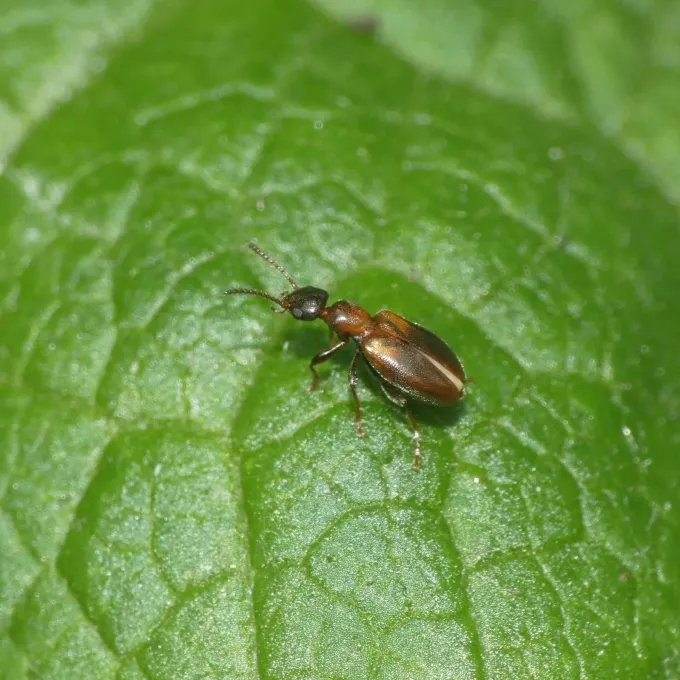
The narrow-necked grain beetle (Omonadus floralis) belongs to the Anthicidae family. It is a small insect often mistaken for an ant due to its distinctively constricted thorax, which resembles a neck.
Adults typically measure between 2.5 and 3.5 millimeters in length. Their bodies are generally dark brown or black, covered with fine, dense hair that gives them a slightly matte appearance.
The head is relatively large with well-developed chewing mouthparts, specifically adapted for feeding on plant tissues and reproductive organs.
These beetles are highly active and fast-moving, which is the primary reason for their common name. They are constantly exploring plant surfaces to find suitable food sources.
The larvae are distinct from the adults and generally live in soil or decaying organic matter, making them more difficult to detect until they emerge as adults.
What it damages
Omonadus floralis primarily damages flowering plants and various vegetable crops. They show a clear preference for consuming buds, flowers, and developing fruit or seed heads.
Adult feeding causes cosmetic and structural damage to flowers, often leading to deformities, stunted growth, and premature flower drop, which negatively impacts yields.
The damage caused by their feeding creates openings in the plant tissue, which often become secondary infection sites for various fungal and bacterial pathogens.
In seed-producing fields, the presence of these beetles can be particularly detrimental, as their consumption of developing seeds directly reduces the total harvest quality.
Greenhouse environments are especially susceptible to infestation due to the controlled, stable microclimate that supports rapid beetle reproduction cycles throughout the season.
When it appears
The seasonal activity of this beetle begins in spring as temperatures rise, allowing overwintering adults to emerge from their dormancy sites.
Peak activity typically occurs during the warmer summer months, correlating with the flowering stages of many agricultural crops, which provide abundant food resources.
Under favorable conditions, the species can complete multiple generations within a single growing season, leading to persistent pressure on crops.
As autumn approaches and temperatures drop, adults seek shelter in protected areas such as soil crevices, crop debris, or underneath tree bark to survive the winter.
The ability to overwinter as an adult ensures that the population can quickly rebound the following spring, provided the environmental conditions are met.
Signs of infestation
The most reliable sign of an infestation is the visual observation of adults on the buds or flowers, particularly during the cooler parts of the day.
Symptoms include small, irregular holes on petals and hollowed-out sections within flower buds, which are often indicative of recent feeding activity.
Unexplained wilting of individual flowers or flower clusters can also suggest that the base of the flower or the pedicel has been damaged by the beetles.
The presence of fine waste pellets on the surface of leaves or flower petals often confirms that the beetles have been active in that specific area.
If significant numbers of buds begin to shed or look discolored, it is a strong indicator that the beetle population has reached a damaging threshold.
Control measures
Effective management requires an integrated approach that focuses on both preventive cultural practices and targeted chemical interventions when necessary.
Cultural control is vital: maintaining good sanitation by removing crop debris after harvest and deep plowing helps destroy the overwintering habitats of the beetles.
Chemical control involving contact-action insecticides can be employed during peak activity periods to reduce the population levels effectively.
Biological control, such as the use of natural predators or entomopathogenic fungi, can provide a sustainable way to suppress beetle numbers without disrupting the ecosystem.
- Rotate crops to break the life cycle of the pest.
- Maintain weed-free margins around fields to eliminate alternative hosts.
- Use yellow sticky traps to monitor adult flight and density in greenhouse settings.
Taxonomy
- Latin name
- Omonadus floralis
- Order
- Coleoptera (beetles)
- Family
- Anthicidae
- EPPO code
- ANTCFL
Discussion
No discussions yet — be the first.