
Notoxus monodon
Notoxus monodon
Description
How to identify
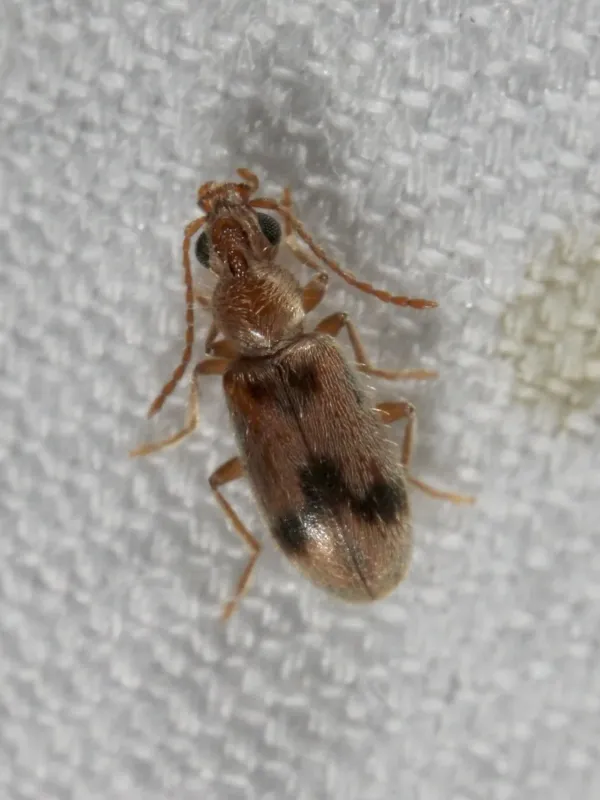
Notoxus monodon is a species of beetle belonging to the family Anthicidae, commonly known as ant-like flower beetles. It is easily recognized by a distinct, horn-like process on its pronotum that extends forward over the head.
Adult beetles are small, typically measuring 3–4 mm in length. They exhibit a yellowish-brown coloration with dark, transverse bands on the elytra, providing effective camouflage in their natural environment.
The larvae are typically slender, creamy-white in color, and possess a well-developed head with functional legs. They are generally soil-dwelling, living in the upper substrate layers near plant roots.
Imago (adults) are highly active insects that utilize their mobility to colonize new areas. They are predominantly diurnal and prefer warm, sunny conditions to facilitate their movement and feeding.
The life cycle involves complete metamorphosis: egg, larva, pupa, and adult. Hibernation occurs primarily in the adult stage, sheltered within the soil or under dense plant debris.
What it damages
The damage caused by Notoxus monodon is inflicted by both adults and larvae. They feed on a variety of agricultural crops, with a preference for young seedlings and tender vegetative tissues.
Adults typically damage the leaves by creating small, irregular holes. This feeding behavior reduces the total leaf area available for photosynthesis, thereby limiting the plant's growth potential.
Larval feeding, which occurs underground, is often more severe. They target the root system and the base of the stem, disrupting the plant's ability to transport water and essential nutrients.
Significant infestations can lead to sparse crop stands and stunted growth. In severe cases, the damage to the root structure results in the wilting and eventual death of the plants.
The economic impact is particularly pronounced during drought periods, as damaged plants are unable to compensate for the reduced root efficiency and quickly succumb to environmental stress.
When it appears
The activity of these beetles begins in spring as temperatures rise above 15°C. Adults emerge from their overwintering sites to feed and locate suitable host plants for oviposition.
The peak activity period usually aligns with the emergence and early vegetative stages of the host crops. Monitoring should be intensive during these vulnerable developmental phases.
During the summer months, the population thrives in warm conditions. Depending on the local climate, one or two generations may complete their life cycle within a single growing season.
As autumn approaches and temperatures drop, adults begin moving towards soil layers or field borders to enter hibernation. This behavior is triggered by photoperiod and temperature changes.
Agronomists are advised to schedule regular field inspections from late spring until mid-summer, focusing on checking the foliage and the root zone for signs of infestation.
Signs of infestation
Visual identification of infestation involves spotting characteristic small, ragged holes on the leaves, indicating the presence of actively feeding adult beetles.
In cases of subterranean larval activity, the primary sign is premature wilting and yellowing of the plants, which often occurs despite adequate moisture levels.
The discovery of the specific "horned" beetles on the plant surface during morning or evening hours is a definitive confirmation of the pest's presence.
Field observation showing patches of stunted growth or poor stand establishment is a major indicator that warrants further investigation of the soil and root systems.
Using sweep nets to sample crop foliage is a highly effective method for detecting adult beetle populations before they reach economic threshold levels.
Control measures
Implementing a robust crop rotation strategy is the primary defense against Notoxus monodon. Avoiding continuous planting of susceptible crops disrupts the pest's cycle and reduces population buildup.
Deep plowing in the autumn is an essential cultural practice that exposes overwintering adults to adverse weather conditions, significantly reducing their survival rate.
If population counts exceed the economic threshold, targeted insecticide applications are necessary. Pesticides should be applied during periods of peak adult activity for maximum efficiency.
Enhancing plant vigor through balanced fertilization and appropriate irrigation helps crops withstand the pressure of light infestations, promoting better regrowth.
- Remove weeds from field edges to eliminate alternative hosts and breeding sites.
- Use certified, high-quality seeds to ensure rapid germination and early crop establishment.
- Perform edge treatments with contact insecticides when the pest migrates from surrounding areas.
Taxonomy
- Latin name
- Notoxus monodon
- Order
- Coleoptera (beetles)
- Family
- Anthicidae
- EPPO code
- NOTXMD
Discussion
No discussions yet — be the first.