
Notoxus
Notoxus
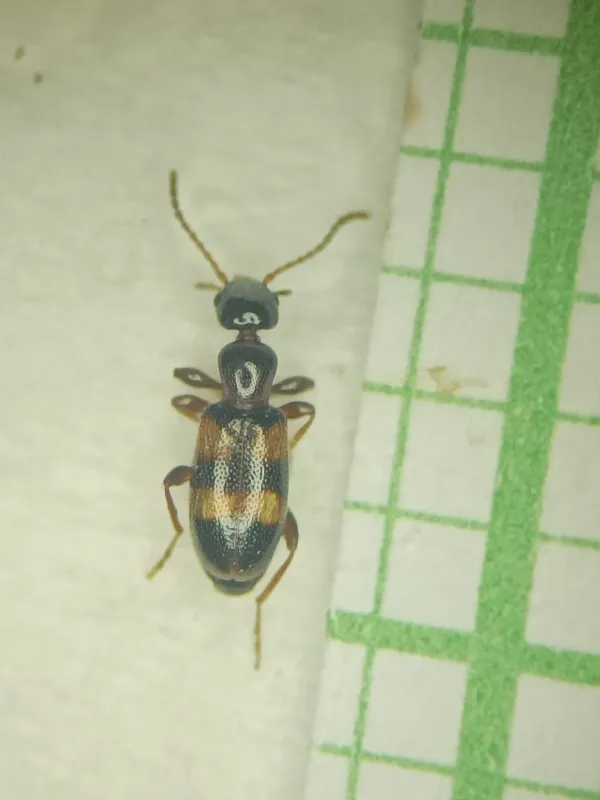
Description
How to identify
Beetles of the genus Notoxus belong to the family Anthicidae (ant-like flower beetles). They are easily recognized by a characteristic horn-like projection on the pronotum that extends over the head, giving them an ant-like appearance.
Adults typically measure between 3 to 5 mm in length. Their coloration is usually yellowish-brown or brown with dark bands on the elytra. The body surface is covered in fine, dense hairs.
The larvae of Notoxus have a typical appearance for the family: they are elongated, whitish or yellowish, highly mobile, with well-developed thoracic legs and a distinct head.
Unlike many other coleopterans, Notoxus beetles are highly active and move rapidly across soil surfaces and plants, which makes visual monitoring and detection more challenging.
Taxonomically, the genus belongs to the order Coleoptera. These beetles are found globally, inhabiting regions ranging from temperate to tropical climates.
What it damages
Although adult Notoxus beetles often act as predators or scavengers, feeding on organic debris, under specific conditions they may damage the reproductive organs of agricultural crops.
The primary damage occurs during flowering and grain formation stages, as beetles may feed on pollen and delicate tissues of various crops.
Crops such as cereals, legumes, and certain vegetables are most sensitive to damage when the insects congregate in inflorescence areas.
The harm caused by Notoxus involves not only direct mechanical damage to tissues but also the potential transmission of fungal and bacterial pathogens to weakened plants.
While severe economic loss is rare, high population densities can lead to significant yield reductions due to the destruction of flowers or developing fruit.
When it appears
Adult activity begins in the spring when soil temperatures reach optimal levels for the beetles to emerge from their overwintering sites.
Peak population density is usually observed in early summer, coinciding with the active vegetative growth and flowering period of most field crops.
The lifecycle is closely linked to soil moisture; while dry periods may suppress population activity, the beetles are capable of rapid recovery following rainfall.
Depending on the regional temperature regime and available food sources, one or two generations may develop within a single season.
In autumn, adults seek shelter in the soil or beneath plant debris to overwinter, selecting sites that offer protection and moderate humidity levels.
Signs of infestation
The first sign of Notoxus presence is the observation of characteristic "horned" beetles during routine entomological field surveys.
Damage manifests as small punctures or irregular, jagged edges on flower petals and young ovaries, which are often misidentified as the work of other insect species.
During morning or evening inspections of inflorescences, beetles can be spotted; they typically react by scurrying into leaf axils or dropping to the ground.
The presence of insect frass (excrement) on leaf surfaces near inflorescences can also serve as an indirect indicator of pest activity in the field.
Mass aggregation of individuals on specific plants indicates a peak feeding period and necessitates an assessment of potential threat to the harvest.
Control measures
Effective management of Notoxus relies on crop rotation and timely, deep soil cultivation, which destroys the overwintering habitats of the adults.
Cultural practices aimed at weed control significantly reduce the attractiveness of the field to the beetles by eliminating alternative food sources.
Chemical control using broad-spectrum insecticides is justified only when the economic threshold of damage is exceeded.
It is recommended to use products based on pyrethroids or organophosphates, which demonstrate high efficacy against active coleopteran stages.
Monitoring using yellow sticky traps allows for the early detection of beetle migration into fields, enabling timely decisions regarding necessary protective sprays.
Taxonomy
- Latin name
- Notoxus
- Order
- Coleoptera (beetles)
- Family
- Anthicidae
- EPPO code
- NOTXSP
Discussion
No discussions yet — be the first.