
Tobias Ant-like Flower Beetle
Anthicus tobias
Description
How to identify
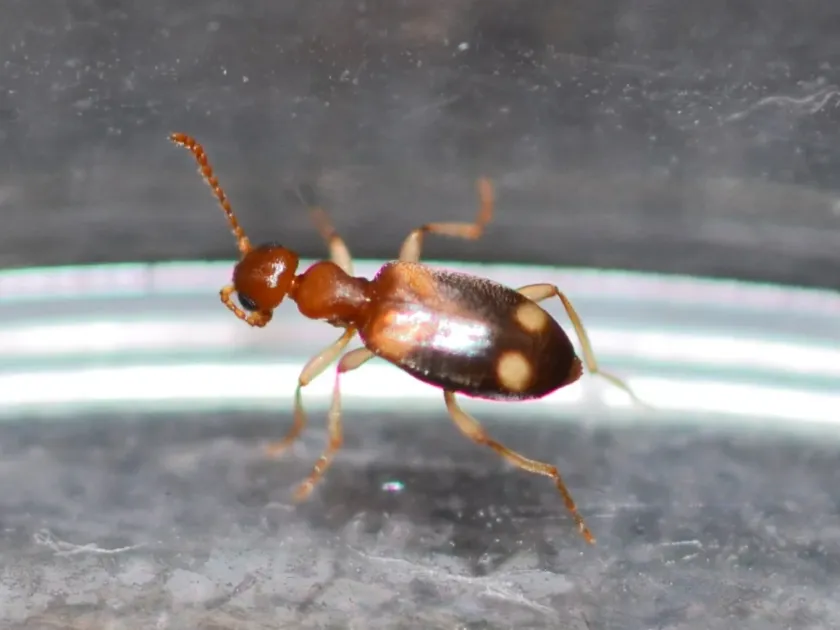
The Tobias ant-like flower beetle (Anthicus tobias) belongs to the family Anthicidae, order Coleoptera. These beetles are small, usually measuring between 2.5 and 3.5 mm in length, and are easily recognized by their ant-like appearance due to the distinct neck-like constriction.
The body color is dark brown to black, often exhibiting a slight metallic luster. The wing covers are covered with fine, pale hairs, giving the insect a somewhat dull or matte appearance under close inspection.
Larvae are small, whitish, and highly mobile within the substrate. They possess strong mandibles that allow them to consume debris and damaged grain particles efficiently.
The life cycle is closely linked to environmental conditions. High humidity and warmth are critical factors that accelerate the transition from egg to adult, allowing for rapid population growth.
As the name suggests, the adults are very active and capable of rapid movement across the grain surface, facilitating the colonization of stored commodities.
What it damages
Anthicus tobias is generally considered a secondary pest of stored products. It thrives in facilities where grain, flour, or processed food items are kept, often appearing after other primary pests have damaged the initial integrity of the grains.
The beetle targets wheat, barley, corn, and flour-based products. It is frequently found in grain dust, sweepings, and piles of broken grains that remain in corners of storage facilities.
While not a primary borer of sound grains, the beetle contributes to significant losses by feeding on the endosperm of broken grains and contaminating the lot with its excrement and secretions.
This contamination often triggers the growth of fungi and molds within the stored mass, further degrading the quality and safety of the food supply.
In cases of heavy infestation, the cumulative feeding and waste production can render a batch of stored produce unusable for human or animal consumption.
Signs of infestation
Presence of adults on the surface of stored grain or near warehouse structures is the primary indicator. Because of their agility, they are often seen during routine visual inspections.
Sifting samples of grain and examining them in the lab will reveal the presence of larvae and shed exoskeletons, confirming an established infestation within the bulk.
A musty odor in the warehouse is a common sign of insect activity. It is caused by the beetle’s waste products interacting with the grain, leading to localized fermentation or mold growth.
Sticky traps and pheromone-based monitoring tools are standard methods for detecting the beetle early, allowing operators to assess population densities.
Damaged kernels showing irregular gnawing marks, especially when accompanied by fine powdery residue, are clear signs that the insect is utilizing the stored materials for food.
Control measures
Sanitation is the most important control strategy. Maintaining clean warehouse environments by regularly removing grain debris and dust eliminates the primary food sources for the beetle.
Proper storage management, including maintaining low moisture content in the grain, is essential for inhibiting the beetle's development. Keeping grain cool and dry is highly effective.
For established infestations, fumigation using phosphine or other authorized gaseous treatments is necessary to eradicate the population at all life stages, including eggs and pupae.
Empty warehouses should be thoroughly cleaned and treated with contact insecticides before the new harvest is brought in to prevent cross-contamination.
- Maintain low moisture (below 13%) in stored grains.
- Use professional-grade monitoring traps.
- Ensure adequate ventilation in storage areas.
- Implement strict 'first-in, first-out' stock rotation.
Taxonomy
- Latin name
- Anthicus tobias
- Order
- Coleoptera (beetles)
- Family
- Anthicidae
- EPPO code
- ANTCTH
Discussion
No discussions yet — be the first.