
Anthicid beetle
Anthicus
Description
How to identify
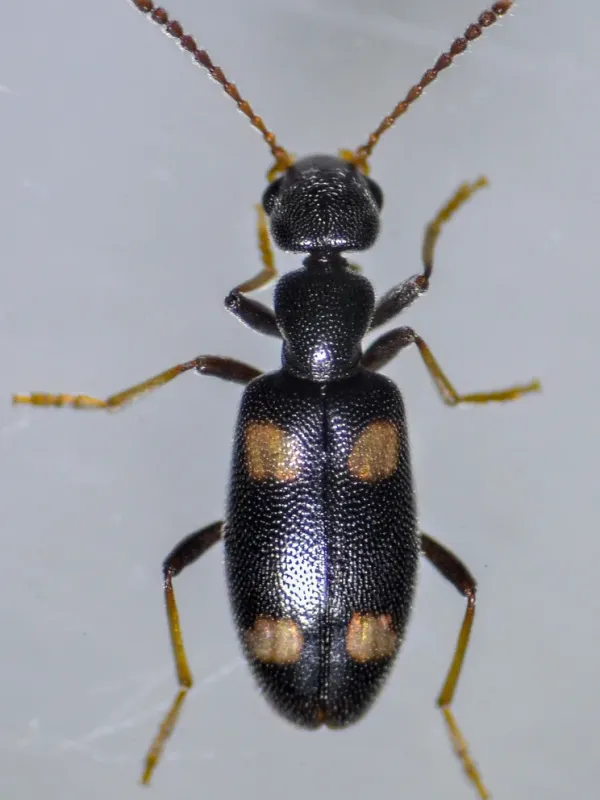
Anthicid beetles (genus Anthicus) are members of the family Anthicidae within the order Coleoptera. They are commonly known as ant-like flower beetles due to their unique body shape.
The defining characteristic of these beetles is a narrow, neck-like constriction behind the head and an elongated thorax, which gives them a superficial resemblance to ants.
These insects are small, typically ranging from 2 to 4 millimeters in length, and their coloration varies from light brown to black, often with distinct spots on the elytra.
The larvae are cylindrical and cream-colored, typically living in soil or organic matter, where they feed on decomposing material or fungal spores.
The adults are extremely active and can be seen running quickly over the surface of leaves, soil, and agricultural debris during the warm months of the year.
What it damages
The damage caused by Anthicus species primarily involves the destruction of seedlings, where they gnaw at the stem epidermis and soft tissues of young plants.
While often considered secondary pests, in high densities they can severely stunt crop development, particularly in fields with high humidity and abundant plant residue.
They are known to feed on seeds in the soil before germination, which can lead to thinning of the crop stand and reduced plant density across the field.
In addition to physical damage, their activity often facilitates the entry of pathogenic fungi into plant tissues, leading to rot and secondary infections.
Stored grain can also be affected, as these beetles thrive in moist conditions, promoting fungal growth and reducing the overall quality of the stored produce.
When it appears
The emergence of adult Anthicid beetles usually begins in early spring as temperatures rise, allowing them to resume activity after the winter diapause.
They prefer moist environments and are most abundant in fields where irrigation or frequent rainfall maintains a high humidity level in the topsoil.
The life cycle is complete, consisting of egg, larva, pupa, and adult stages, with most species overwintering as adults sheltered in debris or shallow soil layers.
The most critical window for crop protection is the germination phase and the appearance of seedlings, as young tissues are highly susceptible to their feeding habits.
There can be multiple generations produced throughout the growing season, depending on the ambient temperature and the local moisture availability.
Signs of infestation
Field observation often reveals missing seedling tissues, such as notched stems or damaged cotyledons, which serve as clear indicators of beetle presence.
One can identify an infestation by scouting the base of young plants, where the beetles are frequently observed crawling on the soil surface during daylight hours.
Stunted plant growth and irregular crop stands are common visual signs that suggest insect feeding pressure, especially in areas with high soil moisture.
The presence of significant amounts of rotting vegetable matter in the field acts as a magnet for these beetles, indicating a high risk of localized damage.
When inspecting stored grain, the presence of these beetles combined with a musty odor is a definitive sign of an infestation requiring immediate aeration or treatment.
Control measures
Good agricultural practices, such as deep tillage, help disrupt the beetle's life cycle by burying debris that serves as their preferred habitat and overwintering site.
Crop rotation and ensuring proper drainage of fields are essential management strategies to reduce the moisture levels that promote Anthicid population growth.
Seed treatments using systemic insecticides provide a crucial layer of protection, preventing the beetles from damaging the seeds and early sprout stages.
In cases of severe infestation, foliar applications of broad-spectrum insecticides may be necessary to suppress populations during the susceptible seedling stage.
- Eliminate weeds and crop residue in and around fields.
- Maintain low humidity and proper ventilation in grain storage facilities.
- Use high-quality seeds to promote rapid, uniform crop emergence.
Taxonomy
- Latin name
- Anthicus
- Order
- Coleoptera (beetles)
- Family
- Anthicidae
- EPPO code
- ANTCSP
Discussion
No discussions yet — be the first.