
Comb-horned powderpost beetle
Xyletinus pectinatus
Description
How to identify
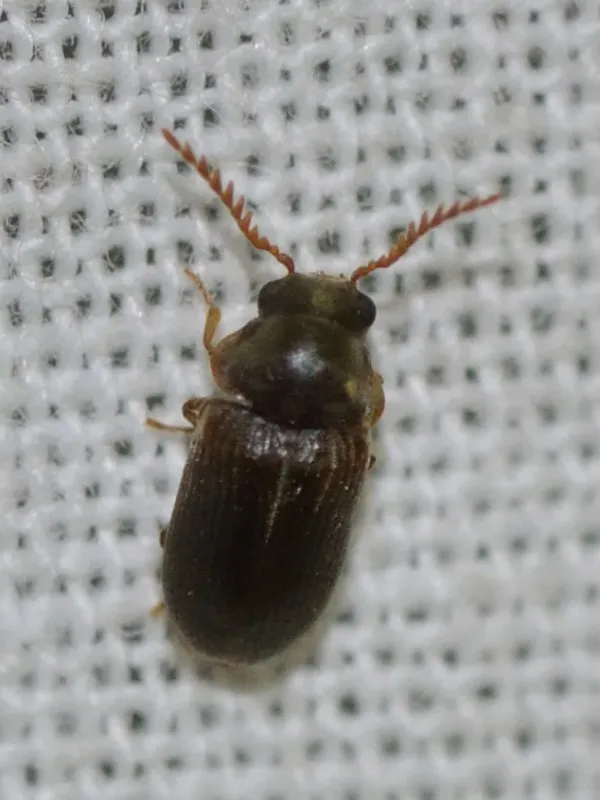
Xyletinus pectinatus, known as the comb-horned powderpost beetle, belongs to the Anobiidae family of the order Coleoptera. Adult beetles are 3.5–5.5 mm long, characterized by a cylindrical body in shades of brown or reddish-brown.
The name is derived from the males, which possess distinct comb-like antennae. The entire body is covered in fine yellowish hairs, giving the insect a matte appearance.
The larvae are whitish with a curved body and a well-developed head capsule, equipped with powerful mandibles capable of consuming dense cellulose tissues.
Pupation occurs within the timber, in specially constructed chambers near the surface of the wood. The entire life cycle of this species remains hidden from the human eye.
This insect is a true xylophage, favoring dry or semi-dry timber of both coniferous and deciduous species for its development.
What it damages
The pest primarily infests dry and semi-dry wood. Major targets include structural timber, wooden building components, rafters, and floor joists.
Beyond structural elements, the beetle can infest stored lumber, wooden artifacts, antique furniture, and, occasionally, museum collections such as herbariums.
In natural habitats, Xyletinus pectinatus is frequently found in forests, colonizing dead or dying branches, fallen trees, and old stumps.
The economic damage is caused by larvae creating extensive galleries inside the wood, which progressively reduces the structural integrity and load-bearing capacity of the material.
The primary danger lies in the silent nature of the infestation, as the exterior of the wood often appears perfectly healthy while internal damage progresses unnoticed.
When it appears
Adult activity peaks during the summer months, specifically June and July, which coincides with their mating and flight periods.
Females lay eggs in small cracks, crevices, or pre-existing exit holes within the timber. Moderate humidity levels are essential for successful larval development.
The life cycle length is highly variable, ranging from one to several years depending on local climatic conditions, ambient temperatures, and the moisture content of the infested wood.
Overwintering typically occurs in the larval stage deep within the timber, which allows the species to withstand harsh cold temperatures.
In the spring, as temperatures rise, larval feeding resumes, continuing until the insects are ready to pupate.
Signs of infestation
The primary sign of infestation is the appearance of small, circular exit holes measuring 1.5–2 mm in diameter on the wooden surface.
Active larval feeding produces fine, brownish wood dust, often called "frass" or boring dust, which accumulates directly beneath the infested area.
In quiet environments, one may occasionally hear a faint ticking or scratching sound caused by the larvae chewing through the wood fibers.
If an infestation is severe, the wood surface may appear depressed or brittle, as the internal structure has been thoroughly hollowed out.
- Circular exit holes in the timber.
- Accumulation of fine wood dust (frass).
- Weakening of structural timber elements.
- Faint scratching sounds audible in quiet conditions.
Control measures
Effective prevention starts with moisture control, as keeping timber dry significantly reduces the risk of infestation by this wood-boring pest.
Upon detection of an infestation, damaged sections of timber should be removed and replaced, or the material must be treated with deep-penetrating insecticides.
For high-value wooden items or large structures, professional fumigation is recommended to ensure the eradication of all life stages within the wood galleries.
Preventive treatment involves applying wood preservatives during the construction phase to make the timber unappealing for egg-laying females.
Maintaining a stable, low-humidity indoor environment is crucial, as it creates unfavorable conditions for larval development and protects the longevity of wooden structures.
Taxonomy
- Latin name
- Xyletinus pectinatus
- Order
- Coleoptera (beetles)
- Family
- Anobiidae
- EPPO code
- XYLNPC
Discussion
No discussions yet — be the first.