
Broad-chested borer
Xyletinus laticollis
Description
How to identify
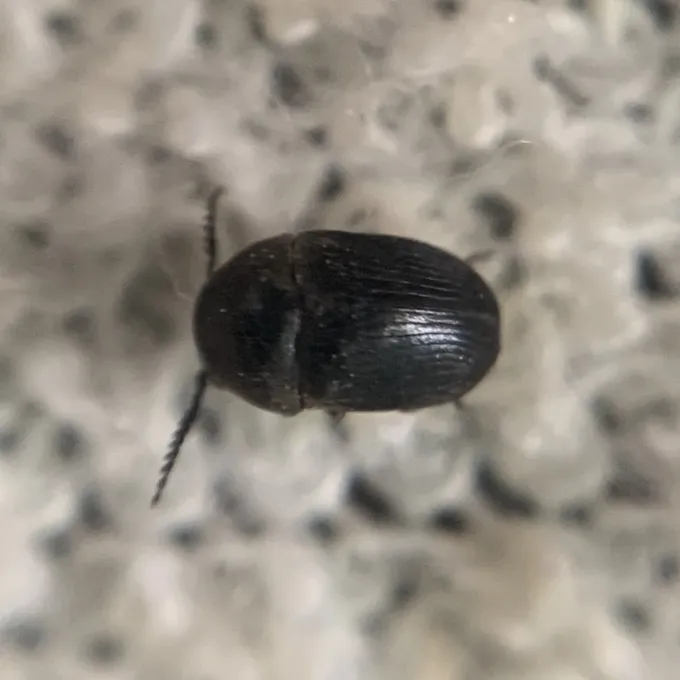
The broad-chested borer (Xyletinus laticollis) is a member of the Ptinidae (formerly Anobiidae) family, order Coleoptera. Adult beetles are small, typically ranging from 3 to 5 mm in length, with a cylindrical body shape covered in fine, short hairs.
The insect’s coloration ranges from dark brown to black, which aids in camouflage within stored grain environments. The pronotum is broad and rounded at the sides, a distinctive feature that gave the species its common name.
Larvae are white, C-shaped, and possess a well-developed head capsule designed for boring into solid plant tissues. They go through several developmental stages (instars) while feeding inside the host material.
Adult beetles are capable of flight, allowing them to disperse quickly within warehouses or from field to storehouse. They are often active during warmer months, which is critical for their mating and colonization processes.
Identification is frequently difficult because the insects spend most of their life cycle hidden inside individual grains or food products, making early detection a challenge for warehouse managers.
What it damages
This beetle is a common pest of stored plant products. It primarily infests cereals, pulses, and various grain-based food products, such as flour, dried fruit, and other starch-rich agricultural commodities.
Beyond commercial grains, it can infest herbaria, medicinal plants, and various dry organic substrates, posing a risk to diverse industries that rely on dried plant materials.
The larvae bore into the grain kernels or seeds, feeding on the endosperm and causing structural damage. This not only destroys the seed embryo but also drastically reduces the weight and market value of the commodity.
Their feeding activity results in the accumulation of frass and "boring dust," which contaminates the food supply, making it unpalatable and potentially unsafe for consumption or animal feed production.
In high-moisture conditions, the infestation can accelerate, leading to secondary fungal growth in the tunnels created by the larvae, further degrading the quality of the stored produce.
When it appears
The activity of the broad-chested borer is highly dependent on environmental temperature. Optimal development occurs in warm conditions, typically ranging from 20°C to 25°C.
Inside climate-controlled or heated warehouses, the insect can continue its life cycle throughout the year, meaning infestations can persist regardless of the external season.
In natural conditions, the peak flight and mating season usually occurs during the summer months when ambient temperatures favor beetle movement and egg-laying on suitable substrates.
Humidity is also a key factor; relative humidity levels above 60% are conducive to the growth and development of the larvae, allowing them to reach maturity more quickly.
When temperatures drop significantly, the development process slows down, and the insects may enter a period of reduced activity or dormancy until warmer conditions return.
Signs of infestation
The most prominent sign of an infestation is the appearance of small, circular exit holes in the surface of grains, seeds, or the packaging materials of stored goods.
Presence of fine, powdery dust (boring meal) near storage containers, shelves, or on top of grain piles is a classic indicator that the larvae are active and feeding within the product.
A musty or stale odor emanating from the storage area is often associated with the presence of these beetles, caused by the accumulation of their metabolic waste and internal grain decay.
Adult beetles are frequently observed resting on walls, near lighting fixtures, or near windows, as they are attracted to light after emerging from their pupal chambers inside the food source.
Clumping of grain kernels or visible webbing and debris are indicators of severe or long-term infestations that require immediate intervention to prevent total loss of the stock.
Control measures
Good warehouse hygiene is the primary line of defense. This includes regular cleaning of storage areas, prompt removal of grain debris, and ensuring that storage facilities are kept dry and cool.
Fumigation of infested products and facilities using registered insecticides is an effective method for eliminating existing populations, as gas can penetrate into the grain mass to kill larvae.
- Regular inspection of stored grain using samples and pheromone traps.
- Using hermetically sealed containers to exclude pests.
- Temperature management (cooling grain to below 15°C to halt development).
- Strict rotation of stocks to ensure older produce is utilized first.
Professional pest control services should be employed to treat cracks, crevices, and other harborages in the warehouse structure before new grain is brought in for storage.
If an infestation is detected, infected batches should be quarantined immediately to stop the spread, and the remaining healthy stocks should be monitored more frequently for signs of contamination.
Taxonomy
- Latin name
- Xyletinus laticollis
- Order
- Coleoptera (beetles)
- Family
- Anobiidae
- EPPO code
- XYLNLA
Discussion
No discussions yet — be the first.