
Wood borer beetle
Xyletinus
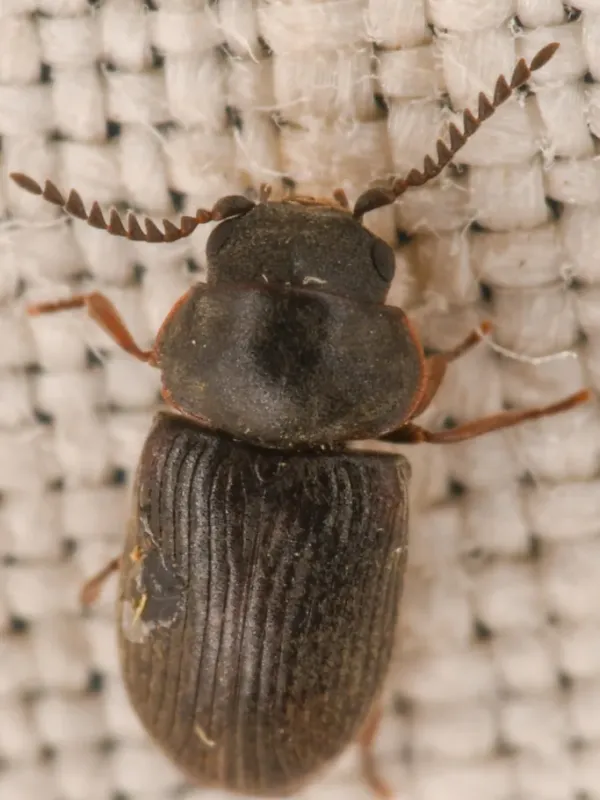
Description
How to identify
The wood borer beetle (genus Xyletinus) belongs to the Anobiidae family within the order Coleoptera. Adult beetles are small, typically ranging from 3 to 5 millimeters in length.
Their bodies are cylindrical and covered in fine hairs, ranging in color from reddish-brown to dark brown, which helps them blend in with wood textures.
The larvae are white, C-shaped, and possess strong mandibles adapted for burrowing through dense plant tissues, including bark and dry wood.
Adults are elusive and nocturnal, making them difficult to spot during daylight hours. They prefer dark, undisturbed areas for mating and egg-laying.
The life cycle involves complete metamorphosis: egg, larva, pupa, and adult. Most of their development occurs hidden deep inside the infested material.
What it damages
These pests primarily target dead or stressed wood, including logs, stumps, and fallen branches. They are rarely a threat to healthy, vigorous trees.
In agricultural and residential contexts, they cause damage to wooden structures, greenhouse frames, and stored timber, significantly reducing the durability of the wood.
The larvae create an extensive network of tunnels throughout the wood, which progressively destroys the structural integrity of the material from the inside out.
The damage is compounded by the fact that the tunnels often act as entry points for decay-causing fungi, which accelerate the rotting process.
Once an infestation is established, it can spread to surrounding wood if conditions remain favorable, making timely intervention essential for damage control.
Signs of infestation
The most diagnostic sign of an infestation is the presence of small, perfectly round exit holes on the surface of the wood, created by emerging adults.
Accumulations of fine wood dust, often called frass, are frequently found beneath these exit holes, indicating active larval burrowing nearby.
In some cases, a faint tapping sound can be heard within the wood during the mating season, which is produced by the beetles as a form of communication.
Affected wood often sounds hollow when tapped and may show signs of structural weakening, such as surface collapses or unusual softness in certain areas.
Visual inspection is the primary method of detection, though one should look for these subtle signs before the damage becomes too severe to remediate.
Control measures
Maintaining low humidity levels is the most effective preventative measure, as these beetles thrive in moist conditions and damp wood environments.
Regular treatment of wooden surfaces with high-quality insecticidal and fungicidal wood preservatives is highly recommended to deter infestation.
- Prompt removal and disposal of heavily infested wood
- Application of deep-penetrating chemical treatments
- Ensuring adequate ventilation to keep wood dry
- Fumigation of infested structures by professionals
For localized infestations, targeted injections of insecticide directly into the entry holes can effectively reach and eliminate the larvae inside.
Consistent monitoring, especially during the spring when adults begin to emerge, is crucial for catching potential outbreaks early.
Taxonomy
- Latin name
- Xyletinus
- Order
- Coleoptera (beetles)
- Family
- Anobiidae
- EPPO code
- XYLNSP
Discussion
No discussions yet — be the first.