
Deathwatch beetle
Xestobium
Description
How to identify
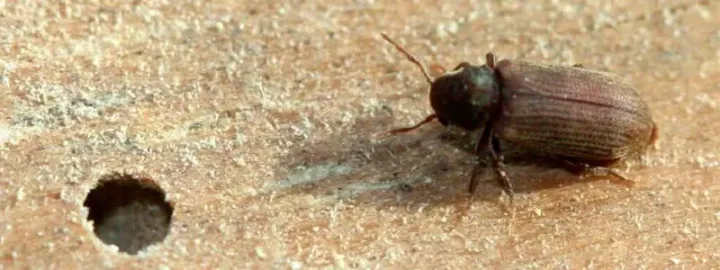
The Deathwatch beetle (Xestobium rufovillosum) belongs to the family Anobiidae. It is a wood-boring beetle, typically measuring between 5 to 7 millimeters in length, with a dark brown color mottled with patches of yellowish hair.
The larvae are white, C-shaped, and grow up to 10-11 millimeters long. They possess strong mandibles capable of grinding through dense hardwood, which is their primary habitat.
The life cycle of this species is complex and highly dependent on environmental conditions, usually spanning from 2 to 5 years. They thrive in damp, fungus-affected wood.
Adult beetles spend most of their short lives inside the wood before emerging through small circular holes to mate and begin a new cycle of infestation.
The beetle's common name derives from the rhythmic tapping sound produced by adults, which in historical times was superstitious associated with the approach of death.
What it damages
These beetles primarily attack hardwoods, particularly oak, but can also infest softwoods if they have been previously weakened by fungal decay. They are notorious for damaging historic buildings.
In forestry and orchard environments, the Deathwatch beetle can infest old, decaying trees, entering through cracks in the bark and compromising the tree's health by destroying its vascular tissue.
The larvae create a complex network of tunnels deep within the timber. As they consume the wood, the internal structure becomes riddled with holes, significantly reducing its load-bearing capacity.
Significant structural damage is often hidden from view. By the time surface signs appear, the internal wood may be largely hollowed out and structurally unsound.
The economic impact of this pest is immense, particularly regarding the preservation of heritage structures, where entire timber frameworks can be destroyed if not treated.
Signs of infestation
The most recognizable sign of infestation is the presence of small, circular exit holes, roughly 2 millimeters in diameter, appearing on the timber surface.
Accumulation of "frass" (a powdery substance consisting of wood dust and larval excrement) beneath infested beams or furniture is a clear indicator of active feeding by larvae.
In spring, one may hear the distinctive ticking sound caused by males hitting their heads against the timber, signaling the presence of an active breeding population.
If the wood feels spongy or easily breaks away under slight pressure, it indicates deep-seated structural damage caused by long-term larval activity.
Visible fungal growth on timber often serves as a precursor or companion to beetle infestation, as the fungus provides the necessary moisture and softening for the larvae.
Control measures
The primary control strategy is moisture management. Deathwatch beetles require high humidity and decaying wood, so maintaining dry conditions is the best preventive measure.
Affected structural timber should be inspected and, if necessary, replaced or reinforced to maintain building safety and prevent further spread of the larvae.
Chemical treatments involve the application of specialized insecticides, which can be sprayed onto the surface or injected directly into the emergence holes for deeper penetration.
For valuable artifacts or heritage beams, heat treatment or controlled atmosphere fumigation can be used to eradicate the pest without causing extensive chemical damage.
Regular monitoring and the application of wood preservatives containing anti-fungal and insecticidal agents provide long-term protection against initial colonization.
Taxonomy
- Latin name
- Xestobium
- Order
- Coleoptera (beetles)
- Family
- Anobiidae
- EPPO code
- XESTSP
Discussion
No discussions yet — be the first.